Private transportation for cruise groups

Cruise Port Charter Bus Rental for Smooth Group Transfers

Keep travelers, suitcases and the sailing-day schedule together with private cruise port transportation built around your group. Charter Buses USA can help arrange airport, hotel, meeting-point and cruise-terminal transfers in one coordinated itinerary—whether you need a compact vehicle for a family voyage or multiple motorcoaches for a large organization.

01

The cruise begins before the ship leaves—and the land-side plan should feel just as organized.

Group Cruise Transportation Built Around the Real Trip

A cruise transfer is more than a ride to a waterfront address. Your group may arrive on different flights, stay at one or several hotels, carry a week or more of luggage and need to reach a particular ship at a particular terminal within a defined check-in window. On return day, the same travelers may leave the ship in waves while flights, hotel check-ins or sightseeing reservations continue on a separate schedule. A private cruise shuttle bus rental brings those moving pieces into one plan.

Charter Buses USA helps trip leaders arrange point-to-point or multi-stop transportation based on passenger count, baggage volume, pickup geography and the cruise line’s instructions. The vehicle follows the itinerary created for your group; it is not a public route and it does not require travelers to split among unrelated rides. If passengers are flying in, pair this service with our airport charter bus rental. If everyone is staying overnight near the port, our hotel shuttle planning service can help connect rooms, baggage loading and the terminal departure window.

This page is designed for the decisions that are specific to cruise travel: confirming the ship and pier, sizing around luggage rather than seats alone, allowing for port traffic, separating embarkation and disembarkation requirements, and building contingency time without turning the day into hours of unnecessary waiting. For a broader pre-trip reference, see our complete cruise port transfer guide.

One manifestKeep the passenger list, pickup points and trip contact aligned.
Right-size storagePlan for checked bags, carry-ons and mobility equipment before assigning a vehicle.
Terminal-specific routingUse the current ship, pier and port access instructions—not only the city name.

Choose the transfer pattern

Four Ways to Connect Your Group With the Cruise Terminal

Start with the actual movement your travelers need. One group may require a single hotel pickup; another may need an airport arrival sweep, an overnight stay and a separate return-day transfer.

Fly and sail

Airport to cruise port

Bring arriving passengers together at a designated airport meeting point, then move the group and its luggage to the cruise terminal or a pre-cruise hotel. For arrivals spread across several hours, the practical answer may be multiple vehicle runs or a planned waiting window rather than one oversized delay for everyone.

  • Share airline, flight number and scheduled landing time.
  • Allow for baggage claim and terminal-to-pickup walking time.
  • Use our airport pickup guide to set expectations.
Sleep, meet, board

Hotel to cruise terminal

A hotel departure gives the trip leader a natural place to check attendance, label luggage and brief travelers before the port. One charter vehicle can serve a single property, or a route can include several hotels when timing and curb access allow. Confirm where a motorcoach may stage; a hotel’s main entrance is not always suitable for a full-size bus.

  • Choose a lobby meeting time and a separate load time.
  • Ask the hotel about bus loading and temporary staging.
  • Keep room checkout time separate from bus departure time.
Local group departure

Home region or meeting point to port

Families, travel clubs, churches, associations and affinity groups can start together from a community center, place of worship, school, office or approved parking area. A consolidated departure reduces the uncertainty of several cars reaching the terminal independently. For a long approach to the port, scheduled rest and meal stops can be written into the itinerary.

Complete the loop

Round-trip embarkation and return service

Book the outbound movement and post-cruise transportation as two clearly defined trip segments. The return pickup should reflect the ship’s expected arrival, the cruise line’s disembarkation process, customs or inspection needs and your onward plan. It should not simply repeat the outbound time in reverse.

Build backward from boarding

A Better Cruise Transfer Timeline

The safest schedule is not based on a generic promise such as “the port is 30 minutes away.” It begins with the cruise line’s current instructions and accounts for every step between the pickup curb and terminal handoff.

1

Confirm the sailing

Provide the cruise line, ship name, sailing date, terminal or pier if assigned, and the group’s boarding instructions. Ships at the same port may use different terminals, and assignments can change.

2

Set the port arrival target

Use the arrival or check-in window communicated by the cruise line. A trip leader should confirm the latest guidance directly; transportation staff cannot determine boarding-document rules or override cruise-line deadlines.

3

Add the terminal approach

Account for traffic, port gates, vehicle queues, pier access, unloading and the walk from the group drop-off area. Large sailing days, construction and security procedures can change the last mile.

4

Calculate pickup and load time

Work backward through planned stops, road time, rest breaks, passenger check-in and baggage loading. State both “meet” and “bus departs” times so late arrivals do not quietly consume the buffer.

Planning principle: arrive early enough to absorb ordinary travel variability, but follow the cruise line’s instructions about when passengers may enter the terminal. Our charter bus arrival-time guide explains how staging and pickup windows affect the ground-transportation side of the plan.

Seats are only half the calculation

Choose a Cruise Shuttle Bus With Room for People and Bags

The most appropriate vehicle depends on passenger count, luggage, route length, curb conditions, requested amenities and local availability. Capacities and features vary by model, so confirm the final configuration in your quote.

Sprinter van for a small cruise transfer group
Small group

Sprinter Van

A nimble choice for a family, executive party or compact travel group making a direct airport, hotel or terminal transfer. Ask about the specific luggage layout before assuming every seat and every large suitcase can be carried at once.

  • Direct transfers with few stops
  • Smaller pickup areas
  • Light-to-moderate luggage plans
Explore Sprinter vans
Minibus for cruise port group transportation
Medium group

Mini Bus

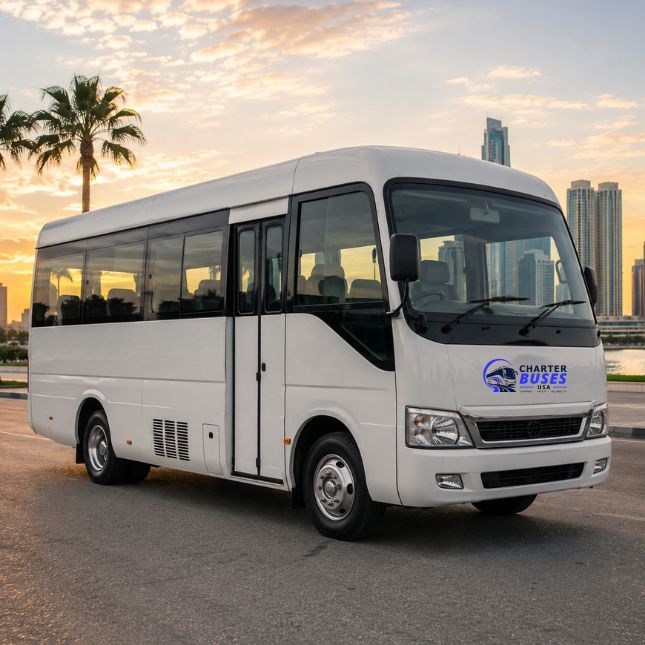
Useful when your group is too large for a van but does not need a full-size motorcoach. A minibus can work well for hotel-to-port shuttles, family reunions and travel-advisor groups, provided the selected model has the right baggage solution.

  • Hotel and airport connections
  • Moderate passenger counts
  • Efficient local shuttle routes
Explore mini buses
Shuttle bus arranged for cruise terminal transportation
Flexible circulator

Shuttle Bus

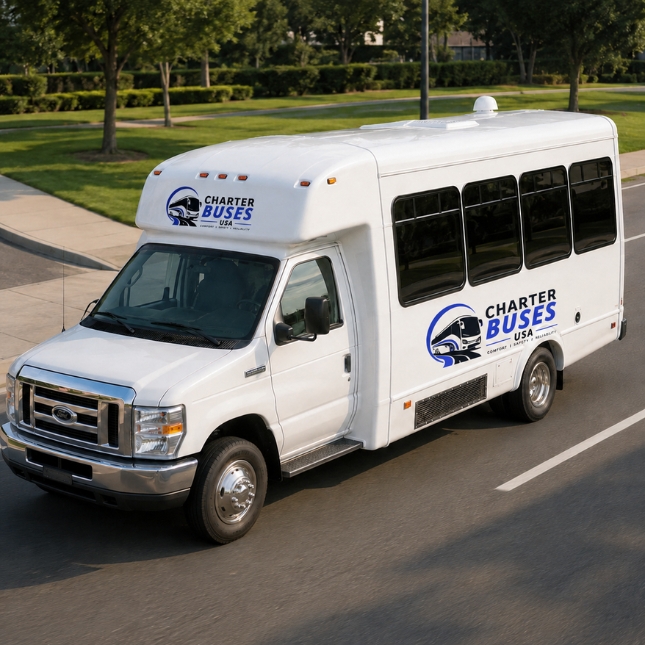
Consider a shuttle bus for repeated hotel runs, multiple nearby pickup points or a staged movement where passengers arrive in groups. The reservation plan should define the number of runs, loading time and where each loop begins and ends.

  • Repeated short-distance movements
  • Several nearby properties
  • Manifest-based boarding waves
Explore shuttle buses
Full-size charter bus with storage for cruise passengers
Large group + storage

Full-Size Charter Bus

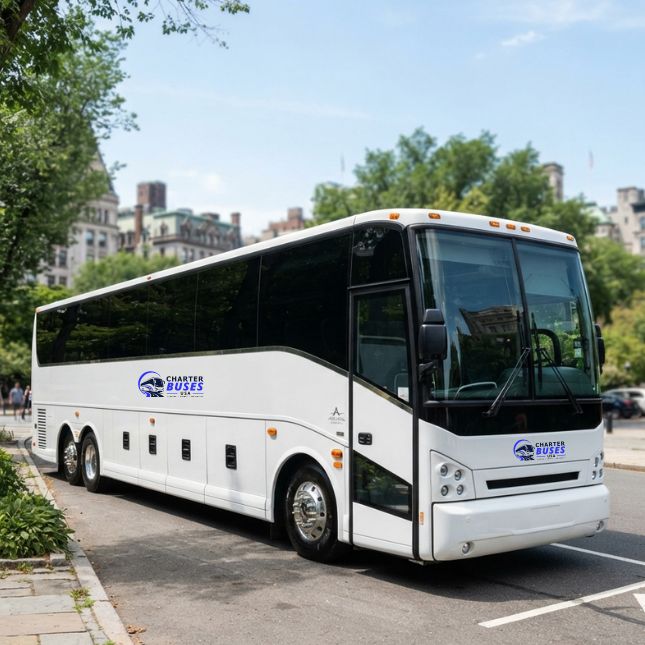
Often the strongest fit for a large cruise party or a longer trip to the port. Many full-size motorcoaches offer underfloor luggage bays and passenger-comfort features, but the exact storage, seating and onboard amenities must be confirmed for the assigned vehicle.

  • Large passenger manifests
  • Longer highway transfers
  • More substantial baggage needs
Explore full-size charter buses
Executive coach option for premium cruise group transfers
Premium movement

Executive Coach

A polished option for incentive groups, corporate cruise programs, VIP hosts and client movements. Tell the reservation specialist which experience matters—work-friendly power, a quieter cabin, premium seating or another feature—so availability can be checked rather than presumed.

  • Corporate and incentive groups
  • Hosted or VIP itineraries
  • Requested premium amenities
Explore executive coaches
Do not size a cruise transfer by passenger count alone. Share the number and approximate type of bags, mobility devices, strollers and special equipment. Our vehicle sizing guide and luggage-capacity guide can help you prepare.

Count bags before choosing seats

Cruise Luggage Changes the Vehicle Calculation

A group of 28 cruise travelers does not pack like a group of 28 commuters. Checked suitcases, carry-ons, garment bags, strollers, walkers, wheelchairs and pre-cruise purchases can create a storage requirement that is disproportionate to the number of occupied seats. That is why a quote request should include a baggage estimate—not only “28 passengers.”

Ask travelers for a simple count by category, then add a reasonable margin for last-minute changes. Keep passports, medication, electronics and cruise documents with each passenger rather than in a luggage bay. Tags should show the traveler’s name and contact details without publicly displaying sensitive itinerary information. At pickup, load bags in a way that supports the planned unloading order, especially when one route serves more than one hotel or terminal.

No universal bag-per-person formula applies to every bus. Interior racks are intended for smaller personal items, while larger pieces may require exterior storage or a different vehicle configuration. Review how under-bus luggage capacity works, then verify the assigned vehicle’s usable storage with your reservation specialist.

PeopleAdults, children, group leaders and hosts
PropertyLarge bags, carry-ons and special equipment
PathStops, curb limits, route length and vehicle access
Embarkation briefOne group leader. One final manifest. One exact ship.

The bus handles ground transportation; the trip leader keeps travelers informed and confirms that everyone has the documents and boarding information required by the cruise line.

From pickup curb to port curb

Make Embarkation Day Calm, Counted and Easy to Follow

Appoint one primary trip contact and, for a large party, a leader for each passenger subgroup. Send the final pickup instructions in writing: exact address, meeting landmark, leader’s phone number, meet time, departure time and a reminder that the bus cannot solve missing boarding documents. Use a checked manifest instead of relying on a head count shouted across a crowded curb.

Before departure, confirm the cruise line, ship and current terminal assignment. A port name alone is incomplete: major ports may operate multiple terminals across separate entrances or roadways. The driver needs the transportation itinerary, while each passenger should retain the cruise line’s boarding information. If the route includes an airport, hotel or meal stop, specify which passengers join or leave at each point.

At the port, follow posted instructions and staff direction for commercial passenger vehicles. Travelers should remain together until unloading is authorized. Assign several able passengers or leaders to observe the luggage handoff and check the cabin after everyone exits. A final walk-through can catch phones, document folders and small bags before the vehicle leaves the terminal area.

A
Separate meeting and departure timesThe gap should cover attendance, bag loading and a short group briefing.
B
Prepare a contact ladderGive travelers one leader to call; provide the reservation team with a primary and backup contact.
C
Keep essentials in handFollow the cruise line’s instructions for identity documents, medicine and items needed before checked bags are delivered.

For a broader pre-departure process, use our charter bus travel checklist and pickup and drop-off planning guide.

The return is a new trip segment

Plan Disembarkation Without Guessing the Curb Time

A ship’s scheduled arrival is not the same as the time every passenger will be standing at the commercial-vehicle pickup area. The vessel must be cleared, passengers leave according to the cruise line’s process, and travelers may need to collect luggage and complete an inspection or customs step. Mobility needs and group size can add more time between leaving the cabin and reaching the curb.

Give the transportation plan a defined communication trigger. For example, the trip leader can contact the designated transportation number after the full group has collected its bags and is moving toward the approved pickup zone. The exact procedure depends on the port, reservation and local staging rules; a motorcoach may need to wait off site until commercial vehicles are called forward.

Be conservative with onward flights. Charter Buses USA coordinates the ground route, but does not control ship clearance, cruise-line operations, port traffic, customs processing or airline requirements. Confirm guidance with the cruise line and airline before setting a flight that leaves little recovery time. If travelers have widely separated flights, compare a direct airport movement with a hotel day room, luggage storage arrangement or planned city stop. Changes that extend mileage or vehicle time may affect the reservation price, so communicate them as early as possible. Our guide explains how charter bus reservation changes are typically handled.

Different groups, different operating plans

Cruise Group Transportation for Families, Organizations and Travel Programs

Private service becomes especially valuable when the organizer is responsible for more than their own suitcase. The itinerary can be shaped around how your specific group communicates, boards and moves.

Families & reunions

Start the vacation with everyone together

Move grandparents, parents, children and luggage without assigning a different car to every household. Choose a convenient common pickup, build in child and senior boarding time, and request any necessary accessibility features early. Groups turning the sailing into a wider reunion can also use our family vacation transportation guide.

Travel advisors & tour hosts

Protect the hosted experience

Create a named movement for clients from airport or hotel to ship, with a defined manifest and trip contact. Advisors can request separate transfers for different flight clusters, premium vehicles for hosted groups, or additional local transportation before and after the cruise. Final supplier, vehicle and itinerary details should be reviewed before they are presented to clients.

Corporate & incentive travel

Connect the business program to the sailing

Coordinate office, airport, hotel, dinner and terminal transfers for incentive winners, leadership retreats or client programs. An executive coach may suit a premium experience, while several vehicles can separate VIP movements from the primary group.

Churches, clubs & associations

Use a familiar local meeting point

Start from a place members already know, such as a church, community facility or approved lot. For long-distance port connections, plan rest stops and driver-compliant schedules. Church coordinators may also review our church group charter service.

Schools, colleges & alumni groups

Keep rosters and responsibility clear

Educational, graduation and alumni sailings need clear adult leadership, written conduct expectations and a verified roster. Tell us about travelers under 18, chaperone structure and equipment before requesting a vehicle. Transportation arrangements do not replace cruise-line consent, identification or documentation requirements.

Large celebrations

Scale beyond one bus

Milestone birthdays, destination weddings and social groups may need two or more vehicles. Divide passengers intentionally—by hotel, family unit, flight time or accessibility need—and name a leader for each bus. See when it makes sense to rent more than one charter bus.

Service across U.S. cruise gateways

Private Bus Transportation to Major Cruise Ports Nationwide

Charter Buses USA can help plan service in cities across the United States, subject to route and vehicle availability. This is a nationwide cruise-transfer service—not a collection of interchangeable port pages. Every reservation still requires the precise ship, pier, terminal, pickup points and current access instructions.

Atlantic & Florida gateways

Common cruise markets include PortMiami, Port Everglades, Port Canaveral, Tampa, Jacksonville, Charleston, Norfolk, Baltimore, Cape Liberty, Manhattan, Brooklyn and Boston. A Florida sailing may require a direct airport-to-port move or an overnight hotel connection; a Northeast departure may begin with a longer regional motorcoach trip.

For New York cruise movements, explore transportation planning in New York City, Manhattan, Brooklyn and Long Island.

Gulf Coast gateways

Gulf departures may involve New Orleans, Mobile, Tampa, Galveston and other regional terminals. These routes often bring passengers from a broad drive market, making a common meeting point or a multi-city approach useful for clubs, families and community groups.

Texas travelers can connect a sailing with service in Galveston, Houston, Corpus Christi or the wider Texas charter bus network. The final plan should account for bridge, causeway and port-entrance traffic where applicable.

Pacific & Alaska gateways

Seattle, Los Angeles/San Pedro, Long Beach, San Diego and San Francisco are prominent West Coast embarkation points, while Alaska programs may use Seattle as a primary U.S. gateway. Airport distance, seasonal sailing peaks, downtown hotel pickups and pier-specific commercial access can all affect the itinerary.

For example, the Port of Seattle operates separate cruise facilities, so “Seattle cruise port” is not enough information by itself. Use the official terminal details and give the reservation team the ship name before the schedule is finalized.

Terminal information changes. Confirm the current assignment with your cruise line shortly before travel and send material updates to the transportation contact. Official port pages—such as PortMiami cruise terminals and the Port of Seattle’s Pier 91 guide—are useful planning references, but the cruise line’s instructions for your sailing remain essential.

Ask, verify, then reserve

Safety, Accessibility and Comfort Should Be Planned—not Assumed

Your quote request is the right time to identify non-negotiable needs. Vehicle features and availability differ by operator, market and model, so a precise request produces a more useful transportation plan.

Safety-informed booking

Share the complete itinerary so driving time, duty limits, parking and necessary stops can be evaluated. Interstate passenger carriers are subject to federal requirements, and travelers can review official safety resources before booking. Our Safety Commitment explains the standards that guide our approach.

Trip leaders should also give passengers a short pre-trip briefing, keep aisles clear and follow the driver’s safety instructions.

Accessible transportation

Tell us early if a traveler needs a wheelchair lift, securement position, reduced-step solution, space for a mobility device or another accommodation. Include the device type and whether the passenger can transfer to a standard seat. Accessible vehicles may be available by advance request, but the feature must be confirmed for the actual reservation.

Review what to expect from an ADA-accessible charter bus.

Comfort for the road ahead

For a long transfer, ask about climate control, reclining seats, onboard restroom, Wi-Fi or power availability as appropriate. These amenities are not identical across every vehicle and should be listed as requests. Short local shuttles may prioritize easy boarding and curb efficiency; longer routes may justify a full-size motorcoach with more passenger features.

Compare common options in our charter bus amenities guide.

The Federal Motor Carrier Safety Administration encourages passengers to research a carrier’s safety history and provides a public safety-search tool. Ask for the operating carrier’s legal name or USDOT number when you need to perform an independent check.

FMCSA: Look Before You Book

A custom route needs a custom quote

What Affects Cruise Port Charter Bus Rental Cost?

There is no responsible nationwide flat price for cruise port transportation. A short hotel-to-terminal shuttle and a full-size motorcoach traveling several hundred miles are different services, even if both end at the same ship. Pricing can reflect vehicle type, total time, mileage, pickup market, sailing date, route, number of stops, parking, tolls, local access costs, driver scheduling and demand.

Round-trip cruise transfers are normally evaluated as two operating segments separated by the voyage—not as a bus parked at the port for several days. Depending on origin, schedule and fleet logistics, the outbound and return service may involve different vehicles or drivers. Your quote should state the itinerary being priced; review it carefully and ask which costs or assumptions are included.

The best way to improve quote accuracy is to submit complete details: passenger and bag counts, all pickup addresses, cruise line, ship, terminal if known, desired port arrival, return plan and requested vehicle features. If dates or passenger numbers are provisional, label them as such. You can learn more about how charter bus pricing works, what a quote may include and how to compare proposals consistently.


Pre-mortem the transfer

Cruise Transportation Mistakes to Catch Before Travel Day

A useful planning question is: “If this transfer became stressful, what would probably have caused it?” Addressing those failure points in the itinerary is easier than solving them at a busy terminal curb.

01

Using the port city as the destination

“Take us to Miami,” “drop us at the New York cruise port” or “we sail from Los Angeles” is not precise enough for dispatch. Major gateways may have several cruise facilities, entrances and terminals. Record the port, cruise line, ship, pier or terminal and the date. Reconfirm the assignment with the cruise line because an early document or old itinerary may no longer show the current location.

02

Choosing the smallest vehicle that has enough seats

A vehicle can seat the passenger count and still be unsuitable for the baggage count. Cruise travelers may bring large suitcases for a week or longer, plus carry-ons and mobility equipment. Send the bag estimate before the vehicle is quoted. A larger model or an additional luggage solution may be more practical than filling every listed seat and discovering that safe storage is insufficient.

03

Publishing only one pickup time

If the invitation says “bus at 8:00,” some travelers will interpret that as the time to arrive while others will expect the wheels to be moving. Publish a meeting time, loading time and departure time. Tell passengers what happens if they are late and who they must contact. The group leader—not the driver—should manage attendance and call missing travelers.

04

Forcing widely separated flights into one pickup

A single airport movement works best when arrival times are compatible. If the first passenger lands hours before the last, one bus may create extended waiting, staging complications or additional charges. Cluster flights logically, use more than one transfer, or choose a hotel meeting point. Include airline and flight numbers so the schedule reflects real arrivals instead of a rough “morning pickup.”

05

Promising an exact return-day curb time

Ship arrival, passenger release and curb readiness are different milestones. Avoid telling the group that the bus will be under the gangway at a guaranteed minute. Create a communication method for disembarkation, identify the approved commercial pickup area and explain that the vehicle may be staged away from the terminal until the group is ready and port rules allow entry.

06

Adding “quick stops” after confirmation

A grocery run, additional hotel, restaurant stop or second airport terminal can change distance, operating time and curb access. It may also affect driver scheduling or the port-arrival buffer. Put every known stop in the quote request. When a new stop becomes necessary, ask whether it can be added and whether price or timing changes rather than directing an informal detour on travel day.

07

Assuming every bus has the same features

Wi-Fi, outlets, restroom, lift, securement position, reclining seats and luggage layouts vary. Treat required accessibility features as requirements and comfort features as requests to be confirmed. A fleet-category photo demonstrates a type of vehicle; it does not guarantee that every displayed amenity will be present on the assigned bus. Put critical needs in writing and review the response.

08

Leaving communication with “the group”

A driver should not receive competing instructions from 40 passengers. Name one primary organizer and one backup, and give each vehicle a leader when several buses are used. Share the support contact with leaders, not as an invitation for every traveler to request route changes. The manifest, pickup instructions and escalation path should all identify the same decision-makers.

09

Ignoring legal driving limits on a long port transfer

A distant cruise port may require a rest plan, relief driver, overnight schedule or different routing. Do not compress a long-distance itinerary simply to match an ideal arrival. Provide the real origin, stops and desired terminal time so a compliant operating plan can be evaluated. Learn why timing matters in our guide to passenger-carrier driver hours.

10

Skipping the final written review

Before payment deadlines and again before travel, compare the reservation with the current sailing plan. Check names, phone numbers, dates, pickup addresses, ship, terminal, passenger count, vehicle category, return destination and special requests. Read the change and cancellation terms. A concise review catches errors that can hide inside a long email chain or a trip plan copied from last year.

A strong itinerary is specific without pretending everything is controllable. It defines the scheduled route, responsibilities and communication triggers, then leaves room for real-world port operations. For a wider review, see 15 charter bus rental mistakes to avoid and our guide to reading a charter bus contract.

Compare the operating model

Private Charter Bus vs. Other Cruise Port Transportation

The least expensive-looking seat is not always the simplest group plan. Compare control, baggage handling, pickup structure and coordination—not just the first advertised price.

Planning factorPrivate charter busShared shuttleCarpools / rideshareCruise-line transfer
Passenger groupReserved for your groupMay combine unrelated travelersGroup splits among vehiclesLimited to eligible booked passengers
Route controlCustom pickup points and approved stops written into the itineraryUsually fixed or semi-fixedFlexible, but every driver must coordinateDefined by the cruise-line program
Luggage planningVehicle selected using disclosed passenger and bag countsSubject to provider limitsDepends on each car’s trunkSubject to cruise-line transfer terms
Large-group coordinationOne manifest and lead contactPossible, but departure may include othersMany drivers, parking points and arrival timesConvenient when schedule and eligibility fit
Best fitGroups prioritizing control, shared arrival and scalable capacityIndividuals or small parties comfortable with a shared scheduleSmall local groups with light luggageTravelers whose flights and sailing match the offered program

Every option has a place. A private vehicle is strongest when your organizer needs one schedule, a defined group space and capacity selected for the actual manifest. For more context, compare charter buses and carpools or review charter buses versus rental vans.

From inquiry to sailing day

How to Book a Cruise Port Charter Bus

A complete request is easier to quote, compare and operate. You do not need every detail to begin, but known facts and clearly labeled estimates help avoid the wrong vehicle or schedule.

Send the trip outline

Provide dates, cities, pickup addresses, cruise line, ship, desired terminal arrival, passenger count and return needs.

Discuss bags and access

Report luggage volume, mobility devices, accessibility requirements, curb constraints and priority amenities.

Review the proposed plan

Check vehicle type, itinerary, priced service, stops, assumptions, payment terms and the policy for material changes.

Confirm group information

Assign trip contacts, prepare the manifest and send passenger-facing pickup instructions with meeting and departure times.

Reconfirm before travel

Verify ship and terminal details with the cruise line, then report relevant updates using the contact method in your reservation.

Create a one-page trip-leader handoff. The person standing at the pickup point should not need to search through a long email thread. Give the primary and backup leaders a concise document showing the reservation reference, operating date, vehicle count or category, exact pickup address, approved loading location, meeting time, departure time, planned stops, target port arrival, cruise line, ship and current terminal. Include the transportation contact method from the confirmation and the name of the person authorized to approve material itinerary decisions.

Prepare a passenger version that contains only what travelers need: where to meet, when to arrive, the group leader’s number, baggage expectations and a reminder to keep identification, medicine and boarding documents with them. Do not circulate sensitive traveler records in a public group chat. On return day, give leaders the designated pickup area and the agreed communication trigger. This short handoff protects the plan when the person who booked the bus is not the person supervising the curb.

Use primary sources

Check Travel Documents and Safety Information Before Departure

Your charter bus reservation covers ground transportation; it does not determine whether a passenger is eligible to board a ship or enter a destination. Document rules depend on citizenship, itinerary, ports of call, cruise-line policy and individual circumstances.

Every traveler should review the cruise line’s instructions and authoritative government guidance. Apply for or renew documents early when needed. Keep required identification and essential records with the passenger—not inside luggage that will be checked or stored out of reach.

Editorial note: external resources are provided for convenience and may change. Charter Buses USA is not a government agency, cruise line, port authority, immigration adviser or issuer of travel documents. Confirm requirements directly with the relevant authority.

Answers for cruise trip organizers

Cruise Port Charter Bus Rental FAQs

Use these answers as planning guidance. Your written quote and reservation details control the specific service arranged for your group.

How far in advance should we book a cruise port charter bus?

Request transportation as soon as the sailing date, departure city and approximate passenger count are stable. Earlier planning gives you more time to compare vehicle configurations, arrange accessible equipment and coordinate passengers arriving on different flights. Availability can tighten during popular cruise seasons, holidays, weekends and major events in the port city.

There is no single booking deadline that guarantees a vehicle in every market. A last-minute request may still be possible, but choices can be narrower and itinerary changes harder to accommodate. Read our guide on how far ahead to book a charter bus, then request a quote for your exact date.

Can a charter bus pick our group up at the airport and take us directly to the ship?

Yes, a direct airport-to-cruise-terminal transfer can be arranged when the itinerary, timing, vehicle access and availability support it. Provide each relevant flight number and arrival time, plus a realistic allowance for deplaning, baggage claim and reaching the commercial pickup area. Airports often designate specific zones for charter buses, and a vehicle may not be permitted to wait at the passenger curb for an extended period.

When flights are spread far apart, consider separate runs, a hotel gathering point or multiple vehicles. Travelers flying on embarkation day should also evaluate disruption risk and follow cruise-line guidance.

Will all of our cruise luggage fit on the bus?

It depends on the assigned vehicle, passenger count, bag sizes and special equipment. Full-size motorcoaches often provide substantial exterior storage, while some minibuses and vans have more limited luggage space. Never assume that an empty passenger seat converts into safe capacity for a large suitcase.

Give us an estimated count of large suitcases, carry-ons, strollers, wheelchairs, walkers and unusual items. The reservation team can use that information when discussing vehicle options. Final capacity depends on the model and safe loading limits.

Can the bus stop at several hotels before going to the port?

Multi-hotel pickups may be arranged, but each stop adds loading time and exposes the itinerary to another curb, traffic and late-passenger variable. Provide exact hotel addresses and ask each property where a commercial bus can load. Hotels that look close on a map may require an inefficient route because of one-way streets, restricted turns or staging limits.

For a large group, two vehicles or one centralized meeting hotel may be more reliable than a long collection route. Material stops should be included in the quoted itinerary rather than added informally on travel day.

What happens if our flight is delayed before the cruise?

Contact the reservation or trip-support number in your confirmation as soon as you know about a meaningful delay. What can be changed depends on vehicle scheduling, driver time, port deadline, route and availability. Additional waiting, mileage or a second movement may change the price, and no transportation provider can guarantee the ship will hold departure for late passengers.

Trip leaders can reduce exposure by tracking flights, avoiding a single pickup plan built around several widely separated arrivals and, where practical, traveling to the embarkation city before sailing day. Review our flight-delay planning guide.

How does pickup work when the ship returns?

The itinerary should name the port, expected date, approved commercial pickup area and a communication process. The ship’s published arrival does not mean passengers are immediately at the curb. Travelers may leave in groups, collect bags and pass through required inspection or customs procedures.

Port rules may prevent a charter bus from waiting at the terminal before the group is ready. Follow the instructions in your reservation and appoint one leader to communicate when the full party has reached the designated stage. If return timing changes materially, contact support using the method provided for the trip.

Can we reserve an ADA-accessible bus for a cruise transfer?

Accessible vehicles may be available by advance request. Tell us what the passenger needs rather than using only a general label: wheelchair lift, securement position, space for a mobility device, reduced-step boarding or another accommodation. Include the device type and whether the traveler can transfer to a standard seat. This allows the reservation team to check a suitable configuration.

Do not wait until travel day to disclose a required lift or securement position. Cruise terminals and the ship have their own accessibility processes, so coordinate those needs separately with the cruise line.

Can food, drinks or alcohol be brought on the charter bus?

Policies vary by vehicle provider and jurisdiction. Ask before packing coolers or planning onboard refreshments. If food or nonalcoholic drinks are allowed, the group may be responsible for keeping the vehicle clean and following restrictions on glass containers or messy items. Alcohol may require advance approval, compliance with applicable laws and an adult group; deposits or added conditions may apply.

Never treat permission on the bus as permission to bring an item onto the ship. Review the cruise line’s prohibited-items and beverage policies separately. Our food and drink guide explains common bus considerations.

Does the charter bus stay at the port during our cruise?

Normally, no. An outbound cruise transfer ends after the group and luggage are dropped off according to the reserved itinerary. The return movement is a separate trip segment scheduled for disembarkation day. A vehicle is not usually parked at the cruise terminal throughout a multi-day sailing.

Depending on logistics, the return service may be operated by a different vehicle or driver. Review both segments in the quote, including origin, destination, date, timing method and passenger count. If only one direction is needed, request a one-way quote.

Which details do we need before asking for a free quote?

Start with the sailing date, cruise line, ship, port, approximate passenger count, bag estimate, pickup city and return needs. For a more precise quote, add exact addresses, flight information, desired port arrival, terminal or pier if assigned, planned stops, accessibility requirements and requested amenities.

You can still inquire when some facts are pending. Mark estimates clearly and update them before confirmation. A change in date, passenger count, vehicle size, route, stop count or operating time can affect availability and price. For general questions, visit our charter bus rental FAQ.

Your ship has a schedule. Your group should have one too.

Request Your Cruise Port Charter Bus Quote

Tell us where travelers begin, which ship they are boarding, how many people and bags are moving, and what happens when the cruise returns. We’ll help shape those details into a practical private transportation plan and discuss vehicle options available for your route.

24/7 reservation supportVehicle options for groups of many sizesCustom airport, hotel and port itineraries