
Opening sessions, lunch breaks and evening receptions create passenger surges that require more capacity than quiet midday periods.
01
Nationwide convention transportation
Convention Shuttle Bus Rental Built Around Your Event Schedule
Move attendees, exhibitors, speakers, staff and VIP guests between airports, hotel blocks, convention centers, overflow parking and off-site events with one coordinated transportation plan. Charter Buses USA arranges convention shuttle bus rentals for single-day meetings, multi-day conferences, industry expos and complex citywide events across the United States.
24/7 reservation supportSingle or multi-vehicle plansRoutes shaped around your agenda
Transportation as an event system
A convention shuttle is more than a bus parked outside a venue
The vehicle matters, but the operating plan determines whether attendees experience a convenient connection or a confusing wait.
A conventional charter trip moves one known group from an origin to a destination. Convention transportation is different. Passenger demand changes by hour; arrivals are distributed across airports and hotels; keynote sessions produce sudden surges; exhibitor teams may carry display materials; and evening events may overlap with the final hotel departures. A useful convention shuttle bus rental therefore starts with passenger flow, not a generic seat count.
Charter Buses USA coordinates private buses around the real event footprint. That may mean a full-size coach serving a high-volume hotel cluster, a minibus cycling through a tighter downtown route, an executive vehicle assigned to speakers, and a separate airport transfer plan. For a compact association meeting, one vehicle may complete a morning pickup and evening return. For a citywide expo, several color-coded routes may operate at different intervals throughout the day.
This page focuses specifically on the decisions convention organizers face: how to convert room-block data into routes, how to plan around session peaks, when to mix vehicle sizes, what information influences price, how to support travelers with disabilities, and what an on-site transportation lead should monitor. For broader employee, meeting and business travel options, review our corporate charter bus rental service. For vehicle-first guidance, compare the full group transportation vehicle selection.
Bus-approved entrances, loading permits, hotel curb space, traffic patterns and pedestrian flow affect achievable frequency.
02Registration updates, agenda changes, weather and flight disruptions should be reflected before the operating schedule is finalized.
03One plan, several movement types
Convention transportation services across the complete attendee journey
Choose only the movements your event needs. The plan can cover one transfer, daily loops or a connected program from the first airport arrival through the closing reception.
↻
Hotel-to-convention-center shuttle loops
Connect contracted room blocks and approved pickup points with the venue on a published schedule. Routes can be grouped by geography, estimated ridership and travel time instead of forcing every hotel onto one long circuit. Morning service may run at a shorter interval before the opening session, then reduce during conference hours and expand again before the exhibit hall closes.
When several properties share a small area, one stop can sometimes serve a hotel cluster if the walking path is appropriate and the hotels approve the arrangement. Larger properties or groups with mobility requirements may need direct service. The objective is a schedule attendees can understand and an operating cycle buses can realistically maintain.
- Room-block and registration data translated into route demand
- First departure, last departure and frequency windows defined
- Venue loading zone and hotel curb procedures incorporated
- Separate plans considered for staff, exhibitors or VIP travelers
✈
Airport arrivals and departures
Arrange scheduled transfers for speakers, hosted buyers, employees or attendee groups arriving on known flights. Consolidated arrivals can use a coach; scattered VIP flights may suit smaller vehicles. Provide airline, flight number, terminal, luggage estimate and a reachable trip contact. Airport rules, staging areas and access fees vary, so the confirmed pickup instructions should be shared with travelers before landing.
P
Remote and overflow parking
A parking shuttle can connect satellite lots with the convention venue when on-site capacity is limited or reserved for exhibitors. Service design should account for opening queues, credential-check time, pedestrian separation, after-dark lighting and the final employee departure—not just the distance between the lot and entrance.
★
Speakers, boards and VIP guests
Keynote speakers, board members, sponsors and invited guests may have schedules that do not match the main attendee loop. A dedicated executive coach or smaller vehicle can support rehearsals, private dinners, media commitments and airport transfers while the primary fleet remains focused on high-volume routes.
◇
Off-site receptions and tours
Move guests from the convention center or hotels to restaurants, museums, awards venues, tours and sponsor functions. Boarding zones, alcohol-related policies, late return waves, coat or personal-item storage and simultaneous events can all affect fleet size. A timed return schedule often works differently from a continuous hotel loop.
Route architecture
Build shuttle frequency from the event agenda backward
A schedule that simply promises “service every 20 minutes” can fail if the full route takes 35 minutes in real traffic. Reliable convention transportation begins with a cycle-time estimate: travel between stops, hotel loading, venue unloading, approved layover, expected congestion and a practical recovery buffer. That number establishes what one bus can actually deliver.
Next, map demand against the agenda. If 900 attendees must be seated for an 8:30 a.m. general session, the peak is not 8:30—it is the boarding window that gets them through venue security and into seats before 8:30. Registration data, room-block pickup, exhibitor access times and staff call times help divide that demand by route. A route carrying 240 people from two nearby hotels may need higher capacity or more departures than a geographically longer route serving 70 people.
Routes should also have a clear purpose. A “blue route” might connect three north-side hotels; an “orange route” might serve the airport property cluster; and a direct VIP movement might operate outside both. Keeping route identities simple makes signs, mobile-app instructions, hotel desk communication and on-site announcements easier to understand.
Planning rule: use estimated passengers per departure window—not total registration—to decide how much capacity must be available at one time.
H1Hotel Cluster NorthTwo approved pickup points · 180 registered guestsLOAD
H2Airport HotelDirect morning stop · luggage on arrival day+ 9 MIN
CCConvention CenterBus entrance B · unload only · staff marshal+ 18 MIN
SStaging AreaApproved layover · driver recovery timeRESET
Where does the clock start?Use the first scheduled boarding time, not the vehicle’s eventual venue arrival.
What creates delay?Traffic is only one factor; loading, credentials, curb conflicts and pedestrian crossings also add time.
When is a second bus useful?When one cycle cannot carry peak demand or overlapping commitments make the route impossible.
Why include recovery?A small planned buffer prevents one slow stop from disrupting every later departure.
Different events, different pressure points
Match the transportation design to the convention format
“Conference transportation” can describe events with completely different passenger patterns. The operating brief should reflect who is traveling, what they carry, when they must arrive and which movements are optional or mandatory.
Association conventions and annual meetings
Association events often combine a large opening session with committee meetings, awards programs and optional tours. Attendees may be spread across negotiated hotel blocks and may not know the host city. Clear route names, printed departure windows and information at registration reduce dependence on individual directions.
Transportation demand may be strongest before the opening general session, after the exhibit hall closes and around a ticketed evening function. Board members and speakers can require earlier call times than ordinary attendees. If spouse or guest programs operate during conference hours, they should be treated as separate trips rather than inserted into the main loop without reviewing capacity.
- Plan around
- Room blocks, opening session and evening program
- Watch for
- Optional tours and overlapping committee schedules
Trade shows, exhibitions and product expos
Trade show transportation serves several populations: visitors, exhibitors, sales teams, contractors, event staff and hosted buyers. Exhibitors may arrive before public opening and leave after attendees, while display materials can reduce practical luggage or seating space. A trade show transportation plan should distinguish people movement from freight and drayage; a passenger bus is not a substitute for an exhibit-material carrier.
Peak departures can occur immediately after the show floor closes, but receptions inside or near the venue may split the crowd. Route signage and staff at the bus loading zone are particularly important when multiple exhibitors sponsor private departures alongside the official convention shuttle.
- Plan around
- Exhibitor access, show-floor hours and hosted buyers
- Watch for
- Display cases, freight confusion and curb congestion
Medical, scientific and technical conferences
These programs can begin early, run several tracks and include satellite symposia at surrounding hotels. Presenters may carry demonstration equipment or poster tubes, and attendees may transition between a convention center, academic campus, laboratory or medical facility. Route timing should allow for access procedures at every destination.
Attendance estimates should come from registration and actual hotel pickup data, not only the maximum event capacity. If continuing-education sessions require punctual check-in, build the arrival target around registration lines and walking time from the unloading point to the session room. Read the related medical conference transportation guide when your program includes healthcare-specific movements.
- Plan around
- Early sessions, satellite venues and credentialing
- Watch for
- Poster materials and fixed education start times
Sales kickoffs, user conferences and brand events
Company-led conferences often own the full attendee experience, including airport greeting, hotel assignment, general sessions, team dinners and closing departures. The transportation plan may therefore connect more stages of the journey than a public convention shuttle. Branding, onboard announcements, executive service and coordinated baggage movements can be important.
A single attendee manifest can help planners identify arriving waves and hotel destinations, but personal data should be handled through the organizer’s approved process. Schedule changes from production rehearsals or executive meetings should be communicated through one authorized transportation contact so drivers and on-site teams are not acting on conflicting instructions.
- Plan around
- Arrival waves, rehearsals, dinners and departures
- Watch for
- Late agenda changes and competing VIP requests
Doorway-risk safeguard: this service page is organized around convention operations rather than repeating the general corporate page. City-specific venue rules, permits and loading instructions should be added only when they are verified for an actual itinerary—not copied into a nationwide page as interchangeable local claims.
Fleet planning by assignment
Choose convention buses by route demand—not prestige or seat count alone
The best vehicle for a route depends on passenger volume, luggage, stop access, trip length, expected boarding speed and requested amenities. Capacities and features vary by actual vehicle and market.
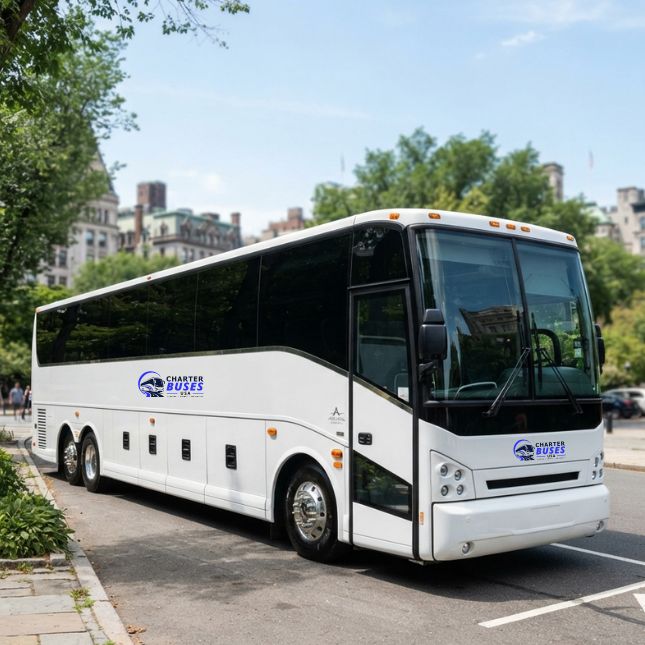 HIGH-VOLUME ROUTES
Full-size charter bus
A full-size coach is useful when many attendees leave from the same hotel or venue window, or when the route involves airport luggage and regional travel. Larger coaches may provide underfloor storage, climate control, reclining seating and an onboard restroom, depending on the assigned vehicle.
- Major hotel blocks and closing-session surges
- Airport groups with luggage
- Regional attendee or employee movements
- Longer off-site programs
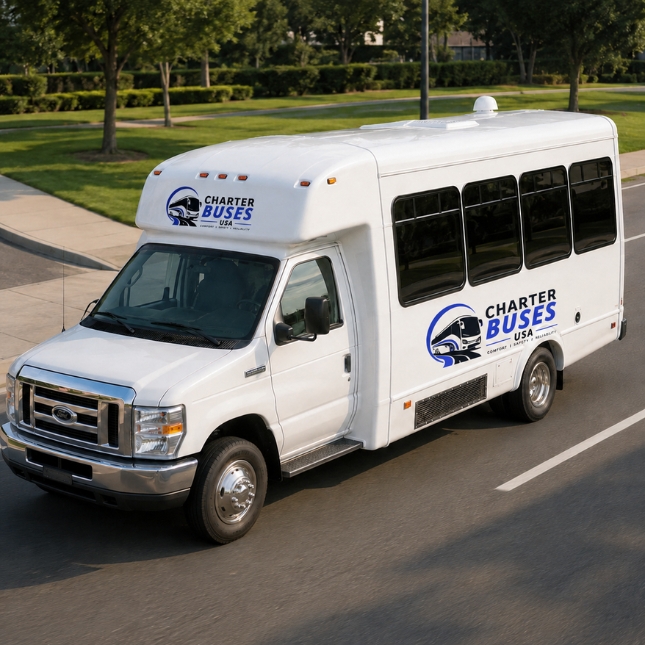 REPEATED LOOPS
Shuttle bus
Shuttle buses suit repeated service between defined stops. The practical advantage is not merely size; it is matching a vehicle to a predictable circulation job. Configurations vary, so confirm luggage capability, step height, accessibility and seating before assignment.
- Hotel-to-convention-center loops
- Remote parking connections
- Campus or convention-district circulation
- Staff and volunteer routes
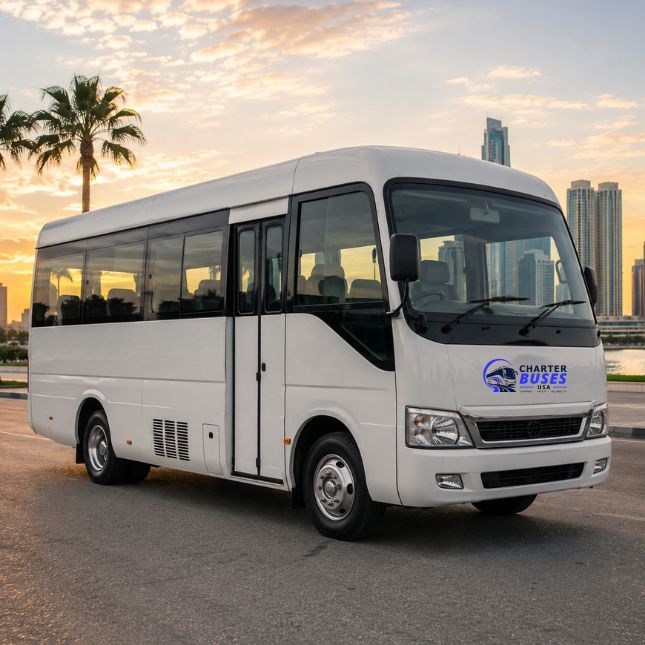 FLEXIBLE LOCAL SERVICE
Mini bus
A minibus can serve a hotel with lower pickup, a staff group, a breakout venue or a route with tighter access. Smaller capacity does not automatically mean a lower total event cost; consider how many cycles and operating hours are required to carry the same demand.
- Lower-volume hotel routes
- Speaker and event-staff movement
- Short downtown connections
- Breakout sessions or site visits
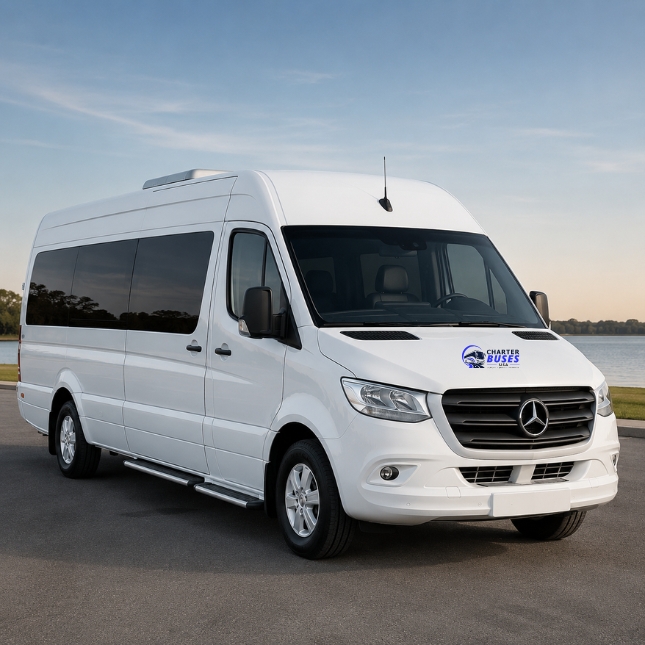 SMALL / VIP MOVEMENTS
Sprinter van
A sprinter-style vehicle can provide an efficient option for a small executive team, production crew or speaker transfer. Passenger and luggage capacity differs by configuration. It should be assigned to a defined small-group task rather than used as overflow without checking the load.
- Keynote and VIP airport transfers
- Board dinners or rehearsals
- Small production teams
- Last-mile hotel connections
Mixed fleets solve uneven demand
One vehicle type does not need to serve every assignment. A large coach can absorb the 7:00–8:30 a.m. hotel peak while a minibus covers a smaller property, and a sprinter van handles a speaker arriving after the main airport group. Review our guide on when an event should rent more than one bus, then share each route separately for an itinerary-based recommendation.
From preliminary hold to operating plan
A convention transportation timeline that improves as your data improves
You do not need final attendance to begin. Early decisions secure a workable framework; later registration and room-block data refine the buses, routes and departure windows.
01
Define scopeEarly planning
List every transportation movement under consideration: airport arrivals, hotel loops, parking, staff calls, site visits, receptions and final departures. Add event dates, host city, estimated registration, venue and hotel candidates. Mark optional movements clearly.
Decision produced: a preliminary service footprint and budget request that can be compared consistently.
02
Test accessBefore routing
Ask the venue and hotels which entrances accept motorcoaches, whether permits or reservations are required, where buses may stage and whether curb time is limited. Measure walking routes from unloading to registration, especially where mobility needs or large exhibit materials are expected.
Decision produced: approved stops and a realistic list of routing constraints.
03
Model demandRegistration opens
Update the plan with registrations by hotel, staff count, exhibitor access and airport manifests. Separate total attendance from the number expected to use the shuttle. Build peak boarding windows around the agenda and decide which routes need larger capacity, more frequent departures or a dedicated vehicle.
Decision produced: a route-by-route fleet and service-hour recommendation.
04
Publish detailsFinal weeks
Finalize route names, pickup descriptions, first and last departures, accessible-service instructions and organizer contact channels. Place consistent information in confirmation emails, the event app, hotel signs and the registration desk. Avoid publishing an exact interval if traffic conditions make it impossible to promise.
Decision produced: one attendee-facing schedule that matches the transportation order.
05
ReconcileAfter service
Record notable loads, wait times, missed or lightly used departures, access problems and itinerary changes. These observations help explain billing and improve a future event. For a recurring convention, route performance is more valuable than relying on last year’s schedule without reviewing this year’s hotels and program.
Decision produced: an operational record for the next planning cycle.
Day-of control
Operate from one version of the truth
The confirmed order, organizer, provider and venue teams should be working from the same route names, contact structure and change process.
Convention transportation control boardOperating checklist
Before first boarding
- Confirm vehicle positions and the approved loading zones.
- Verify route signs match the names published to attendees.
- Check the on-site lead, organizer and dispatch contact chain.
- Review accessible boarding requests and any planned assistance.
- Note construction, street closures, venue changes and severe weather.
During peak service
- Count or estimate boardings by route and departure.
- Keep pedestrian queues clear of moving buses and public traffic.
- Report delays with the next actionable update, not speculation.
- Protect high-priority departures tied to sessions or flights.
- Route change requests through the authorized event contact.
At service close
- Announce and clearly mark the final departure.
- Check whether staff, vendors and volunteers have later call times.
- Log lost-item reports through the confirmed process.
- Record actual service changes and additional operating time.
- Preserve load observations for post-event review.
Give the on-site lead authority—but define its limits
A transportation lead can keep boarding organized, communicate crowd conditions and relay approved changes. The role should not produce multiple conflicting instructions. Identify who may extend service, add a stop or change a departure, and how that authorization is documented. Drivers must still follow safe operating requirements, legal restrictions and feasible access.
Where available, vehicle-location information can support the operations team, but it should not replace a realistic schedule or safe communication. Learn what to ask in our guide to charter bus tracking.
Design attendee communication for the curb, not the planning room
An attendee standing outside a hotel needs a route name, exact pickup location, useful departure window and a way to get help. Avoid publishing internal vehicle numbers as the only identifier. Use the same language on signs, in the mobile app, at registration and in hotel instructions. If a bus is delayed, communicate what riders should do next.
Venue arrival planning also matters. A motorcoach can reach the property “on time” while passengers still need several minutes to unload, clear security and walk to the ballroom. The related guide on how early a charter bus should arrive explains why the attendee deadline and vehicle arrival are not the same timestamp.
Inclusive and responsible event mobility
Make accessibility and operating limits part of the first plan
Accessibility should not be added after routes, signs and vehicles are already confirmed. Ask attendees through an appropriate registration channel what transportation accommodations they require, then share functional requirements early enough to review available vehicle options and boarding locations. Avoid asking for unnecessary medical details.
Likewise, a multi-day agenda should not assume a vehicle and driver can operate indefinitely. Routing, scheduled service, deadhead movement, delays and added evening trips all consume time. A workable itinerary must fit applicable driver hours, rest requirements, local rules and safe operating conditions.
Accessible service is a route-wide responsibility
An accessible vehicle cannot solve an inaccessible pickup point. Review the path from the hotel lobby to the loading area, the curb or platform, boarding space, securement needs, companion seating, venue unloading point and the final accessible route into the building. Confirm whether the planned stop allows safe lift or ramp deployment. Temporary signs and event staff should not obstruct that space.
Tell the reservation team if a passenger uses a wheelchair or scooter, needs a lift, travels with a service animal, has difficulty using stairs or has another transportation accommodation. Vehicle availability and configuration vary, so provide notice as early as possible and reconfirm the arrangement before service. If separate equivalent transportation is proposed, the organizer should review timing and attendee communication so the passenger is not left with an inferior event experience.
Accessible path from hotel or venue entrance
Boarding clearance for the assigned equipment
Mobility-device dimensions when relevant
Companion, service-animal and seating needs
Accessible instructions in event communications
Backup contact for day-of assistance
For additional booking questions, see our guide on bringing a wheelchair on a charter bus.
Planning note: Charter Buses USA coordinates transportation based on the requested itinerary and available providers. Vehicle features, accessible configurations, carrier assignment and amenities must be confirmed for the specific reservation. This page provides general planning information, not legal or regulatory advice.
Quote logic without misleading flat rates
What affects convention shuttle bus rental pricing?
A convention quote reflects the operating work required in a specific market on specific dates. Two events with the same registration can cost differently when their hotel geography, service hours and route frequency are not the same.
Event dates and market
Vehicle supply changes by city, weekday, season and concurrent demand. Large conventions, sports weekends, graduations and holidays can affect local availability. Earlier requests generally provide more planning flexibility, but no date is confirmed until the reservation is accepted under the applicable terms.
Number and type of vehicles
A coach, minibus, shuttle bus and sprinter-style vehicle have different operating profiles. The least expensive vehicle per hour is not always the least expensive solution if it requires more cycles, leaves passengers behind at peaks or cannot carry the required luggage.
Total operating window
Pricing can reflect the time from the provider’s dispatch point through route service and return, not only the minutes when attendees are onboard. Split morning and evening service, standby, staging and last-minute extensions may influence chargeable time.
Mileage and route complexity
Distance matters, but so do repeated loops, deadhead travel, multiple hotels, airport access and off-site functions. A short congested route with slow loading can demand more operating time than a longer free-flowing transfer.
Parking, tolls and access fees
Venue permits, airport access, tolls, parking, staging charges and required driver lodging may be handled differently by itinerary or provider. Ask which estimated or pass-through expenses are included and how additional charges are documented.
Requested features and staffing
Accessibility, luggage storage, Wi-Fi, power, onboard restroom, vehicle branding or on-site transportation staff can affect which options are available. Amenities are vehicle-dependent and should be listed as requirements or preferences before the quote is finalized.
A lower quote is useful only when the scope matches
Compare proposals against the same service grid: route, date, first report, last release, vehicle category, capacity, planned stops, included fees and change terms. If one proposal excludes staging or prices only the passenger-facing window, it may not be comparable to an all-in operating plan.
Read the detailed guide to charter bus rental price factors, then request an itinerary-specific figure instead of relying on a generic national range.
Reduce unnecessary route time: group nearby hotels only when the shared stop is safe, approved and reasonable for guests.
Scale by demand period: use more capacity at morning and closing peaks, then adjust service during lower-demand hours where the itinerary permits.
Separate required and optional movements: quote the core hotel loop independently from tours, dinners or late-night additions.
Send clean data: accurate addresses, dates, agendas and passenger estimates reduce assumptions and revision cycles.
Illustrative operating blueprints
See how the same service changes at different event scales
These examples demonstrate planning logic, not guaranteed capacities, prices or schedules. A real recommendation must use verified locations, passenger demand, traffic assumptions and available vehicles.
Blueprint AOne-day professional meeting
The brief
About 140 participants meet at a suburban conference property. Most drive directly, while a smaller employee group needs transportation from one office and a second group arrives at a rail or airport-area meeting point. The program has a fixed morning start and ends with a reception.
The pressure point
Two pickup groups must arrive before registration without reserving large continuous-loop capacity that is unnecessary during the meeting.
Planning approach
Quote two timed inbound transfers and scheduled returns, with one later departure for reception guests if demand supports it. Compare a minibus and coach based on the actual load, luggage and travel distance. Make the last departure explicit.
The transportation is treated as a set of timed movements rather than an all-day convention loop.
Blueprint BThree-day association conference
The brief
Roughly 850 registrants stay at four contracted hotels. Two properties are near each other; the others sit on different corridors. The agenda includes an opening general session, exhibit hours and an off-site awards dinner. A small board group has earlier meetings.
The pressure point
Morning demand is concentrated, midday demand is light and the awards dinner creates a second venue with a later return pattern.
Planning approach
Model three hotel routes, test whether the nearby properties can safely share a stop, and increase morning capacity before the opening session. Price the dinner as a separate movement with outbound waves and published return departures. Give the board a defined small-group assignment rather than removing a bus from the attendee loop.
Capacity changes by time block, and the off-site function has its own manifest and release plan.
Blueprint CLarge trade show with citywide hotels
The brief
Several thousand participants use many hotels, but shuttle eligibility is limited to contracted blocks. Exhibitors need early access, attendees arrive later and hosted buyers have scheduled appointments. The venue assigns specific bus gates and remote staging.
The pressure point
High-volume opening and closing waves share curb space with exhibitors, taxis, private coaches and public traffic. One slow loading area can disrupt multiple routes.
Planning approach
Group hotels into simple route families, create demand estimates from pickup reports, separate exhibitor service where schedules differ, and assign on-site route marshals. Use approved staging instead of keeping buses at the curb. Establish an escalation path for full buses, traffic incidents and venue gate changes.
The shuttle becomes a managed network with route ownership, not a collection of unrelated vehicle orders.
Do not copy an example schedule blindly. A useful convention plan is specific to the current event. Hotel blocks change, cities revise curb rules, construction affects access and registrations do not always equal shuttle riders. Use these blueprints to identify questions, then provide the actual itinerary for review.
Prepare a quote-ready brief
Send the details that change the transportation answer
You can request an initial convention bus quote with tentative information. Clearly label estimates, provide exact addresses for known stops and identify the date when your organization expects to approve the final route. If the agenda changes, send one updated version rather than several disconnected messages.
Convention transportation requestOrganizer checklist
Event name, city, venue and service dates
Daily agenda with critical arrival deadlines
Every hotel and approved pickup address
Estimated riders by hotel or route
Airport flights, terminals and luggage needs
Exhibitor, speaker, staff and VIP assignments
Off-site event addresses and guest counts
Requested first and last departure windows
Accessibility and boarding requirements
Desired amenities, branding or signage
Venue loading, permit and staging contacts
Authorized on-site decision maker
Attach a spreadsheet or draft agenda if it is easier than typing every movement. Include version dates on working documents so the latest route information is clear.
A practical reservation path
How Charter Buses USA coordinates convention transportation
Complex service becomes easier to review when every route has a purpose and every revision has an owner. Our reservation team gathers the itinerary, helps compare available vehicle categories and prepares the requested transportation for confirmation.
Share the event footprint
Send the dates, city, venue, hotels, agenda, passenger estimates and special requirements. We separate airport transfers, hotel loops and off-site events so each movement can be evaluated.
Review route and fleet options
The reservation team considers service hours, stops, group size, luggage, accessibility and desired frequency. Where appropriate, options may combine full-size coaches, minibuses, shuttles or sprinter-style vehicles.
Confirm the written scope
Review dates, times, addresses, vehicle descriptions, included costs, payment and cancellation terms, organizer contacts and open items. Requested features should appear in the confirmation rather than remain an informal assumption.
Keep changes controlled
As registration and agenda data develop, submit updates through the designated contact. Before service, confirm the final operating schedule and provide attendees with pickup instructions that match it.
Itinerary-first recommendations
Vehicle suggestions follow the assignment, passenger load and access conditions instead of applying one bus type to every event.
Nationwide coordination
Request local, regional or multi-city convention transportation through one reservation channel, subject to route and vehicle availability.
24/7 reservation support
Call when you need to discuss a new request, clarify a confirmed trip or route an urgent service concern through the appropriate process.
Continue planning
Convention transportation resources for your next decision
Use these related service, vehicle and planning pages when a specific part of the itinerary needs more detail.
ServiceAirport charter bus rental
Plan terminal pickups, group arrivals, luggage requirements and hotel transfers for convention travelers.
Explore airport transportation ServiceCorporate charter bus rentalReview broader transportation for business meetings, employee programs, retreats and company events.
Explore corporate transportation Planning guideConvention transportation guideGo deeper into fleet sizing, scheduling, contracts and planning mistakes for multi-day events.
Read the convention guide Planning guideBusiness conference bus guideCompare transportation considerations for company-led conferences and professional meetings.
Read the conference guide OperationsCharter bus parking rulesUnderstand why venues, hotels and cities may require approved loading, staging and parking plans.
Review parking considerations FleetCompare group vehiclesSee charter buses, shuttle buses, minibuses, executive coaches, sprinter vans and other categories.
Compare vehicle optionsConvention shuttle questions
Frequently asked questions about convention bus rentals
Answers are general because availability, carrier assignment, features, costs and operating requirements depend on the actual city, date and itinerary.
How much does a convention shuttle bus rental cost?
Pricing depends on the event city and dates, number and type of vehicles, total operating hours, route mileage, hotel stops, service frequency, airport or venue fees, tolls, parking, driver requirements and requested features. A three-day continuous shuttle network will be priced differently from two timed transfers for a one-day meeting.
For a meaningful comparison, give each company the same route grid and ask what is included. The best way to receive a relevant figure is to submit the current agenda, addresses and passenger estimates for a custom quote.
How far in advance should we reserve convention transportation?
Begin requesting options when the venue, event dates and likely hotel footprint are known. Large events, multi-vehicle programs and conventions held during high-demand periods benefit from earlier planning because local vehicle availability can narrow. You do not need final registration to start; estimated attendance and tentative schedules can support a preliminary review.
Update the plan as room pickup and registration develop. Service is not reserved merely because an estimate was requested, so review the confirmation and applicable payment terms to understand when your vehicles and itinerary are secured.
Can a shuttle serve several convention hotels?
Yes, a route can connect several approved hotel stops when geography, passenger demand and achievable cycle time support it. Nearby hotels may sometimes share one pickup point, while larger or more distant properties may need direct service. Confirm that the walking route and shared stop are appropriate for guests with disabilities and that the hotel permits the planned loading.
Adding every hotel to one loop can make service slow and unpredictable. For a larger program, separate route families usually make attendee instructions and frequency easier to manage.
How do we estimate the number of buses required?
Start with riders expected during each departure window, not total convention registration. Divide demand by practical vehicle capacity, then account for the time one bus needs to load, travel, unload, stage and return. If a bus cannot complete another cycle before the critical arrival deadline, its seats cannot be counted twice for that peak.
Registration by hotel, historical pickup reports and current room-block data improve the model. Also include staff, speakers, exhibitors, companions, mobility devices, luggage and equipment that may affect practical capacity.
Is a professional driver included with the bus?
Yes. A chartered convention bus is arranged with a professional driver; the event organizer does not provide or operate the driver. The confirmed itinerary must allow the service to be performed within applicable operating requirements and safe conditions.
Do not make direct schedule requests that conflict with the authorized itinerary or require unsafe or prohibited operation. Route substantive changes through the designated organizer contact and reservation or operations channel so timing, access and any additional charges can be reviewed.
Can we request wheelchair-accessible convention transportation?
Share accessibility requirements as early as possible so available configurations and appropriate boarding locations can be reviewed for the specific market and date. Explain functional needs such as a lift, space for a wheelchair or scooter, companion seating or difficulty using stairs without requesting unnecessary medical information.
Accessibility includes the path to and from the vehicle. Confirm that hotel and venue stops provide enough clearance for boarding equipment and connect to an accessible entrance. Reconfirm the arrangement and attendee instructions before the event.
Can a charter bus wait during the conference?
Standby or staged service may be arranged when it is included in the itinerary and an approved location is available. Many convention centers and hotels limit curb dwell time, so a vehicle may need to unload and move to a remote staging or legal parking area. Waiting time can also affect the operating window and quote.
Tell the reservation team whether you need a one-way transfer, continuous circulation, scheduled returns or a vehicle held for a specific group. Review our guide on whether a charter bus can wait during an event.
Can airport transfers be included with the convention shuttle?
Yes. Airport transportation can be included as a separate route or connected to the broader convention plan. Consolidated arrival waves may suit a coach, while scattered speakers or VIP guests may need smaller timed transfers. Send flight numbers, terminals, passenger counts, luggage estimates, hotel destinations and an arrival contact.
Airport access and staging rules differ. Travelers should receive the confirmed meeting location and instructions rather than assuming the bus can wait at baggage claim or an ordinary passenger curb.
Can we change routes or times after booking?
Request changes as soon as the agenda, hotel list or passenger demand changes. A revision may be possible, but it is subject to vehicle and driver availability, route feasibility, access, applicable terms and potential price changes. An extra stop can alter cycle time for every later departure, so it should not be treated as a minor edit without review.
Use one authorized event contact and identify the version date of every updated schedule. Do not assume a requested change is approved until it appears in the appropriate written confirmation.
Are parking, tolls and venue fees included in the quote?
They may be included, estimated, billed separately or treated as pass-through expenses depending on the itinerary and provider. Ask how tolls, airport charges, permits, convention-center access, parking, remote staging and required driver lodging are handled. Also review what happens if the event extends beyond the confirmed operating window.
A clean proposal should identify the transportation scope and explain known exclusions or variable expenses. Keep receipts or service-change records when the applicable terms require reconciliation after the event.
Are Wi-Fi, power outlets and onboard restrooms guaranteed?
No amenity should be assumed from the words “charter bus” or “shuttle bus.” Wi-Fi, charging outlets, monitors, public-address systems, reclining seats, luggage bays and onboard restrooms depend on the vehicle category and the specific unit available. A full-size motorcoach is more likely to offer certain long-distance features than a compact local shuttle, but configurations still vary.
List essential features separately from preferences when requesting the quote. If an amenity is necessary for speakers, event production or attendee accessibility, make sure it is addressed in the written reservation details and reconfirmed for the assigned service.
Can convention shuttles use event branding and route signs?
Route signs, windshield placards and event identifiers may be possible when they comply with vehicle, provider, venue and local requirements. Full vehicle wraps or adhesive branding require specific approval and more lead time; do not attach materials to a bus without authorization. Ask what dimensions, materials and installation methods are permitted.
Operational clarity should come before decoration. Use large, high-contrast route names that match the event app and hotel signs. Distinguish official shuttles from sponsor or private coaches, and avoid using a color as the only identifier so instructions remain understandable to more attendees.
Move from agenda to operating plan
Request a convention shuttle bus rental built for your routes
Send your event dates, venue, hotel list, draft agenda, estimated ridership and accessibility requirements. Charter Buses USA will review the requested movements and help you compare transportation options for the specific city and schedule.