
Can I Bring a Wheelchair on a Charter Bus? What Every Traveler Should Know

Planning group travel gets complicated fast when accessibility questions come into play. If you or someone in your group uses a wheelchair, one of the first questions you’ll ask before booking is simple: can I bring a wheelchair on a charter bus? The short answer is yes, but the details matter a lot more than a one-word answer can capture.
In this guide, you’ll learn exactly how wheelchair accessible charter bus rentals work, what federal law requires, which bus types offer lifts or ramps, how securement systems keep passengers safe, and what questions to ask before you book. Whether you’re organizing a school field trip, a wedding, a corporate retreat, or a family reunion, this article will help you plan a trip that works for every passenger, not just the ones who can climb three steps to board.
Can I Bring a Wheelchair on a Charter Bus? The Short Answer
Yes, you can bring a wheelchair on a charter bus. Most charter bus companies either operate ADA-compliant vehicles equipped with lifts or ramps, or they can arrange one for your trip if you request it in advance. However, not every bus in a company’s fleet has accessibility features built in, so the key is communicating your needs early in the booking process.
Charter bus companies are generally not exempt from federal accessibility rules just because they operate on a charter or tour basis rather than fixed-route service. As a result, reputable operators plan for wheelchair users as a normal part of doing business, not as a special exception. Still, the level of accessibility can vary widely between companies, bus models, and even specific vehicles within the same fleet.
Why This Question Comes Up So Often
Wheelchair users, their families, and event organizers ask this question constantly because standard motorcoaches were historically built with steep steps and narrow aisles that weren’t designed with mobility devices in mind. Add to that inconsistent information on company websites, and it’s easy to see why travelers want a clear answer before they commit to a rental.
Fortunately, the charter bus industry has made real progress. Many operators now maintain at least one or two wheelchair-accessible vehicles specifically to meet demand from schools, senior groups, healthcare facilities, and tour companies serving mixed-ability groups.
Understanding ADA Requirements for Charter Buses
The Americans with Disabilities Act (ADA) sets the baseline for accessibility in transportation, including over-the-road buses used for charter and tour services. The rules here are more nuanced than they are for public transit, so it helps to understand how they actually apply.
The 48-Hour Rule
Under Department of Transportation regulations implementing the ADA, over-the-road bus (OTRB) companies with fleets of a certain size must provide accessible vehicles for individuals with disabilities, generally with 48 hours’ advance notice. This is often referred to as the
For related reading, see our guide on What Can You Bring on a Charter Bus? A Complete Packing Guide.
48-hour rule, and it applies specifically to companies operating fleets of over-the-road buses. If a charter bus company falls under this requirement and receives proper advance notice, they are obligated to provide a vehicle equipped with a wheelchair lift or ramp for the trip in question.
That said, the regulation includes some important nuances that trip planners should understand:
- Fleet size matters. Companies with 100 or more vehicles in their fleet are generally required to have a higher percentage of accessible buses immediately available. Smaller operators may have fewer accessible units, which is exactly why advance notice matters so much.
- Notice timing is everything. Requesting an accessible vehicle at the last minute, especially within 24 hours of departure, significantly reduces the odds that one will be available. The 48-hour window exists because retrofitting a schedule to swap in a lift-equipped coach takes coordination.
- Historical or unique vehicles may be exempt. Some specialty vehicles, such as vintage buses used for niche tours, may fall outside standard ADA vehicle requirements, though the company must still offer equivalent service through another accessible option.
It’s worth noting that ADA compliance for charter and tour bus companies is handled a bit differently than it is for fixed-route public transit systems. Public transit agencies must make their entire fleet accessible over time. Charter and tour companies, by contrast, are allowed to meet demand through a mix of accessible and standard vehicles, provided they give travelers with disabilities the same opportunity to travel with reasonable advance notice.
What Counts as a “Charter Bus Company” Under the Law
Not every transportation provider is treated the same way under ADA regulations. A company that exclusively offers private, closed-door charter service to a single group (as opposed to open-to-the-public tours) still has obligations, but the specifics can vary depending on whether the service is considered “demand-responsive” or a fixed schedule. If accessibility is a priority for your trip, the safest approach is to ask the company directly how they handle these requests rather than trying to interpret the regulation yourself.
Types of Wheelchair-Accessible Charter Buses
Not all accessible buses are built the same way. When you’re booking, it helps to know what you’re actually asking for so you can confirm the vehicle matches your needs.
Lift-Equipped Coaches
These are full-size motorcoaches retrofitted with a hydraulic or electric lift, usually located near the front or mid-section of the bus. The lift lowers to ground level, allows the wheelchair user to board, then raises them to the level of the bus floor. Lift-equipped coaches typically have a designated wheelchair securement area with tie-down points and a companion seat nearby.
Ramp-Equipped Minibuses and Shuttles
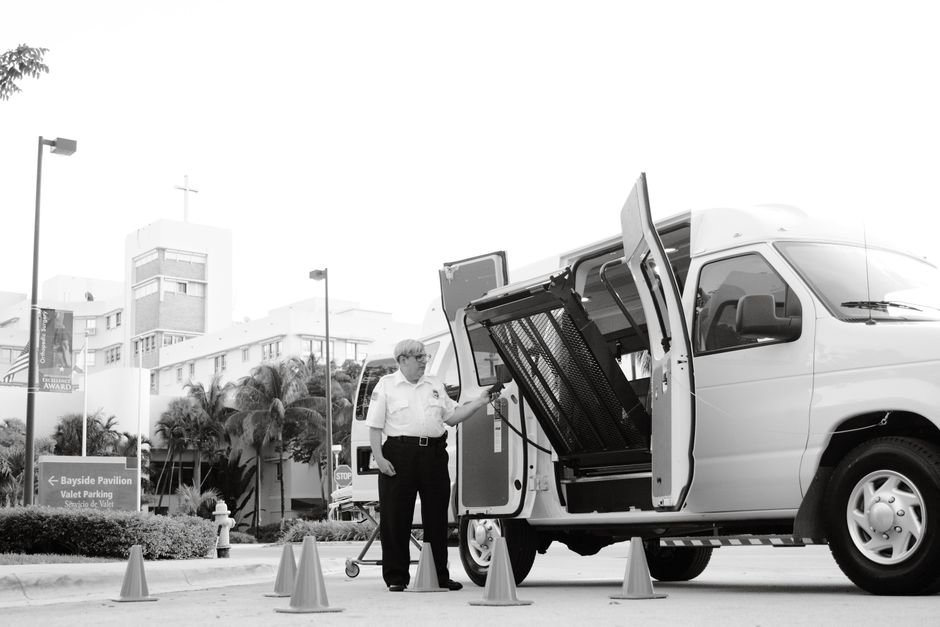
For smaller groups, some companies offer accessible minibuses or shuttle buses with a fold-out or slide-out ramp instead of a lift. Ramps tend to be faster to deploy and require less mechanical upkeep, though they usually work best on level ground since steep ramp angles can be difficult for manual wheelchair users to navigate independently.
Low-Floor Accessible Buses
Less common in the charter world but increasingly available in urban markets, low-floor buses eliminate the need for a lift altogether by keeping the entryway close to curb height, similar to accessible city transit buses. These are worth asking about if your trip is primarily within a metro area.
Whichever vehicle type is available, ask the operator directly about the width of the doorway, the incline of the ramp (if applicable), and the weight capacity of the lift. These details matter more than the general category of the bus.
How to Request a Wheelchair-Accessible Charter Bus
Booking an accessible charter bus isn’t drastically different from booking a standard one, but a few extra steps make the process go far more smoothly.
1. Disclose Accessibility Needs at the Time of Quote
Don’t wait until after you’ve paid a deposit to mention that a passenger uses a wheelchair. Bring it up during your very first conversation with the charter company or broker. This gives them time to check fleet availability and quote you accurately, since accessible vehicles sometimes carry different pricing or availability windows than standard coaches.
2. Specify the Type of Mobility Device
“Wheelchair” can mean a lot of things: a lightweight manual chair, a heavy power wheelchair, a scooter, or a mobility device combined with an oxygen tank or other medical equipment. The more specific you are, the better the company can match you with an appropriately equipped vehicle. Power wheelchairs and scooters are often significantly heavier than manual chairs, sometimes exceeding 300 pounds, which affects which lifts can safely accommodate them.
3. Confirm Securement Capability
Ask whether the bus has a four-point tie-down securement system or a rear-facing securement station. Reputable operators will be able to explain exactly how the wheelchair will be secured during transit and whether the passenger will remain in their wheelchair or transfer to a standard bus seat.
4. Get It in Writing
Once the accessible vehicle is confirmed, ask for that detail to be included in your written contract or confirmation email. This protects you if there’s ever a mix-up on the day of the trip, and it gives you something concrete to reference if the vehicle that shows up doesn’t match what was promised.
5. Reconfirm Close to the Travel Date
Even after initial confirmation, it’s smart to check in with the company a few days before departure, especially for group trips with multiple moving parts. This is a good time to review your pre-trip checklist as a group so nothing falls through the cracks, accessibility-related or otherwise.
What Happens on Travel Day: Boarding, Securement, and Seating
Understanding what actually happens when a wheelchair user boards a charter bus can ease a lot of pre-trip anxiety, especially for first-time travelers or parents arranging transportation for a child with a disability.
The Boarding Process
On a lift-equipped coach, the driver or an attendant will typically position the bus so the lift has enough clearance, then lower the platform to ground level. The wheelchair user rolls onto the platform, and the lift raises them to the bus floor. From there, the wheelchair is guided to its designated securement space, generally located near the front of the bus or in a widened aisle section.
Securement Procedures
Federal guidelines require accessible over-the-road buses to have securement systems capable of restraining the wheelchair during transit, similar to how a seatbelt restrains a passenger. Most systems use a combination of floor anchors and straps that connect to four points on the wheelchair frame. Drivers should be trained on how to use this equipment correctly, and passengers or caregivers are welcome to ask questions or request adjustments if something doesn’t feel secure.
Companion Seating
Accessible buses are generally designed with at least one companion seat directly next to the wheelchair securement area, so a caregiver, family member, or travel companion can sit close by throughout the trip. If you’re traveling as a group and this matters to you, mention it when booking so the seating chart can be arranged accordingly.
Transferring to a Standard Seat
Some wheelchair users prefer to transfer out of their wheelchair and into a regular bus seat for comfort during longer trips, with the wheelchair stored separately (often folded and secured in the luggage bay or a designated storage area). This is a personal choice and should be discussed with the driver or company ahead of time, particularly if assistance is needed for the transfer.
Wheelchairs, Scooters, and Other Mobility Devices: What’s Typically Allowed
Charter bus companies generally accommodate a range of mobility devices, but there are some practical limits worth knowing about before you book.
Manual Wheelchairs
These are the easiest to accommodate. They’re lightweight, foldable in most cases, and compatible with virtually all lift and ramp systems used on accessible charter buses.
Power Wheelchairs
Power wheelchairs are heavier and bulkier, and their dimensions vary quite a bit depending on the model. Standard ADA-compliant lifts are designed to handle devices up to 600 pounds combined with the passenger’s weight, but it’s still worth confirming the exact specifications of your chair when booking, especially for larger models.
Mobility Scooters
Three- and four-wheeled scooters are typically accepted on accessible buses, though their turning radius can make maneuvering in a tight bus aisle more challenging. If you use a scooter, let the company know the model and dimensions in advance so the driver can plan the boarding and securement process accordingly.
Portable Oxygen Concentrators and Medical Equipment
Many wheelchair users also travel with supplemental medical equipment. Most charter companies allow portable oxygen concentrators and similar devices on board without issue, but battery-powered equipment may need to comply with additional guidelines, particularly for longer trips. Mentioning this equipment during booking prevents any surprises on travel day. For a broader rundown of what’s allowed in the cabin, our packing guide covers general item restrictions that apply to all passengers.
Questions to Ask Before You Book
A short conversation with the charter company upfront can save a lot of stress later. Here are the key questions worth asking:
- Does your fleet include wheelchair-accessible vehicles, and how many?
- What type of lift or ramp is installed, and what’s its weight capacity?
- How wide is the boarding door and the interior aisle?
- Is there a designated wheelchair securement area with a four-point tie-down system?
- Is there a companion seat directly next to the securement area?
- How much advance notice do you need to guarantee an accessible vehicle?
- Is there an accessible restroom on board, if the trip is long-distance?
- Will the driver or an attendant be trained to operate the lift and securement equipment?
- Is there an additional fee for booking an accessible vehicle?
On that last point, reputable operators generally do not charge extra simply for providing an ADA-compliant vehicle, since doing so would run against the spirit (and often the letter) of federal accessibility law. If a company tries to charge a premium purely for accessibility accommodations, treat that as a red flag and consider requesting quotes elsewhere.
Planning Group Trips With Wheelchair Users
Event organizers, school administrators, and tour coordinators often manage trips that include a mix of wheelchair users and ambulatory travelers. A little extra planning goes a long way in making these trips run smoothly for everyone.
Build Extra Time Into the Schedule
Boarding and deboarding via a wheelchair lift takes longer than a standard staircase entry, especially if multiple passengers need the lift. When mapping out your pickup and drop-off schedule, add a buffer of 10 to 15 minutes at each stop to account for this, particularly at busy pickup zones like schools, event venues, or airports.
Coordinate Pickup Locations Carefully
Not every curb or parking lot offers the flat, unobstructed space a lift needs to deploy safely. When scouting pickup and drop-off points, look for level pavement with enough clearance on the side where the lift will extend. If you’re working with a venue you haven’t used before, it’s worth doing a quick site visit or at least asking detailed questions about the loading area.
Communicate With the Whole Group
If your trip includes passengers with varying mobility needs, let the group know ahead of time roughly how boarding will work and how long it might take. This manages expectations and reduces impatience or confusion when the bus arrives.
Choose the Right Bus Size for Your Group
Accessibility needs can influence which bus size makes the most sense for your trip. A smaller group with a wheelchair user might do better with a compact, ramp-equipped shuttle rather than a full-size coach, while larger mixed-ability groups often need a full-size lift-equipped motorcoach with enough seating and securement space. If you’re unsure which fits your group, our guides on choosing a bus for large groups and choosing a bus for small groups break down the options in more detail.
Long-Distance and Overnight Trips With a Wheelchair
Multi-day charter trips introduce a few extra considerations beyond a standard day trip. Rest stops, restroom access, and overall comfort all deserve some upfront planning.
Restroom Access
Most full-size motorcoaches include an onboard restroom, but not all of them are wheelchair accessible due to space constraints. If restroom access is essential, confirm this specifically when booking, and build extra rest stops into your itinerary at accessible highway service plazas as a backup plan.
Rest Stop Planning
When mapping out a long-distance route, prioritize stops known for accessible facilities, wide walkways, and accessible parking near the entrance. Many major interstate rest areas and travel plazas have improved accessibility in recent years, but it’s still smart to verify ahead of time rather than assume. Our long-distance travel tips guide covers additional strategies for keeping multi-hour trips comfortable for the entire group.
Overnight Comfort
If your trip involves an overnight stay, coordinate with hotels in advance to confirm accessible rooms are reserved and that the property can accommodate mobility devices in common areas, elevators, and dining spaces. It’s an extra step, but it prevents last-minute scrambling at check-in.
What If a Charter Company Refuses Service?
Unfortunately, not every operator handles accessibility requests correctly, and travelers with disabilities do occasionally run into pushback or outright refusal. It helps to know your rights if this happens.
Refusal Based Solely on Disability Is Illegal
Under the ADA and related DOT regulations, a charter or tour bus company generally cannot refuse service to a passenger simply because they use a wheelchair, provided reasonable advance notice was given and the company falls under applicable accessibility requirements. Refusing service purely on the basis of disability is not just poor customer service, it can be a legal violation.
Document Everything
If you experience a refusal or an accessibility failure (such as a broken lift with no backup plan offered), document the communication in writing. Save emails, note dates and times of phone calls, and keep any confirmation paperwork showing that an accessible vehicle was promised.
Escalate If Necessary
Complaints related to ADA violations in over-the-road bus service can be filed with the U.S. Department of Transportation’s Federal Motor Carrier Safety Administration or the Department of Justice, depending on the specifics of the situation. Most reputable charter companies want to avoid this kind of escalation and will work to resolve issues directly, so raising the concern with a manager or the company’s customer service team is often a faster first step.
Tips for a Smoother Accessible Charter Bus Experience
A few practical habits can make a real difference in how smoothly your trip goes:
- Book early. Accessible vehicles are a smaller subset of most fleets, so they can book up faster, especially during busy travel seasons like spring break, prom season, or summer camp months.
- Take photos of your mobility device’s dimensions and weight rating. Having this information ready speeds up conversations with the charter company and driver.
- Introduce yourself to the driver before departure. A quick conversation about how you prefer to board, transfer, or be secured helps the driver assist you more confidently and respectfully.
- Pack essential medical supplies in an easily accessible bag. Keep items like medication, charging cables for power wheelchairs, or spare parts within reach rather than stored in the undercarriage luggage bay.
- Ask about backup plans. Mechanical issues happen. Ask what the company’s contingency is if the primary accessible vehicle experiences a lift malfunction on travel day.
Frequently Asked Questions
Can any charter bus accommodate a wheelchair?
Not every vehicle in a charter company’s fleet is wheelchair accessible. Most operators maintain a limited number of lift- or ramp-equipped buses specifically for this purpose, so it’s important to request one specifically rather than assume any bus you book will work.
How much notice do I need to give for a wheelchair-accessible bus?
Federal regulations generally require 48 hours’ notice for companies that fall under over-the-road bus accessibility rules, but booking a week or more in advance greatly improves your odds of securing the right vehicle, especially during peak travel periods.
Will I have to pay extra for an accessible charter bus?
Reputable companies typically do not charge extra purely for accessibility accommodations. If you’re quoted a significantly higher price specifically because a wheelchair-accessible vehicle is required, it’s worth asking for clarification or comparing quotes from other operators.
Can I stay in my wheelchair during the trip, or do I need to transfer to a bus seat?
Both options are usually available. Many wheelchair users remain in their chair, secured in a designated area with a four-point tie-down system, while others prefer to transfer to a standard seat for comfort. This is a personal choice and should be discussed with the company ahead of time.
What should I do if a charter company says they don’t have an accessible bus available?
Ask if they can source one through a partner company or affiliate network, which many brokers and larger operators are able to do. If they simply refuse without offering alternatives, and reasonable notice was given, it may be worth documenting the interaction and looking into your rights under ADA-related transportation regulations.
Final Thoughts
Bringing a wheelchair on a charter bus is absolutely possible, and thanks to ongoing improvements across the industry, it’s becoming a much smoother experience than it used to be. The key is proactive communication: disclose accessibility needs early, ask specific questions about the vehicle’s lift or ramp system, confirm securement procedures, and get everything in writing. Whether you’re an individual traveler planning a personal trip or an organizer coordinating a mixed-ability group for a school outing, corporate retreat, or multi-day tour, a little upfront diligence ensures that everyone gets where they’re going comfortably, safely, and with dignity. With the right operator and the right preparation, mobility devices shouldn’t be a barrier to enjoying the convenience and comfort that charter bus travel offers.