How to Write a Charter Bus Transportation RFP for Your Organization

Most bus procurements go sideways on page one. A buyer sends out a short note asking five carriers for “a quote for transportation this school year,” and three weeks later the responses cannot be compared. One carrier priced a 56-passenger coach with a five-hour minimum. Another assumed a 35-passenger mini bus and a flat daily rate. A third left out tolls, parking and driver lodging entirely. Nobody did anything wrong. They simply priced different assumptions because the request never described the work. A well-built charter bus transportation RFP fixes that by telling every bidder exactly what you need, how to price it and how you will decide. This guide shows how to write a transportation RFP section by section, with sample clauses you can adapt.
RFP, RFQ or Simple Quote? Pick the Right Tool First
A single round trip for a department outing does not justify a 20-page document and a scoring committee. A two-year contract covering athletics, field trips and campus shuttles probably does. Before you write anything, decide which instrument fits the size and shape of the spend.
The table below is a general decision aid, not a rule. Your organization’s procurement policy and any public bidding thresholds that apply to you always come first. Many public entities and universities set dollar thresholds above which formal competitive solicitation is required, so check with your purchasing office before choosing a path.
| Situation | Usually a fit | Why |
|---|---|---|
| One trip, small spend, clear details | Simple quote | Two or three written quotes on the same itinerary are often enough if your policy allows it. |
| Several trips, defined specs, price is the main factor | RFQ (request for quotation) | You already know what you want; bidders compete on price for a fixed scope. |
| Recurring service over a semester, year or multiple years | RFP | You need to weigh safety record, capacity, service levels and price together. |
| Mixed trip types (shuttles, overnight trips, events) | RFP | Bidders need room to explain how they would staff and equip different kinds of work. |
| Spend above your policy’s formal bid threshold | Whatever your policy requires | Thresholds, advertising rules and award rules are set by your organization or jurisdiction. |
| Federal agency or federally funded program | Follow agency acquisition rules | Government buyers carry extra compliance steps beyond this general guide. |
If you buy for a federal, state or local agency, the procurement steps around registration, set-asides and travel policy are covered in our guide to charter bus planning and compliance for government travel. The rest of this article stays organization-agnostic, so it works for a school district, a university, a corporate facilities team, a nonprofit or a city buyer.
The RFP Outline: 12 Sections to Build
Here is the backbone of a usable charter bus transportation RFP. Each section below lists what to include and offers a short sample clause. Replace anything in [BRACKETS] and have purchasing and legal review the final language.
1. Background and Objectives
Bidders write better proposals when they understand who you are and why you are buying. Two or three paragraphs are plenty.
- A short description of your organization and the riders (students, employees, members, the public).
- What prompted the solicitation: a contract ending, new programs, growth, a service problem.
- Three to five objectives, such as on-time performance, accessible service, a single point of contact or predictable budgeting.
- Whether you intend to award to one carrier, several carriers or a primary and a backup.
Sample clause: [ORGANIZATION] seeks one or more qualified motorcoach carriers to provide charter transportation for [PROGRAMS] from [START DATE] through [END DATE]. Our objectives are safe, on-time service; accessible vehicles on request; clear all-in pricing; and a single dispatch contact for each trip.
2. Scope of Service
This is the section that prevents the “different assumptions” problem. Describe the work in enough detail that two bidders reading it independently would price the same trip.
- Trip types: local day trips, out-of-town same-day trips, overnight or multi-day trips, recurring shuttles, airport transfers, event loops.
- Known dates and blackout periods, plus any recurring routes with stops and times.
- Typical group sizes and the largest single movement you expect.
- An estimated volume table (clearly labeled as an estimate, not a guarantee).
- Geographic area served and any trips that may cross state lines.
An estimated volumes table gives bidders something concrete to plan fleet and drivers around:
| Trip type | Est. trips per year | Typical riders | Typical duration | Notes |
|---|---|---|---|---|
| [Local day trip] | [40] | [45 to 55] | [5 to 7 hours] | [Weekday, school hours] |
| [Out-of-town same day] | [12] | [50] | [10 to 12 hours] | [Weekends, 150 to 250 miles each way] |
| [Overnight trip] | [4] | [40] | [2 to 3 days] | [Driver lodging required] |
| [Recurring shuttle] | [160 service days] | [20 to 30 per run] | [Peak hours AM and PM] | [Fixed route, 3 stops] |
Sample clause: Volumes shown are good-faith estimates based on [PRIOR YEAR] usage and are provided for pricing purposes only. [ORGANIZATION] does not guarantee any minimum number of trips.
If a recurring shuttle is new for you, consider phrasing it as a trial period with a review point. Our article on testing a shuttle route with a pilot program explains how to set that up before you commit to a long term.
3. Vehicle Requirements
Specify what you need rather than what you prefer, and separate the two. Over-specifying can shrink your bidder pool for no real benefit.
- Vehicle types and seating capacities you expect to use (full-size motorcoach, mini bus, executive coach, shuttle bus, van).
- Accessibility: wheelchair lift availability, the notice period carriers need and how many wheelchair positions a vehicle offers.
- Amenities that matter for your trips: restroom on board for long runs, under-floor luggage space, power outlets, PA system, Wi-Fi.
- If your organization sets a maximum vehicle age, state it, and ask bidders to list model years for vehicles they would assign.
- Cleanliness and condition standards, and whether you may inspect vehicles.
Lift-equipped coaches typically need advance notice, so your RFP should ask how much. Our overview of what to expect from ADA accessible charter buses covers the questions worth asking.
Sample clause: Proposers shall list each vehicle type offered, seating capacity, model year range and amenities. Proposers shall state whether wheelchair lift-equipped vehicles are available and the minimum advance notice required to assign one.
4. Safety and Compliance
This is where an RFP earns its keep. A low price means little if the carrier is not properly registered or has a poor safety history. Ask for documentation, then verify it yourself.
- USDOT number and, for for-hire interstate passenger carriers, operating authority (often called an MC number). You can check both on the FMCSA SAFER system.
- Current FMCSA safety rating, if the carrier has one, and how the bidder addresses any inspection or crash history.
- A statement of compliance with FMCSA driver qualification file requirements.
- A statement of compliance with drug and alcohol testing rules for CDL drivers, including use of the FMCSA Drug and Alcohol Clearinghouse.
- How the carrier plans trips around federal hours-of-service rules. For passenger carriers, a driver may drive up to 10 hours after 8 consecutive hours off duty and may not drive after 15 hours on duty. Long days may need a second driver or planned rest.
- Vehicle maintenance and inspection practices, plus any additional screening your organization requires for drivers transporting minors.
For a plain-language walk-through of what federal oversight covers, link your committee to how the FMCSA regulates charter bus safety.
Sample clause: Proposers shall provide their USDOT number and operating authority number. [ORGANIZATION] will verify registration, authority status and safety information through FMCSA SAFER before award. Proposers shall certify compliance with applicable FMCSA driver qualification, drug and alcohol testing, and hours-of-service requirements.
5. Insurance
Federal rules set a floor. Under 49 CFR 387.33, for-hire passenger carriers in interstate commerce must carry minimum public liability coverage of $5 million for vehicles seating 16 or more passengers including the driver, and $1.5 million for vehicles seating 15 or fewer including the driver.
- Auto liability limits (state the federal minimum and any higher limit your organization may require).
- General liability and workers’ compensation where required by state law.
- Whether your organization must be named as certificate holder and as additional insured.
- Notice of cancellation requirements and when a certificate of insurance (COI) must be delivered.
Sample clause: The successful proposer shall maintain auto liability coverage of not less than [AMOUNT, NOT LESS THAN THE APPLICABLE FEDERAL MINIMUM] per occurrence and shall name [ORGANIZATION] as additional insured. A certificate of insurance shall be provided before the first trip and upon each renewal.
Your evaluators can use our checklist on how to verify a charter bus company is licensed and insured to confirm what bidders submit.
6. Pricing Format
This section matters more than any other for comparing bids. If you let each carrier present prices its own way, you will spend days reconstructing totals. Give bidders a pricing form and require them to fill in every line, writing “included” or “not applicable” rather than leaving blanks. If you want a refresher on how carriers build a price, see how charter bus quotes are calculated.
| Pricing item | Motorcoach (56 seats) | Mini bus | Other vehicle | Notes from bidder |
|---|---|---|---|---|
| Hourly rate | [ ] | [ ] | [ ] | [ ] |
| Minimum hours per booking | [ ] | [ ] | [ ] | [ ] |
| Daily rate (state hours included) | [ ] | [ ] | [ ] | [ ] |
| Mileage rate (if used) | [ ] | [ ] | [ ] | [ ] |
| Deadhead or garage-to-garage time | [ ] | [ ] | [ ] | [ ] |
| Driver lodging and meals (overnight) | [ ] | [ ] | [ ] | [ ] |
| Tolls | [ ] | [ ] | [ ] | [ ] |
| Parking and permits | [ ] | [ ] | [ ] | [ ] |
| Fuel surcharge policy | [ ] | [ ] | [ ] | [ ] |
| Gratuity policy | [ ] | [ ] | [ ] | [ ] |
| Cancellation fees and deadlines | [ ] | [ ] | [ ] | [ ] |
| Second driver (when required) | [ ] | [ ] | [ ] | [ ] |
Sample clause: Proposers shall complete Attachment [X], Pricing Form, in full. Any cost not listed on the Pricing Form will not be payable. Rates shall remain firm for [PERIOD], with any adjustment for renewal terms subject to [ADJUSTMENT METHOD].
7. Service Levels and Communication
Spell out what you expect when things go right and when they go wrong.
- A named account contact and a dispatch line staffed during all trip hours.
- Response time for booking requests and for day-of issues.
- Arrival standard, such as the coach on site [15] minutes before scheduled departure.
- Replacement vehicle plan and expected timing if a bus breaks down.
- Incident and accident reporting: who gets notified, how fast and in what format.
- Driver information shared before the trip (name, contact number, vehicle number).
Sample clause: The contractor shall notify [CONTACT] within [30] minutes of any delay expected to exceed [15] minutes, and within [1] hour of any incident involving injury, property damage or a vehicle breakdown. The contractor shall describe its replacement vehicle procedure in its proposal.
8. Invoicing and Payment Terms
- When invoices are issued (per trip, monthly, after each trip closes).
- Required invoice details: PO number, trip date, trip ID, vehicle type, hours billed, itemized extras.
- Payment terms set by your organization, and whether deposits are allowed.
- Accepted payment methods and your vendor setup steps (ACH form, vendor registration).
- How disputed charges are raised and resolved.
Sample clause: Invoices shall reference the purchase order number and itemize base charges and any approved extras. [ORGANIZATION] will pay undisputed invoices within [NUMBER] days of receipt. Charges not listed on the Pricing Form or approved in writing will not be paid.
9. Proposal Format and Required Forms
A fixed format speeds up review. Tell bidders exactly how to organize their response and which forms are mandatory.
- Page limits and the order of sections (cover letter, company profile, safety and compliance, fleet, service plan, pricing form, references, forms).
- IRS Form W-9.
- Certificate of insurance showing current limits.
- USDOT and MC numbers with a SAFER snapshot.
- Three references from similar clients, with contact names.
- Any organization-specific forms: non-collusion affidavit, conflict of interest disclosure, vendor information form.
Sample clause: Proposals missing the Pricing Form, W-9, certificate of insurance or USDOT number may be deemed non-responsive. Submit one electronic copy in PDF format to [EMAIL OR PORTAL] by the due date.
10. Evaluation Criteria and Weighting
Publishing your criteria in the RFP keeps the process fair and tells bidders what to emphasize. These are the bus service bid evaluation criteria many buyers use, but your weights should reflect your priorities. The table below is an example only.
| Criterion (example) | Example weight | What evaluators look at |
|---|---|---|
| Safety and compliance | 30 points | SAFER status, safety rating, testing and driver qualification statements |
| Price (normalized) | 30 points | Total cost on the sample trip scenarios |
| Fleet and capacity | 15 points | Vehicle types, accessibility, ability to cover peak days |
| Service plan and communication | 15 points | Dispatch, response times, replacement procedure |
| References and experience | 10 points | Similar clients, feedback from reference calls |
Some organizations make safety and insurance pass or fail gates before any points are awarded. That approach prevents a cheap bid from scoring its way past a compliance gap.
11. Timeline
A tight window tends to reduce the number and quality of proposals.
- RFP issue date: [DATE]
- Deadline for written questions: [DATE AND TIME]
- Answers posted as an addendum to all bidders: [DATE]
- Proposal due date: [DATE AND TIME]
- Interviews or presentations (if any): [DATE RANGE]
- Intended award: [DATE]
- Service start: [DATE]
Sample clause: All questions shall be submitted in writing to [CONTACT] by [DATE]. Answers will be shared with all registered proposers by addendum. Proposers shall not contact other [ORGANIZATION] staff about this RFP during the solicitation period.
12. Contract Terms
- Initial term and the number and length of optional renewals.
- Termination for convenience and for cause, with notice periods.
- Change process for adding trips, changing dates or adjusting vehicle sizes.
- Whether you will use your own master agreement or review the carrier’s terms.
- Indemnification, record retention and confidentiality of rider information.
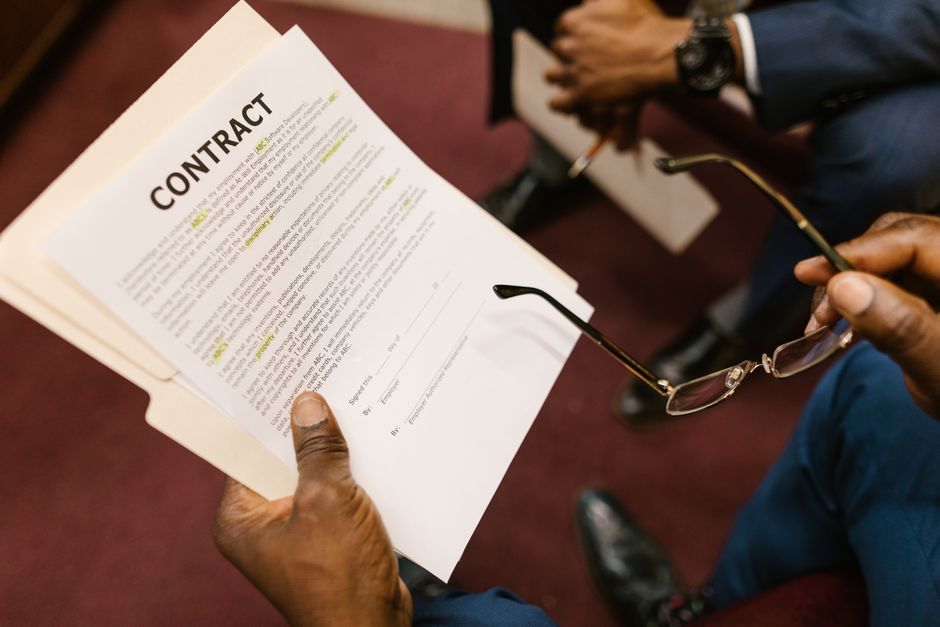
Before you finalize, compare your draft language against what carriers usually include in their own agreements. Our piece on charter bus contracts explained highlights the clauses that cause the most confusion.
Sample clause: The initial term is [ONE] year, with up to [TWO] one-year renewals at [ORGANIZATION]’s option. Either party may terminate for convenience on [60] days’ written notice. Changes to scope shall be documented by written change order signed by both parties.
How to Score Proposals Fairly
Even with a pricing form, bidders structure rates differently. One may quote a lower hourly rate with a higher minimum. Another may include deadhead time in the hourly rate while a third bills it separately. The fix is to normalize: run every proposal through the same sample trips and compare totals.
Include two or three sample trip scenarios in the RFP itself, so bidders know you will use them. A useful set covers a short local trip, a long same-day trip and an overnight trip. Here is an example scenario, with illustrative inputs:
SAMPLE TRIP SCENARIO A (for price normalization)
Riders:          52 passengers, 1 wheelchair user
Vehicle:         One lift-equipped 56-passenger motorcoach
Pickup:          [YOUR CAMPUS OR OFFICE ADDRESS], 7:30 a.m.
Destination:     [VENUE], approx. [180] miles one way
Activity:        Group on site 10:30 a.m. to 4:30 p.m.; bus waits
Return:          Depart venue 4:45 p.m., arrive approx. 8:00 p.m.
Extras:          Tolls on route, venue bus parking [confirm with venue]
Driver:          Single driver unless hours-of-service rules require two

Bidder: show base charge, each extra, and the all-in total.
Once every bid is expressed as an all-in total for the same scenarios, scoring price becomes simple. A common method awards full price points to the lowest normalized total and prorates the rest. For example, if the lowest total is the baseline, a bid 10 percent higher earns proportionally fewer points. Check with your purchasing office before choosing a formula, since some policies dictate one.
Also have evaluators score independently before meeting, verify SAFER data yourself, ask every reference the same questions and document the reason for each score in case a bidder requests a debrief.
For a deeper look at line-by-line comparison, share our guide on how to compare charter bus quotes with your evaluation committee.
Common Charter Bus Transportation RFP Mistakes
Most problems with a transportation RFP for bus services trace back to a handful of recurring gaps. Here is what tends to go wrong and how to prevent it.
| Mistake | What happens | Better approach |
|---|---|---|
| Asking for “a quote” with no scope | Bidders price different vehicles, hours and extras | Describe trip types, volumes and sample scenarios |
| No pricing form | Hours of rework to compare totals | Require a standard form with every line completed |
| Ignoring deadhead and minimums | Low hourly rates hide higher actual cost | Ask for minimums and garage-to-garage policy explicitly |
| Safety as a checkbox | A carrier with gaps wins on price | Verify on SAFER and make compliance pass or fail |
| Insurance limits not stated | COI arrives below your requirements after award | State limits and additional insured status in the RFP |
| Accessibility left out | No lift vehicle available when needed | Ask for lift availability and notice periods |
| Hidden weighting | Bidders guess; protests become more likely | Publish criteria and weights up front |
| Too short a response window | Fewer bids, rushed pricing | Allow time for questions and an addendum |
| Guaranteeing volumes you cannot meet | Disputes when trips fall short | Label volumes as non-binding estimates |
| No change process | Arguments over added trips and date shifts | Include a written change order procedure |
Tailoring the RFP to Your Type of Organization
The 12-section outline works almost everywhere, but emphasis shifts depending on who is buying.
School districts. Riders are minors, so districts often add driver screening attestations and firm return times. See our school field trip charter bus rental service.
Colleges and universities. Expect tours, team trips and intercampus loops; separate pricing tabs for shuttles and one-off charters help. Our college and university charter bus services page shows typical trips.
Corporate travel and facilities. Buyers often stress executive coaches, rider data privacy and one monthly invoice. Learn more about corporate charter bus rental.
Government and municipal buyers. Expect formal advertising and vendor registration. Our government and military charter bus services page covers agency trips.
Nonprofits. A shorter RFQ with a clear pricing form is often enough.
A One-Page RFP Summary Template
Carriers often decide whether to bid from the summary alone. Copy this charter bus RFP template, fill in the brackets and place it at the front of your document.
REQUEST FOR PROPOSAL: CHARTER BUS / MOTORCOACH SERVICES
RFP No.:            [NUMBER]
Issued by:          [ORGANIZATION NAME], [DEPARTMENT]
Contact:            [NAME], [TITLE], [EMAIL]
Issue date:         [DATE]
Questions due:      [DATE, TIME, TIME ZONE]
Proposals due:      [DATE, TIME, TIME ZONE]
Submit to:          [EMAIL OR PORTAL]

SERVICE SUMMARY
Trip types:         [Day trips / overnight trips / shuttles / events]
Service period:     [START DATE] to [END DATE], plus [N] optional renewals
Est. annual volume: [N] trips; [N] shuttle service days (non-binding)
Typical group size: [RANGE]; largest movement [N] riders
Vehicles:           [Motorcoach / mini bus / lift-equipped as requested]
Service area:       [REGION]; some trips may cross state lines

MINIMUM REQUIREMENTS (pass/fail)
- Active USDOT number and operating authority, verified on FMCSA SAFER
- Insurance at or above federal minimums and [ORG] limits;
  [ORG] named as additional insured
- Compliance statements: driver qualification, drug and alcohol testing,
  hours of service
- Completed Pricing Form, W-9, certificate of insurance, 3 references

EVALUATION (example weights)
Safety and compliance [30] | Price [30] | Fleet [15] |
Service plan [15] | References [10]

AWARD
Intended award date: [DATE]   Service start: [DATE]
[ORG] reserves the right to award to one or more proposers or to reject
any or all proposals, consistent with its procurement policy.
Pair this summary with the full outline above and the pricing form, and you have a complete motorcoach services RFP that a bidder can answer in a single pass.
Transportation RFP FAQs
How long should a charter bus transportation RFP be?
Length should follow scope. A single-season program may fit in 8 to 12 pages plus attachments, while a multi-year contract with shuttles and event work can run longer. Prioritize clarity over length: a complete scope, a pricing form and published criteria matter more than page count.
How much time should bidders get to respond?
Follow your procurement policy first. Beyond that, give bidders time to read the document, submit questions, receive your addendum and build pricing. Rushed windows tend to produce fewer and less accurate proposals, especially during busy travel seasons when carriers are stretched.
Can we award to more than one carrier?
Many organizations do. A primary and secondary award, or awards split by trip type or region, can protect you on peak days when one fleet is fully booked. State this possibility in the RFP so bidders can price accordingly, and confirm it is allowed under your policy.
What is the best way to compare hourly and daily pricing?
Run each bid through the same sample trip scenarios and compare all-in totals, including minimums, deadhead, tolls, parking, driver lodging and any surcharges. Unit rates alone can mislead; totals on identical trips are the fairest comparison.
Do we need to verify safety data ourselves?
Yes. Ask bidders for their USDOT and MC numbers, then look them up on FMCSA SAFER before award. Confirm the registration and authority are active and review any safety rating and inspection information. It takes a few minutes and protects your riders and your organization.
Add Us to Your Bidder List
A clear charter bus request for proposal gets you comparable bids, a defensible award and fewer surprises once trips begin. If your organization is preparing a solicitation, we would welcome the chance to be on your bidder list. Send your RFP, RFQ or a sample itinerary and we will respond in the format you require, with documentation for every safety and insurance item in your checklist. You can read more about how we approach operations on our safety commitment page. Ready to price a specific trip now? Request a charter bus quote and share your dates, headcount and stops.