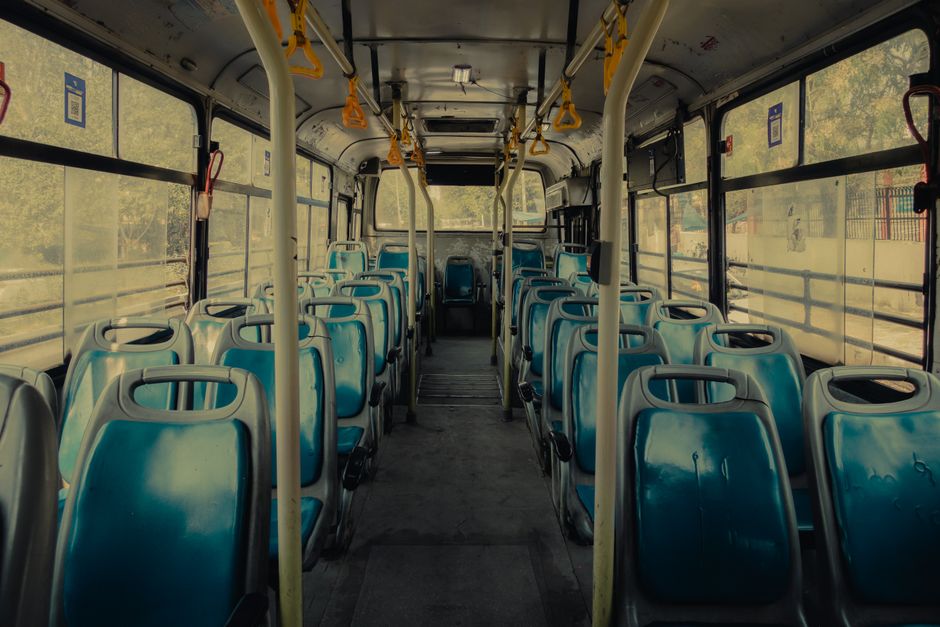
How Much Legroom Does a Charter Bus Have? A Complete Seat Space Guide


If you have ever booked a long car trip or flown coach on a cramped airplane, you already know how much a few extra inches of legroom can change your mood by hour three. The same logic applies to group travel, and it is exactly why so many trip planners ask the same question before they book: how much charter bus legroom can passengers actually expect? The answer depends on the bus type, seating configuration, and the company operating the vehicle, but there are clear industry standards you can use to set expectations.
In this guide, we will break down average charter bus legroom measurements, compare them to planes, trains, and school buses, explain what affects seat spacing, and share practical tips for keeping your group comfortable on a long ride. Whether you are chartering a bus for a wedding, a ski trip, or a multi-day tour, understanding legroom will help you choose the right vehicle and avoid unhappy passengers halfway through the trip.
What Is Charter Bus Legroom, Exactly?
Legroom on a charter bus is typically measured by two numbers: seat pitch and seat width. Seat pitch is the distance from a point on one seat to the same point on the seat in front of it, which tells you how much space you have to stretch your legs. Seat width tells you how much room you have side to side, which matters for shoulder and hip comfort during a long ride.
Most people use the term
For related reading, see our guide on How Much Luggage Fits on a Charter Bus? A Complete Packing Capacity Guide.
Average Charter Bus Legroom Measurements
When people talk about charter bus legroom, they are usually referring to two specific measurements that industry professionals rely on: seat pitch and seat width. Seat pitch is measured in inches from the back of one seat to the back of the seat directly behind it, and it is the number that determines whether your knees hit the seat in front of you. Seat width tells you how much room you have across your hips and shoulders, which becomes especially important on trips longer than a couple of hours.
On a standard full-size motorcoach, seat pitch typically ranges from 31 to 34 inches. Premium or executive coaches, which are often used for corporate travel or VIP groups, can offer seat pitch of 36 to 40 inches, along with wider individual seats that recline further back. Seat width on a standard motorcoach usually falls between 19 and 21 inches per passenger, though this can vary depending on whether the bus uses a 2×2 seating configuration (two seats on each side of the aisle) or a tighter 2×3 layout that squeezes in extra capacity at the cost of comfort.
For comparison, here is a quick breakdown of average charter bus legroom by vehicle type:
| Bus Type | Typical Seat Pitch | Typical Seat Width |
|---|---|---|
| Minibus (20-25 passengers) | 28-32 inches | 17-19 inches |
| Mid-size charter bus (25-35 passengers) | 30-33 inches | 18-20 inches |
| Full-size motorcoach (45-56 passengers) | 31-34 inches | 19-21 inches |
| Premium/executive motorcoach | 36-40 inches | 20-22 inches |
| Double-decker charter bus | 30-34 inches (varies by deck) | 18-20 inches |
These numbers are averages pulled from common industry specifications, and individual operators may vary slightly based on the manufacturer, model year, and how the bus was configured when it was purchased. If your group has specific comfort needs, it is always worth asking your rental company for exact seat pitch and width figures before you book, especially for trips longer than three or four hours.
Charter Bus Legroom vs. Other Modes of Transportation
One of the easiest ways to put charter bus legroom into perspective is to compare it against the other transportation options your group might be weighing, whether that is flying, taking a train, or riding in a school bus for a shorter trip.
Charter Bus vs. Airplane
Commercial airline economy class seating typically offers a seat pitch of 28 to 31 inches, with budget carriers sometimes dipping as low as 28 inches. Seat width on a standard economy airline seat is usually around 17 to 18 inches. By comparison, even a standard charter bus with a 2×2 configuration often matches or beats economy airline legroom, and premium motorcoaches with 36 to 40 inches of pitch far exceed what most travelers experience on a plane. The difference becomes even more noticeable because charter bus seats do not require you to fold up a tray table or squeeze past a beverage cart to stretch out.
Charter Bus vs. Train
Trains, particularly long-distance ones like Amtrak, tend to offer more generous legroom than both planes and buses, with coach seat pitch often ranging from 39 to 50 inches. However, trains come with fixed routes and schedules, which is one of the biggest advantages a charter bus has: your group is not tied to a station or a timetable, and the bus can pick everyone up from a single, convenient location.
Charter Bus vs. School Bus
School buses, which are sometimes used for very short group trips due to cost, offer noticeably less comfort. Bench-style seating on a traditional school bus is typically designed for tight seat pitch of around 24 to 28 inches, with no individual reclining seats, minimal padding, and no center armrests. For any trip longer than 30 to 45 minutes, a charter bus is almost always the more comfortable choice, and the legroom difference is one of the main reasons why.
What Affects Legroom on a Charter Bus
Not all charter buses are created equal, and several factors influence how much space passengers actually get. Understanding these variables can help you ask the right questions when you are comparing quotes from different rental companies.
1. Bus Size and Type
Larger motorcoaches generally have more room to work with structurally, which often translates into better seat pitch compared to smaller minibuses or vans. However, size alone does not guarantee comfort. Some large coaches are configured to maximize passenger capacity rather than comfort, which means a 56-passenger bus might actually have tighter seat pitch than a 45-passenger version of the same model.
2. Seating Configuration
Most standard motorcoaches use a 2×2 configuration, meaning two seats on each side of a center aisle. Some operators offer 2×1 configurations on premium coaches, which dramatically increases legroom and personal space but reduces total capacity. On the other end of the spectrum, a few high-capacity charter buses use a 2×3 layout in certain rows to squeeze in more seats, which noticeably reduces both pitch and width.
3. Total Passenger Capacity
There is often a direct tradeoff between capacity and comfort. A charter bus rented for 20 people can usually be matched with a smaller, more comfortable vehicle that still offers generous seat pitch, while a bus packed to its maximum 56-passenger capacity is more likely to have tighter spacing throughout. If your group size gives you flexibility, choosing a bus that is not filled to capacity can meaningfully improve everyone’s comfort.
4. Onboard Amenities
Charter buses equipped with onboard restrooms, extra luggage storage, entertainment systems, or upgraded seating with built-in outlets often use some of the coach’s interior space for those features, which can slightly reduce the number of rows or the pitch between them. If your trip is long enough to require a restroom on board, it is worth reading our guide on whether charter buses have bathrooms to understand how that amenity factors into the overall layout and comfort of the vehicle.
5. The Operator and Fleet Age
Newer coaches in a rental company’s fleet tend to have more modern, ergonomic seating with better cushioning and adjustable recline, even if the raw seat pitch measurement is similar to an older bus. Fleet age and maintenance standards vary significantly between operators, so it is smart to ask how old the specific vehicle is and whether it has been recently refurbished.
Legroom by Charter Bus Size: A Closer Look
Choosing the right size bus for your group is one of the most effective ways to control legroom outcomes. Here is a more detailed look at what to expect from each common charter bus category.
Minibuses (20-25 Passengers)
Minibuses are a popular choice for smaller groups, such as a wedding party, a youth sports team, or a corporate shuttle. Because these vehicles are smaller overall, seat pitch tends to run slightly tighter, typically in the 28 to 32 inch range. That said, many minibus rentals are booked well under maximum capacity, which means passengers often get extra elbow room even if the seat pitch itself is average. If you are trying to decide between a minibus and a larger coach, our guide on choosing the best charter bus for small groups walks through the tradeoffs in more detail.
Mid-Size Charter Buses (25-35 Passengers)
Mid-size coaches strike a balance between capacity and comfort. Seat pitch in this category usually ranges from 30 to 33 inches, and many mid-size buses use a straightforward 2×2 layout throughout. These vehicles are a common choice for school field trips, church groups, and mid-sized corporate outings where the group is too large for a minibus but does not need a full 56-passenger coach.
Full-Size Motorcoaches (45-56 Passengers)
The classic full-size motorcoach is the workhorse of the charter bus industry, and it is what most people picture when they think of a charter bus. Seat pitch generally falls between 31 and 34 inches, with individual reclining seats, footrests on some models, and overhead reading lights. Groups renting a bus for 40 people or a bus for 60 people will most likely be looking at this category, and it is worth confirming ahead of time whether the vehicle will be filled close to capacity or booked with a few empty rows for extra breathing room.
Premium and Executive Motorcoaches
Premium coaches are built with comfort as the priority rather than maximum capacity. These buses often feature 2×1 or spacious 2×2 seating with seat pitch of 36 to 40 inches, leather or leather-style upholstery, extra recline, and sometimes even individual work tables. They are popular for VIP transportation, executive retreats, and long multi-day tours where comfort is worth the added cost. If budget is a concern, our pricing guide for charter bus rentals breaks down how much more premium seating typically adds to your total quote.
Double-Decker Charter Buses
Double-decker buses offer a unique layout where legroom can vary between the upper and lower decks. Lower deck seating near the front often has slightly more room due to the vehicle’s structure, while upper deck rows are generally consistent with standard motorcoach measurements of 30 to 34 inches. Double-deckers are a great option for large groups who want extra visibility and a distinctive travel experience, though they are somewhat less common than standard motorcoaches in most rental fleets.
Why Legroom Matters More Than You Might Think
It is easy to underestimate how much seat pitch and width actually affect a trip until you are three hours into a five-hour ride with your knees pressed against the seat in front of you. Tight legroom does more than cause minor discomfort. It can lead to stiffness, poor circulation, and irritability, all of which can affect group morale on longer trips. For overnight or multi-day charters, such as ski trips or extended tours, adequate legroom becomes even more important because passengers may be sitting for many consecutive hours across multiple days.
Legroom also interacts with other amenities in ways that are easy to overlook. A bus with generous seat pitch but no onboard power outlets might still leave tech-dependent travelers frustrated on a long ride. If staying connected and charged is a priority for your group, take a look at our guide on whether charter buses have Wi-Fi and power outlets so you can factor that into your decision alongside seating comfort.
How to Check Legroom Before You Book
Rental companies do not always list exact seat pitch and width numbers on their websites, so it often takes a direct conversation to get the specifics. Here are a few practical steps to take before signing a contract:
- Ask for the exact make and model of the bus that will be assigned to your trip, then look up the manufacturer’s published seating specifications if they are not provided directly.
- Request photos or a virtual tour of the specific vehicle, not just stock images from the company’s marketing materials.
- Confirm the seating configuration, especially whether the bus uses a 2×2 layout throughout or mixes in tighter 2×3 rows near the back.
- Ask whether the bus will be booked at full capacity or with some rows left open, since a less crowded bus often feels more spacious even with average seat pitch.
- Inquire about seat features like recline angle, padding thickness, and whether footrests or leg rests are included, since these details affect comfort just as much as raw measurements.
Tips for Maximizing Comfort on a Long Charter Bus Ride
Even with average legroom, there are ways to make a long ride more comfortable for your entire group.
Encourage Strategic Packing
Bulky carry-on bags stuffed under seats or in laps can eat into already limited legroom. Encourage passengers to store larger items in the bus’s under-carriage storage rather than keeping everything at their feet. If you are unsure how much luggage your group can bring, our guide on how much luggage fits on a charter bus can help you plan ahead so bags do not end up crowding the aisle or the footwells.
Rotate Seating on Multi-Day Trips
On trips that span multiple days, consider rotating who sits where so that no single group of passengers is stuck in the tightest row for the entire journey. This is a simple, no-cost way to distribute comfort more evenly across the group.
Plan Rest Stops Strategically
Even generous legroom cannot fully replace the benefit of standing up and stretching. Building in regular rest stops, roughly every two to three hours, gives passengers a chance to move around, which matters just as much as the seat pitch itself for keeping everyone comfortable.
Choose the Right Bus Size for Your Group
As covered earlier, booking a bus that comfortably fits your group without maxing out capacity is one of the most reliable ways to improve legroom and overall comfort. If you are managing a larger group, our guide on the best charter bus for large groups covers how to balance capacity, comfort, and budget when selecting a vehicle.
Who Needs Extra Legroom the Most?
While every passenger benefits from a comfortable seat, certain travelers should pay especially close attention to legroom when booking a charter bus.
- Taller passengers, generally over 6 feet, often notice the difference between 31-inch and 36-inch seat pitch immediately, since standard spacing can feel cramped regardless of how the seat reclines.
- Older adults may need more room to shift positions comfortably and may benefit from aisle seats or rows near the front where boarding and exiting is easier.
- Passengers with mobility limitations should confirm in advance whether the bus has accessible seating with additional space, as well as ramp or lift access if needed.
- Groups traveling with young children often need extra floor space for car seats, diaper bags, or activity supplies, which makes generous legroom even more valuable.
If any of these situations apply to your group, it is worth mentioning them directly to your rental company when requesting a quote, since they may be able to recommend a specific bus model or seating arrangement that better fits your needs.
Frequently Asked Questions About Charter Bus Legroom
How much legroom does a standard charter bus have?
Most standard full-size motorcoaches offer a seat pitch of 31 to 34 inches, with seat width typically between 19 and 21 inches. Premium coaches can offer significantly more, often 36 to 40 inches of pitch.
Is charter bus legroom better than airplane legroom?
In most cases, yes. Standard charter bus seat pitch generally matches or slightly exceeds economy airline seating, and premium motorcoaches offer noticeably more space than even airline first class in many cases.
Does seat pitch vary within the same bus?
It can. Some buses use a consistent 2×2 layout throughout, while others include tighter rows near the back or around onboard restrooms and storage areas, which can reduce pitch in those specific sections.
Can I request a specific seat with more legroom?
Many operators allow seating requests, especially for aisle seats, front-row seats, or exit-row style seating with extra space. It is best to ask directly when booking, since availability depends on the specific bus and route.
Does a smaller group mean more legroom?
Not automatically, since seat pitch is a fixed measurement built into the bus itself. However, a smaller group riding in a bus with unused rows often experiences a more spacious feel, even if the actual seat pitch stays the same.
Final Thoughts on Charter Bus Legroom
Charter bus legroom is not a one-size-fits-all number, but understanding the general ranges, from tighter minibus seating around 28 inches to premium motorcoach pitch reaching 40 inches, gives you a realistic framework for setting expectations. The right choice ultimately depends on your group’s size, trip length, and comfort priorities, along with how much you are willing to invest in a premium seating option. By asking the right questions before you book, checking seat pitch and configuration details, and matching the bus size to your actual passenger count, you can avoid the all-too-common scenario of a group arriving stiff, cramped, and frustrated after a long ride. A little research upfront goes a long way toward making sure everyone steps off the bus as comfortable as they were when they got on.