How to Coordinate Bus Pickups for a Large Wedding: A Step-by-Step Guide


Getting 150 guests from the hotel to the ceremony, then to the reception, then back again at midnight, is not something you can wing with a group text and good intentions. If you’re trying to coordinate bus pickups for a large wedding, you already know the stakes: one missed pickup time or one confused shuttle driver can throw off your entire timeline and stress out your bridal party before you’ve even said “I do.”
The good news is that wedding transportation logistics follow a repeatable process. Once you understand the key steps, from mapping pickup zones to briefing your drivers, you can build a shuttle plan that runs smoothly even with hundreds of guests spread across multiple hotels. This guide walks through exactly how to coordinate bus pickups for a large wedding, step by step, so nobody gets left behind and nobody shows up late to the vows.
You’ll learn how to choose the right vehicles, structure pickup locations, build a realistic timeline, communicate the plan to guests, and avoid the mistakes that trip up even experienced planners. Let’s get into it.
Why Bus Transportation Matters for Large Weddings
Once a guest list crosses the 75 to 100 person mark, parking becomes a logistical headache. Rural venues, historic estates, wineries, and downtown hotels rarely have enough spots for every guest to drive separately, and valet service for 200 cars is expensive and slow.
Shuttle buses solve several problems at once. They reduce the number of cars on site, they keep guests together and on schedule, and they let everyone, including the wedding party, enjoy a drink or two without worrying about driving home. They also add a layer of polish that guests notice, even if they can’t quite say why the day felt so seamless.
There’s a safety angle too. Weddings involve alcohol, unfamiliar roads, and often nighttime driving. A well-run shuttle system keeps guests off the road when they’re least equipped to be behind the wheel, which matters more than most couples realize until they’re planning the reception send-off.
Step 1: Assess Your Guest Count and Locations
Before you call a single transportation company, you need real numbers. Vague estimates like “probably 150 people” will lead to under-booking buses, and running out of seats mid-shuttle is one of the most common wedding-day transportation failures.
Start by answering these questions:
- How many guests are attending, based on confirmed RSVPs, not the invite list?
- How many guests are staying at the host hotel or hotel block versus arriving from other locations?
- How many members of the wedding party, family, and vendors need separate or earlier transportation?
- What is the driving distance and time between the hotel, ceremony site, and reception venue?
If your guests are spread across three or four different hotels, your logistics get more complex fast. You’ll either need multiple pickup points or a single centralized pickup hub, which we’ll cover in the next section. Either way, get a firm headcount before you request quotes, because bus capacity is priced and reserved by seat count, not by “the wedding.”
Step 2: Choose the Right Type of Bus or Shuttle
Not every large wedding needs a fleet of 56-passenger motorcoaches. The right vehicle mix depends on your guest count, the number of pickup locations, and your budget.
Charter Buses vs. Minibuses vs. Shuttles
Here’s a quick breakdown of what each option is best suited for:
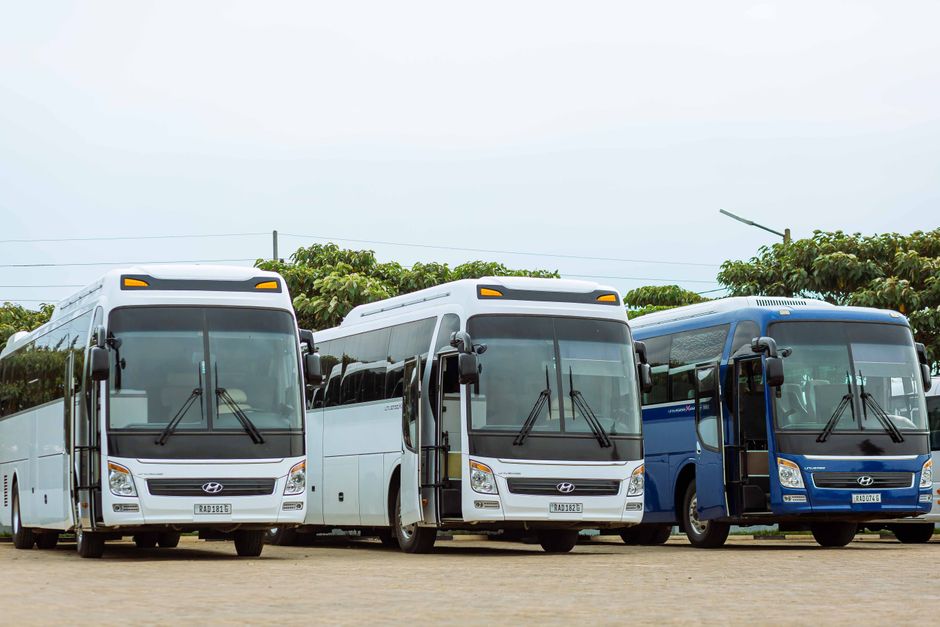
- Full-size charter buses (45-56 passengers): Ideal for weddings with 100+ guests concentrated at one or two hotels. Fewer vehicles mean fewer drivers to coordinate and fewer opportunities for confusion.
- Minibuses (20-35 passengers): Better for smaller guest counts or for shuttling the wedding party, immediate family, and VIPs separately from the general guest list.
- Sprinter vans or shuttle vans (10-14 passengers): Useful for narrow venue driveways, small wedding parties, or supplementing larger buses during peak pickup windows.
Many large weddings actually use a combination: one or two full-size coaches for general guests, plus a smaller van for the wedding party who need to arrive earlier for photos. If you’re unsure which setup fits your guest list, this guide on choosing the right charter bus for large groups breaks down capacity, amenities, and pricing considerations in more detail.
Also confirm that any company you’re considering is properly licensed and insured. The Federal Motor Carrier Safety Administration maintains a public database where you can verify a charter bus company’s safety record before booking, which is worth five minutes of your time given how much is riding on this vendor showing up on time.
Step 3: Map Out Pickup Locations and Routes
This is the part of the process where most couples either save themselves a massive headache or accidentally create one. The goal is to make pickup locations obvious, walkable, and safe, while keeping the number of stops low enough that the schedule doesn’t fall apart.
Hotel Block Pickups
If most of your guests are staying at one or two contracted hotel blocks, this is the easiest scenario. Buses can pick up directly from the hotel lobby or a designated hotel entrance at a fixed time. Confirm with the hotel in advance that buses are allowed to idle and load in that spot, since some properties restrict oversized vehicles to specific curb zones.
Multiple Pickup Points vs. a Single Hub
When guests are scattered across several hotels, you have two options:
- Multiple pickup points: The bus follows a loop, stopping at each hotel in sequence. This is convenient for guests but adds travel time to the route, and every extra stop increases the chance of delays.
- Single centralized hub: Guests are asked to meet at one main hotel or a central parking area, and buses depart from there only. This is faster and simpler to manage, but it requires clear communication so guests staying elsewhere know they need to get themselves to the hub first.
For weddings with more than three hotel blocks, a centralized hub almost always works better. It’s easier to manage one departure time from one location than to synchronize a multi-stop loop across a city, especially if traffic or road construction is a factor.
Whichever setup you choose, walk or drive the actual route yourself, or ask your transportation coordinator to do so, before the wedding. GPS estimates don’t always account for one-way streets, low bridges, weight limits, or construction closures that a 56-foot motorcoach can’t navigate the way a sedan can.
Step 4: Build a Detailed, Realistic Timeline
A shuttle schedule is only as good as the buffer time built into it. Weddings run on emotional time, not clock time, and your transportation plan needs to absorb the inevitable delays without falling apart.
A basic large-wedding shuttle timeline usually includes:
- Wedding party and family shuttle: Departs 60 to 90 minutes before the ceremony for photos and setup.
- First guest shuttle wave: Departs 45 to 60 minutes before the ceremony start time.
- Final guest shuttle wave: Departs 20 to 30 minutes before the ceremony start time, with a hard cutoff.
- Ceremony-to-reception shuttle: Departs immediately after the recessional, or after a cocktail hour buffer if the reception is at a different venue.
- Return shuttles: At least two departure times at the end of the night, staggered 30 to 60 minutes apart, so guests aren’t forced to leave all at once or stranded waiting for one bus to make multiple trips.
Buffer Time and Traffic Considerations
Add at least 15 minutes of buffer to every leg of the route, and more if the wedding falls on a weekend evening in a city with regular traffic congestion. It’s also smart to account for loading time itself: it takes longer than people expect to load 50 guests onto a bus, especially if anyone is in formal wear, heels, or using mobility assistance.
If your venue is a few hours from the main hotel cluster, as is common with destination weddings, your timeline needs even more cushion, and you may want to plan the shuttle schedule around a full-day itinerary rather than just the wedding hours. Our destination wedding charter bus planning guide covers how to structure transportation when guests are unfamiliar with the area and the drive is longer than a typical local wedding.
Step 5: Communicate the Plan Clearly to Guests
Even the most well-designed shuttle schedule fails if guests don’t know about it, don’t understand it, or forget it by wedding day. Communication needs to happen more than once and through more than one channel.
Wedding Website, Invitations, and Save-the-Dates
Post the shuttle schedule on your wedding website with specific departure times, pickup locations, and a note on whether guests need to RSVP for a seat. Many couples add a transportation FAQ section to the site answering questions like “Do I need to reserve a shuttle seat?” and “What if I miss the last bus?”
For guests who don’t check wedding websites closely (there are always a few), include a transportation card in the invitation suite or in the welcome bag if you’re doing a hotel welcome event.
Day-Of Signage and Reminders
On the wedding day itself, redundancy matters:
- Place a printed sign near the hotel lobby or pickup point listing departure times.
- Ask hotel front desk staff to remind guests as they check in.
- Have a designated person physically present at the pickup point 15 minutes before departure, waving people over and doing a rough headcount.
- Send a text reminder through your wedding party group chat or a wedding app the morning of the event.
A helpful trick many planners use: give each bus a name or number and announce it clearly (“Bus 1 to the Hillside Barn, boarding now”) rather than assuming guests know which shuttle is theirs. This matters most when you’re running multiple buses to different venues or on different schedules.
Step 6: Coordinate with Your Wedding Planner, Venue, and Vendors
Your shuttle plan doesn’t exist in isolation. It needs to sync with the ceremony start time, the venue’s load-in restrictions, and even the caterer’s setup schedule.
Share your transportation timeline with:
- Your venue coordinator, so they know when to expect the first wave of guests and can confirm parking and unloading zones for oversized vehicles.
- Your wedding planner or day-of coordinator, who should have the shuttle schedule alongside the master timeline and can troubleshoot in real time if something runs late.
- Your photographer, especially if the wedding party shuttle is tied to a specific photo session before the ceremony.
- The bus company itself, confirming they have the venue’s exact address, any gate codes, and instructions for bus parking or staging areas during the reception.
Venues with narrow driveways, gravel roads, or low-clearance entrances sometimes can’t accommodate a full-size motorcoach. Confirm vehicle size restrictions with the venue directly, not just with the bus company, since venues often know about access issues that aren’t visible on a satellite map.
Step 7: Assign a Transportation Point Person
No matter how detailed your written plan is, you need one human being whose job on the wedding day is to manage transportation and nothing else. This should not be the bride, groom, or anyone in the wedding party who needs to be getting ready or taking photos.
Good candidates for this role include:
- A day-of wedding coordinator or planner, if you’ve hired one
- A trusted friend or relative who isn’t in the wedding party
- A paid transportation liaison if your bus company offers one
This person’s responsibilities typically include confirming driver arrival, doing headcounts before departure, relaying any delays to the venue, and serving as the point of contact if a guest gets confused about pickup times or locations. Give this person the bus company dispatcher’s direct phone number, not just a general customer service line, so they can get real-time updates if a bus is running behind.
Step 8: Plan for Return Trips and End-of-Night Logistics
Couples often plan the arrival shuttle carefully and then completely forget to plan the departure. This is a mistake, because the end of the night is when guests are most likely to have been drinking, the most tired, and the most likely to need a ride.
Consider these questions when planning return shuttles:
- Will you offer one return trip at the end of the night, or multiple staggered departures for guests who want to leave early versus those who want to stay until last call?
- Does the bus contract include enough hours to cover the full reception, or will you be charged overtime fees if the party runs long?
- Is there a clear announcement plan for the final shuttle departure, so no one gets stranded?
- Do you need a smaller backup vehicle (like a sedan car service) on standby for stragglers or an emergency?
It’s worth building a small financial buffer into your transportation budget specifically for overtime charges. Receptions almost always run later than planned, and most bus companies charge a per-hour or per-30-minute overtime rate if the vehicle is needed beyond the contracted window.
Budgeting for Wedding Shuttle Service
Bus pricing for weddings varies based on vehicle size, trip length, number of hours booked, and your local market. As a general framework, expect to pay for:
- Base rental rate, often calculated per hour with a minimum booking window (commonly 4 to 6 hours)
- Mileage or distance fees, especially for destination weddings or venues far from the hotel cluster
- Driver gratuity, typically 15 to 20 percent, which is sometimes included and sometimes added separately
- Overtime charges if the reception runs past the contracted time
- Additional vehicle fees if you need more than one bus or a supplemental van
Get a written quote that breaks down all of these line items before you sign a contract. Ask specifically whether gratuity, fuel surcharges, and overtime rates are included or itemized separately, since these are the most common sources of surprise charges on the final invoice.
If you’re trying to figure out how many vehicles and what seating configuration makes sense for your guest count, this charter bus seating chart guide for large groups is a useful reference for matching bus capacity to your actual headcount rather than guessing.
Common Mistakes to Avoid
Even organized couples run into the same handful of transportation problems. Here’s what to watch for:
- Booking based on invite count instead of confirmed RSVPs. This leads to either wasted seats or, worse, not enough room for everyone who actually shows up.
- Not confirming venue access for oversized vehicles. A gorgeous barn venue down a narrow gravel lane might not be able to fit a 56-foot motorcoach, and finding this out on the wedding day is a disaster.
- Underestimating loading and unloading time. Formal wear, high heels, and large groups all slow down boarding. Build in more time than feels necessary.
- Forgetting the return trip. Arrival logistics get all the attention, but end-of-night transportation is just as important, if not more so.
- Relying on a single communication channel. Guests miss emails, skip wedding websites, and lose printed cards. Repeat the transportation plan across multiple formats.
- No day-of point person. Someone needs to own transportation logistics in real time, separate from the couple and the wedding party.
- Not confirming the driver has the correct venue address and gate codes in advance. GPS apps sometimes route large vehicles incorrectly, especially in rural areas.
Sample Bus Pickup Schedule for a Large Wedding
Here’s an example timeline for a wedding with 200 guests staying primarily at one host hotel, with a ceremony and reception at the same venue:
- 2:00 PM: Wedding party and immediate family shuttle departs hotel for photos
- 3:15 PM: First guest shuttle departs hotel lobby
- 3:45 PM: Final guest shuttle departs hotel lobby (ceremony begins at 4:30 PM)
- 5:15 PM: Ceremony ends, cocktail hour begins
- 10:30 PM: First return shuttle departs venue for hotel
- 11:30 PM: Second return shuttle departs venue for hotel
- 12:15 AM: Final return shuttle departs venue (last call announced 30 minutes prior)
Adjust the specific times based on your ceremony start time, venue distance, and guest preferences, but this structure, early wedding party shuttle, two guest waves for arrival, and staggered return trips, works for most large weddings regardless of size or location.
Frequently Asked Questions
How many buses do I need for a 200-guest wedding?
It depends on bus size and how many trips each vehicle can realistically make within your timeline. A single 56-passenger motorcoach can typically handle 200 guests across two or three loading waves if you have enough buffer time between ceremony and ticket call. If your schedule is tight, two smaller buses running simultaneously will move guests faster than one large bus making multiple trips.
Should guests pay for wedding shuttle service?
Most couples cover shuttle costs as part of overall wedding transportation, similar to covering the venue or catering, since it’s considered a hosting expense. It’s uncommon and generally not recommended to charge guests for shuttle seats, as this can create confusion and discourage guests from using the safer transportation option.
What happens if a guest misses the last shuttle back?
This is exactly why it helps to have a backup plan, such as a rideshare voucher system, a small number of taxi contacts posted at the venue, or a designated staff member who can call a car service. Announcing the final shuttle time clearly, multiple times throughout the night, significantly reduces how often this happens.
How far in advance should I book a charter bus for my wedding?
Book your transportation 4 to 6 months in advance for a standard wedding date, and 8 to 12 months ahead if your wedding falls during peak season (late spring through early fall) or in a market with limited charter bus availability. Popular wedding weekends can book up transportation companies quickly, especially for large fleets.
Do I need a separate vehicle for the wedding party?
It’s recommended if your wedding party needs to arrive earlier than general guests for photos, or if you want a more intimate, decorated vehicle for that group. A smaller van or limo bus works well for this purpose, while the larger charter bus or buses handle general guest transportation on a separate schedule.
Final Thoughts
Coordinating bus pickups for a large wedding comes down to a handful of core decisions: getting an accurate headcount, choosing the right vehicle mix, mapping realistic routes with buffer time, and communicating the plan clearly and repeatedly. None of this requires a professional events background, but it does require starting early and treating transportation as its own project within the bigger wedding plan, not an afterthought handled the week before.
If you want a broader checklist covering every transportation decision from booking to tipping the driver, take a look at our complete charter bus wedding checklist, which pairs well with the planning steps outlined here. Get the logistics locked down early, assign a point person for the day itself, and your guests will remember the celebration, not the shuttle schedule.