Best Charter Bus Seating Chart for Large Groups: A Complete Planning Guide

Planning transportation for a large group is never just about booking a vehicle. It’s about making sure every passenger has a comfortable, safe seat and that the whole trip runs smoothly from pickup to drop-off. That’s where a well-designed charter bus seating chart becomes one of the most valuable tools in your event planning kit.
Whether you’re organizing a corporate retreat, a school field trip, a wedding shuttle, or a multi-day tour, the way you arrange passengers can make or break the experience. A thoughtful seating chart reduces confusion at boarding, keeps families and friend groups together, protects passengers with mobility needs, and even helps balance weight distribution on the bus. In this guide, you’ll learn how charter bus seating actually works, what the best layouts look like for different group types, and how to build a seating chart that keeps everyone happy from the first mile to the last.
Why a Charter Bus Seating Chart Matters for Large Groups
Small groups can usually board a bus and figure out seating on the fly. Large groups, however, run into problems fast without a plan. Think about 50 people trying to find seats at once, with kids wandering off, coworkers jockeying for window seats, and someone’s grandmother stuck standing in the aisle because every seat near the front filled up.
A seating chart solves these problems before they happen. It:
- Speeds up boarding time, especially at multi-stop pickups
- Keeps families, coworkers, or teammates seated together
- Prevents arguments over preferred seats
- Helps chaperones and tour leaders monitor specific sections
- Makes it easier to assist passengers with mobility issues or medical needs
- Improves safety by balancing weight and keeping aisles clear
In short, the best charter bus seating chart for large groups isn’t just a nice-to-have. It’s a logistics tool that saves time, reduces stress, and creates a better overall travel experience.
Understanding Charter Bus Seating Capacity by Bus Size
Before you can design a seating chart, you need to know what you’re working with. Charter buses come in several sizes, and each one has a different seating capacity and layout. Choosing the right bus size for your group is the first step, and it directly affects how you’ll organize seating later.
Mini Charter Buses (18-30 Passengers)
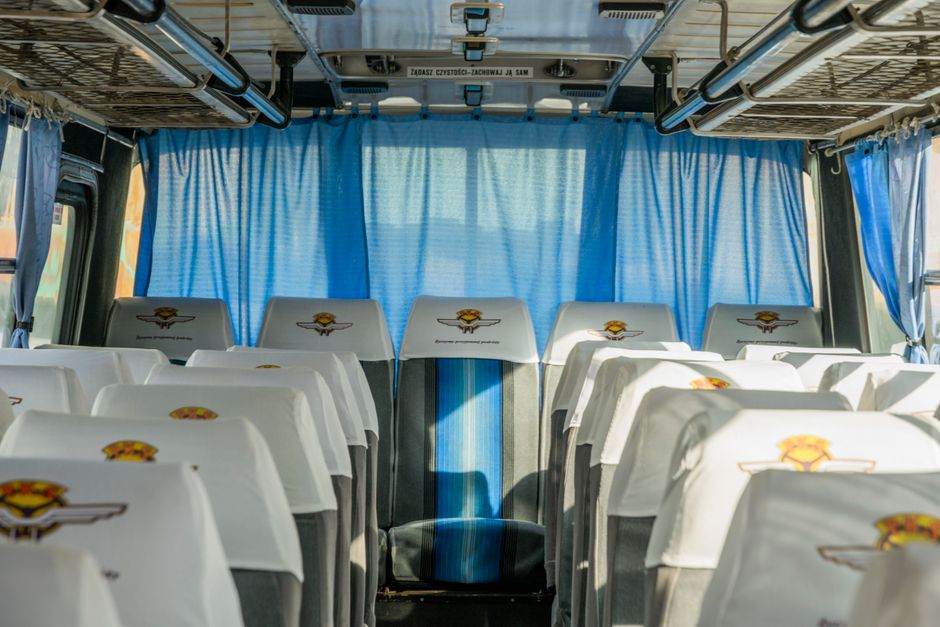
Mini charter buses are ideal for smaller groups such as a single classroom, a small sports team, or a departmental outing. They typically seat between 18 and 30 passengers in a 2×2 configuration, meaning two seats on each side of a center aisle. Because the group is small, seating charts for mini buses are usually simple: front rows for group leaders or those needing quick access, and the remaining rows filled in order of check-in.
Mid-Size Charter Buses (35-40 Passengers)
A 35 to 40 passenger charter bus works well for mid-sized teams, wedding parties, or smaller church groups. These buses still use a 2×2 seating layout but stretch it across more rows. At this size, you start to see real value in grouping seats by family unit, department, or sub-group, since the aisle can get crowded if everyone stands up at once during boarding.
Full-Size Charter Buses (45-56 Passengers)
This is the workhorse of the charter bus industry. A full-size motorcoach typically seats between 45 and 56 passengers, again in a 2×2 configuration, with a restroom, luggage bays, and sometimes a small entertainment or refreshment area near the back or front. Full-size buses are the most common choice for large groups such as corporate outings, school trips, and multi-family reunions, which makes seating chart planning especially important here.
Double-Decker and Executive Coaches
For very large groups or premium experiences, double-decker buses can carry 70 or more passengers across two levels. These require a more advanced seating chart since you’re now managing vertical zones in addition to front-to-back sections. Executive coaches, on the other hand, may seat fewer passengers but include amenities like reclining seats, tables, or lounge areas, which changes how you’d map out a chart.
Knowing your bus size and layout options helps you avoid a common mistake: designing a seating chart before confirming exactly how many rows and seats you’re working with. If you’re still deciding on the right vehicle, our guide on how to choose the right charter bus company walks through capacity, amenities, and vetting questions to ask before you book.
The Best Charter Bus Seating Chart Layouts for Large Groups
There’s no single seating chart that works for every group. The best layout depends on the purpose of the trip, the size of the group, and whether you have sub-groups that need to stay together. Below are the most effective seating chart strategies for common large-group scenarios.
1. The Zone Method (Best for Mixed Groups)
The zone method divides the bus into three or four sections, front, middle-front, middle-back, and rear, and assigns each zone to a specific sub-group or purpose. For example:
- Front zone: Group leaders, chaperones, elderly passengers, or anyone needing quick access to the driver or door
- Middle zones: Families, friend clusters, or department teams seated together
- Rear zone: Younger, more energetic passengers, or those who prefer to socialize without disturbing others
This layout works especially well for school trips, church outings, and family reunions where you have multiple age groups and priorities on one bus. It’s a strategy we cover in more detail in our charter bus rental guide for family reunions, since reunions often mix toddlers, teens, and grandparents on the same trip.
2. The Alphabetical or Department Method (Best for Corporate Groups)
For corporate events, conferences, or company outings, an alphabetical or department-based seating chart keeps things fair and predictable. Instead of letting seniority or friendships dictate seating, you assign rows by last name or by department. This method reduces awkward social dynamics and ensures coworkers from the same team can chat during the ride, which is often useful for pre-event briefings.
If you’re planning transportation for a company event, our charter bus rental guide for corporate events covers additional logistics like Wi-Fi needs, luggage for multi-day conferences, and how to coordinate pickup for large staff headcounts.
3. The Team and Position Method (Best for Sports Teams)
Sports teams benefit from a seating chart built around team roles rather than random assignment. A common approach:
- Coaches and staff near the front for quick communication with the driver
- Starters or team captains in the middle section
- Full roster grouped by position (offense, defense, or by sport-specific units)
- Equipment managers near the rear, close to storage areas
This keeps the team functioning like a unit even during transit, and it makes pre-game strategy talks easier since position groups can discuss plays together. For more detail on outfitting a bus for athletic travel, see our guide to charter bus rental for sports teams.
4. The Accessibility-First Method (Best for Senior and Mixed-Mobility Groups)
When your group includes seniors, passengers with disabilities, or anyone with mobility limitations, seating charts should prioritize accessibility over convenience or preference. Best practices include:
- Assigning front-row seats closest to the door for passengers who need extra time or assistance boarding
- Avoiding rear seats near the restroom for anyone with mobility challenges, since that area often has less legroom and more foot traffic
- Reserving aisle seats (not window seats) for those who may need to get up frequently
- Coordinating with the driver in advance about wheelchair-accessible seating if needed
Our complete planning guide for senior group trips goes deeper into accessibility requirements, rest stop planning, and how to request accessible vehicles from your bus company.
5. The Free-Flow Method (Best for Social Trips)
For casino trips, concerts, or festival outings where the group is more social than structured, a strict seating chart can feel unnecessary. Instead, many organizers use a hybrid approach: reserve a few rows near the front for organizers or VIPs, then let everyone else choose their own seats. This keeps the fun, casual atmosphere while still maintaining some order at boarding.
This approach works particularly well for trips detailed in our guides on charter bus rental for casino trips and charter bus rental for festivals, where group energy and flexibility matter more than rigid structure.
How to Create a Seating Chart for Your Group Step by Step
Now that you understand the layout strategies, here’s how to actually build your seating chart before travel day.
Step 1: Confirm Your Final Headcount
Seating charts fall apart when headcounts change last minute. Set a firm RSVP deadline at least a few days before the trip, and build in a small buffer of 2 to 3 extra seats in case of late additions. This is especially important for large groups where even a small miscount can throw off your entire layout.
Step 2: Get the Actual Bus Floor Plan
Ask your charter bus company for the specific seating layout of the vehicle you’ve booked, not a generic diagram. Bus interiors vary, some have 2×2 seating throughout, others have a few 3-seat rows in the back, and some include tables, lounge seats, or ADA-accessible rows that reduce total capacity slightly. Working from the actual floor plan prevents mismatches between your chart and reality.
Step 3: Identify Sub-Groups and Priorities
List out every sub-group that needs to sit together: families, departments, teams, or friend clusters. Then flag any individual priorities, such as passengers who need front-row access, get motion sick easily, or have requested to sit near a specific person for medical or comfort reasons.
Step 4: Choose Your Layout Method
Pick one of the seating strategies above (zone, alphabetical, team-based, accessibility-first, or free-flow) based on your group type and trip purpose. You can also combine methods, for example, using accessibility-first principles for the front rows while applying the zone method to the rest of the bus.
Step 5: Draft, Share, and Adjust
Create a draft seating chart using a spreadsheet, seating chart app, or even a simple printed diagram. Share it with co-organizers or chaperones for feedback, then finalize it at least 48 hours before departure. Print a few copies for boarding staff and post a copy near the boarding area so passengers can find their seats quickly.
Step 6: Communicate the Plan to Passengers
Send the seating chart or general seating rules to your group ahead of time. Even a simple email or group text explaining how boarding will work, whether seats are assigned or zoned, and what to do if they have special needs can prevent confusion and delays on travel day. For larger groups, consider designating a few team leads or chaperones to help direct passengers to the correct section as they board, especially for the first trip of a multi-day itinerary.
Common Seating Chart Mistakes to Avoid
Even well-organized groups can run into seating issues if a few common pitfalls are overlooked. Knowing what to avoid can save you a lot of last-minute stress.
Waiting Until the Last Minute
Seating charts take time to build correctly, especially for groups over 30 people. Waiting until the morning of the trip to assign seats almost always leads to confusion, delays, and frustrated passengers. Start your seating plan as soon as your headcount is finalized.
Ignoring the Bus Layout
Not all charter buses are laid out the same way. Assuming a standard 2-2 configuration when your bus actually has a mix of 2-1 rows, a rear lounge, or fewer seats due to ADA accommodations can throw off your entire chart. Always confirm the exact layout with your charter bus company before finalizing anything.
Overlooking Accessibility Needs
Passengers with mobility devices, service animals, or medical conditions need to be seated first, not squeezed in wherever space is left. Failing to plan accessibility seating in advance can lead to safety issues and last-minute scrambling.
Not Accounting for Luggage or Equipment
Large instruments, sports equipment, or bulky bags can sometimes need to travel in the passenger cabin if the cargo bay is full. If your group is bringing gear that takes up seat space, factor this into your seat count early. For a deeper look at how much can realistically fit, check out this guide on how much luggage fits on a charter bus.
Failing to Plan for No-Shows or Late Additions
Large groups almost always have a few last-minute changes, whether it is a cancellation, a plus-one, or someone switching buses. Build a small buffer into your chart, and designate one or two flexible seats near the back that can be reassigned without disrupting the rest of the plan.
Not Communicating the Plan Clearly
A seating chart is only useful if people actually know about it. Posting it in a group chat, printing it for chaperones, and displaying it at the boarding area all help make sure passengers do not hold up boarding by hunting for their assigned zone.
Seating Chart Tips for Specific Group Types
While the core process stays the same, certain groups benefit from a few extra considerations when building their seating chart.
School and Youth Groups
Chaperone placement is critical. Spread adult supervisors evenly throughout the bus rather than clustering them all in front. Assign specific chaperones to specific rows so there is always a clear point of contact for students in every section.
Corporate and Conference Groups
For business trips, consider seating by department or project team so colleagues can review materials or discuss agendas during transit. If the trip is tied to a broader event, our guide to charter bus rental for corporate events covers additional logistics worth planning around.
Wedding and Family Groups
Family reunions and wedding parties often do best with a hybrid of zone and free-flow seating, grouping immediate family near the front while letting extended family and friends choose their own seats in the back. For more ideas on organizing large family trips, see our guide on charter bus rental for family reunions.
Senior Travel Groups
Comfort and mobility take priority. Seat passengers with limited mobility near the front and entrance, and avoid placing anyone prone to motion sickness in the rear over the axle. Our article on charter bus rental for senior group trips has more tips tailored to this type of travel.
Sports Teams and Athletic Groups
Keep starters, coaches, and equipment managers together for pre-game coordination, and separate rowdy celebration seating from quieter rows if players need rest before or after competition. For more logistics tailored to athletic travel, see our guide on charter bus rental for sports teams.
Tools That Make Seating Charts Easier
You do not need expensive software to build an effective seating chart, though a few tools can speed up the process for larger groups.
Spreadsheets
A simple spreadsheet with rows representing bus seats is often all you need. Color-code by sub-group, and use a separate tab to track special requests or accessibility needs.
Seating Chart Apps
Several event-planning apps and seating chart generators let you drag and drop names into a bus layout template, which can be especially helpful for weddings, school trips, or corporate events with dozens of attendees.
Printed Templates
For smaller or less tech-savvy groups, a printed bus diagram with names written directly onto seat numbers works just fine. Keep a laminated master copy with the trip leader in case questions come up mid-route.
Check-In Sheets
Pairing your seating chart with a check-in sheet at boarding helps confirm that everyone is accounted for before departure, which is especially useful for school groups, tours, and multi-stop pickups.
Frequently Asked Questions
How far in advance should I create a charter bus seating chart?
For groups under 20 people, a day or two before departure is usually enough. For larger groups of 40 or more, start at least a week in advance so you have time to gather sub-group information, confirm the bus layout, and share the plan with chaperones or team leads.
Can I change the seating chart on the day of the trip?
Yes, but try to limit changes to essential adjustments, such as accommodating a late accessibility request or a no-show. Build in a small buffer of flexible seats near the back specifically for this purpose so last-minute changes do not disrupt the entire chart.
What is the best seating method for a group with mixed needs, such as families, seniors, and staff?
A hybrid approach usually works best. Use accessibility-first seating for the front rows, zone seating for families and staff groups, and free-flow seating for any remaining open seats. This layered method covers safety needs first while still giving some flexibility to the rest of the group.
Do charter buses require assigned seating by law?
No, there is no legal requirement for assigned seating on charter buses, though ADA-related rows near the front are legally reserved for passengers who need them. Beyond that, assigned versus open seating is entirely up to the group organizer and the charter bus company’s policies. To learn more about general regulations, check out this guide on charter bus rules every passenger should know.
What should I do if two sub-groups both want front-row seats?
Prioritize based on need first, such as motion sickness, mobility, or medical requirements, then rotate priority for future trips if the request is purely preference-based. Clear communication about why front-row seats were assigned a certain way can prevent hurt feelings or disputes among group members.
Final Thoughts
A well-planned charter bus seating chart does more than keep people organized. It sets the tone for the entire trip, reduces stress at boarding, and helps every passenger, from chaperones to VIPs to guests with accessibility needs, feel taken care of from the moment they step on board. Whether you choose zone seating, alphabetical seating, team-based seating, accessibility-first seating, or a free-flow approach, the key is matching your method to your group’s size, purpose, and unique dynamics.
Start early, confirm your actual bus layout, account for every sub-group and special request, and communicate the plan clearly before travel day arrives. With a little upfront planning, your large group can board quickly, travel comfortably, and arrive ready to enjoy whatever brought you together in the first place.