How to Plan the Last Shuttle Departure Without Leaving Guests Behind

It is 11:52 p.m. The last shuttle was scheduled for 11:45. The driver has already waited seven minutes, the bus is half full, and somewhere inside the venue a cluster of guests is finishing one last conversation. Do you leave or wait? If you wait, how long? If you leave, what happens to the people who walk out at midnight to an empty curb?
Every event that runs shuttles faces this moment. The good news is that the answer should not be made at 11:52. It should be written down weeks before, in a last shuttle departure plan that covers timing, warnings, headcounts, a sweep vehicle, a hold rule and a backup for anyone who still misses the bus. This guide shows you how to build each piece.
Why the Last Bus Is Different
The final departure is not just another run. Several things change at the end of an event at once:
- Demand is unpredictable. Some guests leave early, others stay to the very end. You rarely know how many people are still inside.
- There is no next bus. Earlier in the night, a missed bus means a 15-minute wait. At the end, it means no ride at all.
- Guests are tired, and some have been drinking. Attention to announcements drops, and the cost of being stranded rises.
- Drivers have limits. A driver who started in the afternoon may be close to the end of their allowed on-duty time. Federal hours-of-service rules mean “just wait another hour” is not always possible.
- The venue wants to close. Lights go off, security locks doors and staff want to go home.
Planning the last departure means planning for all of these at once.
The Four Ways Guests Get Left Behind
Look at events where people missed the last bus and the causes fall into a short list. Design your plan to block each one.
| Failure | What it looks like | What prevents it |
|---|---|---|
| They did not know | Guest assumed buses ran “until the end” or misread the time | Clear last-bus time in every message, sign and announcement |
| They were not counted | Bus left full and no one realized 12 people were still inside | Headcount tracking across the night, a sweep check of the venue |
| Capacity ran out | More people at the final pickup than seats on the final bus | Extra capacity in the final wave, a sweep vehicle |
| Nobody owned the decision | Driver left on schedule because no one told them to hold | A named decision maker and a written hold rule |
Step 1: Set the Last Departure Time Backward From Three Limits
Choose the last bus time by working backward from the earliest of these limits:
- The venue’s hard close. When must everyone be off property? Leave enough time for the last bus to load and leave before that.
- Your booked service window. When does the bus contract end? Ask your operator what happens if the event runs over and how overtime is billed; our guide on what happens if your trip runs late explains common arrangements.
- Driver duty limits. Ask the operator to confirm the latest time the assigned drivers can operate, considering when their shift started. If the event is long, the operator may need to plan a driver change. Our article on driver rules and hours of service gives background.
Then compare that time with the event program. If the band plays until midnight and the last bus is at 11:45, you have a conflict. Either move the last bus later (and book the hours) or accept that some guests will leave before the music ends, and tell them.
Step 2: Plan a Final Wave, Not a Final Bus
One common mistake is to schedule the last departure as a single bus. At most events, the end of the night brings the largest single surge of riders. Plan the end as a final wave: several vehicles positioned at the venue at once, leaving together or a few minutes apart.
Estimate how many riders remain
You will not know exactly, but you can make a working estimate:
- Start with the total number of guests who need a ride back.
- Subtract the number who rode earlier return runs (have greeters count boardings all night).
- Subtract guests known to have other plans (driving, rideshare, staying on site).
- The remainder is who you plan the final wave around. Add a margin, because counts are never perfect.
Match seats to that estimate
If 140 riders may remain, a single 56-passenger coach will not do. Plan enough seats for the estimate plus margin, then keep one vehicle as the sweep (see Step 5). Our guide to when to rent more than one charter bus helps with fleet sizing, and the sizing guide covers vehicle choice.
Step 3: Build a Last-Call Ladder
Guests need more than one reminder. A ladder of warnings, each through a different channel, reaches people who missed earlier ones. Here is a template you can adapt:
| When | Channel | Sample message |
|---|---|---|
| Before the event | Invitation, event website, app | “Return shuttles run every 20 minutes from 9:00 p.m. The last shuttle departs at 11:45 p.m.” |
| On arrival | Sign at the drop-off and welcome table | “Last shuttle back: 11:45 p.m. from this spot.” |
| 60 minutes before | Text or app push | “Reminder: the final shuttles leave in one hour, at 11:45 p.m., from the north entrance.” |
| 30 minutes before | Microphone announcement from DJ, band or MC | “The last shuttles to the hotels leave in 30 minutes from the north entrance.” |
| 15 minutes before | Staff walking the rooms, plus text | “Final shuttles boarding now at the north entrance. They leave in 15 minutes.” |
| At departure | Staff at venue exits | “These are the last buses. Please board now.” |
Ask your MC or DJ in advance to make the 30-minute announcement, and give them the exact words on a card. Announcements are much more effective when the music pauses.
Step 4: Track Riders All Night
You cannot know who is left unless you know who already went. Counting is the backbone of the final wave.
Options for tracking
- Simple tally. Greeters count boardings on each return run and report totals to the dispatcher. Low tech and surprisingly effective.
- Manifest check-off. For events with a known guest list (weddings, corporate trips), greeters tick names as people board.
- Badge or ticket scan. Conferences and festivals can scan credentials at the bus door.
- Room block or group check. For tour groups or student trips, each group leader confirms everyone is on board before the bus leaves.
Whatever you choose, assign one person to keep the running total. Ten minutes before the last departure, they should be able to say “about 80 people have ridden back, so about 120 may still be here.”
Step 5: Hold a Sweep Vehicle
The single most effective protection against stranded guests is a sweep vehicle: a bus or van that leaves after the final wave, specifically to collect anyone still at the venue.
- Timing. Schedule it to leave a set time after the final wave, for example 15 minutes later.
- Size. It does not need to be a full coach. A mini bus or Sprinter van is often enough, though at large events a coach is safer.
- Routing. It may need to stop at every drop-off point the event served, since stragglers come from all groups. Our article on whether a charter bus can make multiple stops explains how to arrange this.
- Venue sweep. Before the sweep vehicle leaves, a staff member walks the venue (bathrooms, terraces, lobby, parking areas) and calls out the departure.
Tell guests about the sweep only in a limited way. If everyone knows there is a later bus, the final wave turns into a sweep and the sweep overflows. A good approach: publish the last shuttle time and quietly keep the sweep as your safety net.
Step 6: Write a Hold Rule
The most stressful question at the end of the night is whether to hold a bus. Answer it ahead of time with a short written rule that the dispatcher, driver and event lead all agree to.
A sample hold rule
Final wave buses leave at 11:45 p.m. If a bus is less than half full and staff report guests on their way, the dispatcher may hold that bus up to 10 minutes. The sweep vehicle leaves at 12:00 a.m. after the venue walk is complete. Only the event transportation lead may approve holds beyond these times, and only after confirming with the operator that the driver can stay.
Key parts of a good hold rule:
- A maximum hold time for normal buses.
- A named person who can approve exceptions.
- A check with the operator on driver hours and overtime before any long hold.
- A clear trigger for the sweep: a time, the venue walk being complete, or both.
Drivers appreciate clear rules. Without one, they may leave on time to protect their hours, which is reasonable from their side.
Step 7: Have a Plan for Anyone Who Still Misses It
Even with every step above, someone may still walk out after the sweep has gone. Decide in advance what you will do:
- Rideshare or taxi budget. A small budget and a staff member authorized to book rides is often the cheapest insurance you can buy.
- Venue front desk or concierge. If the event is at a hotel, ask the front desk to call a taxi for any guest who missed the shuttle.
- Staff vehicle. Some planners keep one staff member with a car available until the last guest is home. Check your organization’s policy first.
- A phone number on the sign. The last-bus sign should include a number to call if you missed the shuttle.
For youth groups and schools, missing the last bus is never acceptable. A chaperone must stay with any student until they have a safe ride, and no bus should leave without a confirmed headcount.
Design a Last-Bus Sign That Cannot Be Misread
Signs at the pickup point do a lot of work at the end of the night, when guests are tired and phone batteries are low. A sign that says “Shuttles until 11:45” can be read as “the last bus arrives at 11:45” or “the last bus leaves at 11:45.” Use wording that removes the doubt.
- Say “departs,” not “until.” “LAST SHUTTLE DEPARTS 11:45 PM” is hard to misread.
- Name the destinations. “To Lakeside Hotel and Grand Inn” saves questions at the door.
- Add a missed-bus line. “Missed it? Call or text (number).” This is the line guests photograph.
- Make it large and lit. If the sign is outdoors after dark, light it or place it under existing lights.
- Repeat it inside. Place a matching sign at the coat check, bar or main exit, where guests decide when to leave.
Guests Who Need Extra Attention at the End
Some riders are more likely to miss the final bus, or more affected if they do. Identify them ahead of time and assign a staff member to check on them in the last 30 minutes.
Students and youth groups
For schools, camps and youth sports, a bus should never leave the final pickup until every chaperone has confirmed their headcount against a roster. Build the roster check into the timeline, not just the departure time. Our guide to graduation ceremony transportation covers similar crowd conditions.
Older guests and guests with disabilities
Riders who use mobility aids, or who walk slowly, may need more time to reach the bus and board. Offer them an earlier return departure, or hold a seat and a lift-equipped vehicle in the final wave. See our guide on charter bus accessibility features.
Guests from farther away
If one pickup serves a hotel 40 minutes away and another serves a hotel five minutes away, a missed bus is far worse for the distant group. Consider giving the longer route a slightly later or larger final departure, and make sure the sweep vehicle covers it.
Guests who have been drinking
The last bus may be the safest ride home some guests have. That is a strong reason to keep it reliable, well announced and backed by a sweep. Agree with staff how they will help a guest who is unwell and how they will communicate with the driver.
A Final-Hour Timeline
Here is an illustrative timeline for an event with a published last shuttle at 11:45 p.m. Adjust times to your event.
| Time | Action | Owner |
|---|---|---|
| 10:45 p.m. | Text reminder sent. Dispatcher confirms final wave buses and sweep vehicle with the operator. | Transportation lead |
| 11:00 p.m. | Running count reviewed. Estimate of remaining riders shared with operator. | Dispatcher |
| 11:15 p.m. | Final wave buses in position at the loading zone. MC makes 30-minute announcement. | Dispatcher, MC |
| 11:30 p.m. | Staff walk rooms with 15-minute call. Second text sent. | Floor staff |
| 11:45 p.m. | Final wave departs. Any hold decisions follow the hold rule. | Dispatcher |
| 11:50 p.m. | Venue walk begins: restrooms, lobby, terraces, parking. | Floor staff, venue security |
| 12:00 a.m. | Sweep vehicle departs after walk is complete. | Dispatcher |
| 12:00 to 12:30 a.m. | One staff member stays with rideshare budget for any late guests. | Designated staff |
| Next morning | Debrief: counts, holds, issues. Notes saved for next year. | Transportation lead |
Event-Specific Variations
Weddings
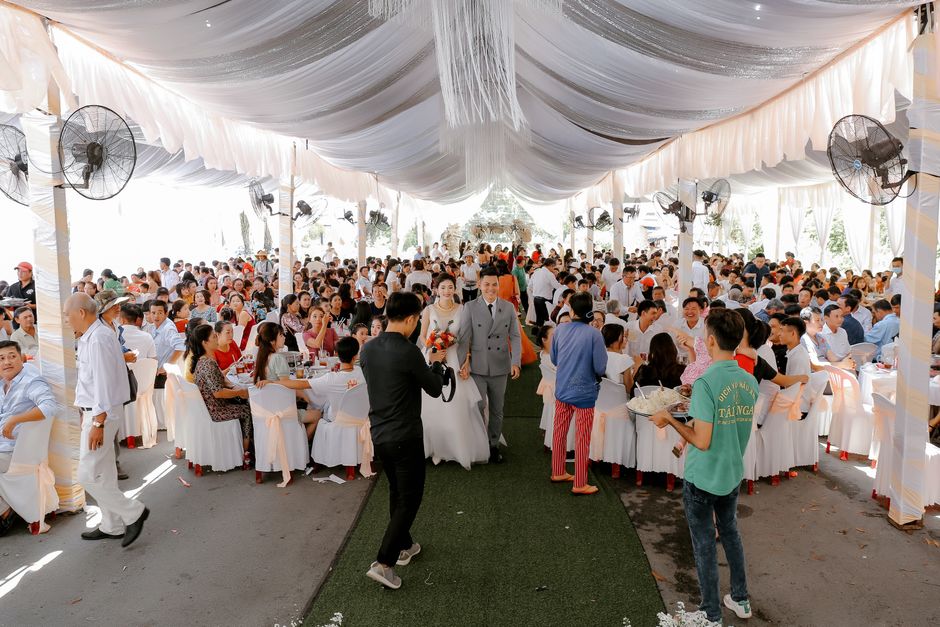
The last shuttle often runs after the send-off. Guests may want to leave with the couple, so position all return vehicles before the send-off and depart soon after. Keep an eye on older guests and families with children who may want an earlier return. Our wedding charter bus checklist covers return timing alongside other details.
Conferences and corporate events
Evening receptions often have a soft end. Name an end time in the program and align the last shuttle with it. If an after-party moves to another location, decide whether shuttles serve it. See charter buses for corporate events and holiday office party transportation.
Festivals and concerts
Crowds leave all at once when the headliner finishes. The last bus is really the last of many buses loading in quick succession, and the sweep may need to wait for traffic to clear. Encores and delayed sets are common, so build in a buffer. See music festival group travel and our concert and festival transportation page.
Sports events
Overtime and extra innings change the end time. Agree with the operator on how long buses will wait beyond the expected end, and how overtime is billed. See sports team charter buses.
Casino nights, theme parks and day trips
Group day trips have a single return bus by design, so the “last shuttle” is the only shuttle. Set a firm meeting time and place, collect phone numbers for every rider, and assign a group leader to count before the bus leaves. See our planning guides for casino trips and theme park trips.
Multi-day events
If the last shuttle on day one is chaotic, guests will change their behavior on day two (often leaving earlier, or not trusting the buses at all). Debrief each night and adjust.
What to Agree With Your Bus Operator
Before the event, confirm these in writing:
- The last scheduled departure time and the sweep departure time.
- The number and size of vehicles in the final wave and the sweep.
- The hold rule, including maximum hold time and who can authorize exceptions.
- The latest time the assigned drivers can operate, and whether a relief driver is planned.
- How overtime is handled and billed.
- The direct number for the operator’s dispatch during the final hour.
Our article on the charter bus contract explains where these details typically sit, and whether drivers stay with the group covers expectations during long events.
Safety at the End of the Night
The final departure is often after dark, with tired guests and sometimes alcohol. A few safety points:
- Keep the loading zone well lit until the sweep has left.
- Have staff at the bus door to help guests on the steps.
- Never let guests stand in the drive aisle between buses.
- Check the evening forecast. Rain, cold or late-night heat changes how long guests can safely wait outdoors; the National Weather Service publishes heat safety guidance and cold-weather advice for event staff. If conditions are poor, move the queue indoors and call guests out only when their bus is at the curb.
- Know the operator’s policy on intoxicated passengers and agree how staff will handle it.
- Make sure every vehicle has the emergency contact list. Our guide to charter bus emergency procedures covers what drivers and planners should know.
Debrief: Measure the Last Departure
The best last-bus plans are refined from real data. The morning after the event, while details are fresh, write down a few numbers and observations:
- How many riders boarded the final wave and the sweep vehicle?
- Was your estimate of remaining riders close, too high or too low?
- Were any buses held? For how long, and who approved it?
- Did anyone miss the sweep? How did they get home, and what did it cost?
- Which reminder did guests mention seeing: the text, the MC, the staff walk or the sign?
- Did the driver or operator raise any concerns about timing or hours?
Save these notes with the event file. For recurring events (an annual gala, a yearly conference, a returning festival), these figures make next year’s final wave much easier to size.
Your One-Page Last Shuttle Protocol
Copy this into your event run-of-show and fill in the blanks. Share it with your transportation team, venue and bus operator.
LAST SHUTTLE PROTOCOL

Event:
Date:
Venue hard close:
Bus service ends (contract):
Latest driver operating time (from operator):

PUBLISHED LAST SHUTTLE:      ____ p.m.
SWEEP VEHICLE DEPARTURE:     ____ (after venue walk)

FINAL WAVE
  Vehicles and seats:
  Position at loading zone by:
  Estimated remaining riders (update at 60 min out):

LAST-CALL LADDER
  60 min: text / app
  30 min: MC announcement (card provided)
  15 min: floor staff walk + text
  0 min:  staff at exits

HOLD RULE
  Normal hold maximum:
  Who can approve longer holds:
  Operator check required before long hold: yes

VENUE WALK
  Areas to check:
  Staff assigned:

AFTER THE SWEEP
  Staff member on site until:
  Rideshare / taxi budget and who authorizes:
  Phone number on last-bus sign:

CONTACTS
  Transportation lead:
  Dispatcher:
  Operator dispatch:
  Venue security:
Plan the End Before the Beginning
Leaving no guest behind is less about heroics at midnight and more about a few decisions made weeks earlier: a realistic last departure time, a final wave sized to the crowd, a ladder of reminders, a running count, a sweep vehicle, a hold rule and a backup ride. If you are planning a private event, wedding or corporate event, request a quote and tell us your last departure time. We will help you plan the final wave and sweep.