Why Charter Bus Bookings Are Surging After Labor Day

Every year around the first week of September, something predictable happens inside charter bus dispatch offices across the country: the phones don’t stop. Quote requests that trickled in over the summer suddenly arrive in waves, and by the middle of the month, some of the most popular weekends through December are already gone in high-demand markets.
If you’ve tried to book a bus for a fall event and found fewer open dates than you expected, you’re not imagining it. Labor Day functions as an informal starting gun for the busiest stretch of the charter bus calendar, and understanding why can save you real money, and a real headache, if you’re planning a trip anytime between now and the new year.
This isn’t one single cause. It’s roughly seven overlapping sources of demand that all happen to land in the same twelve-to-sixteen-week window, stacking on top of each other in a way that doesn’t happen at any other point in the year. Summer has its own busy stretches, but that demand is spread across roughly three full months of school breaks and family vacations. Fall compresses a similar volume of trips into a much narrower band of specific, date-sensitive weekends, which is exactly why availability feels so much tighter even when the total number of trips isn’t dramatically higher. Here’s what’s actually driving the surge, category by category.
A Realistic Snapshot of What September Looks Like
Picture a mid-sized regional charter fleet with twenty coaches. On a single weekend in late September, that operator might already have six buses committed to season-long football contracts, three tied up with weddings booked back in the spring, two supporting a university’s fall orientation weekend, and one covering a corporate client’s annual sales retreat. That’s twelve of twenty buses gone before a single new customer picks up the phone that week. The remaining eight have to cover everything else: field trips, family reunions, airport shuttles, funeral processions, festival transportation, and any last-minute requests that come in.
That’s not a worst-case scenario. It’s a fairly ordinary fall weekend for a charter operator in a football-heavy or wedding-heavy region, and it’s exactly why the surge feels less like “busy season” and more like an actual capacity ceiling once you get within a few weeks of a popular date.
College and High School Football Fills Buses Every Single Weekend
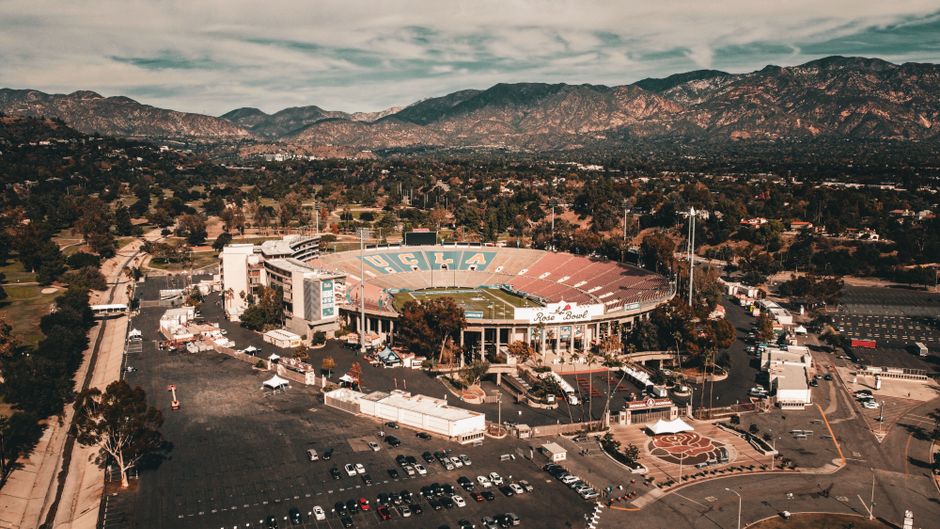
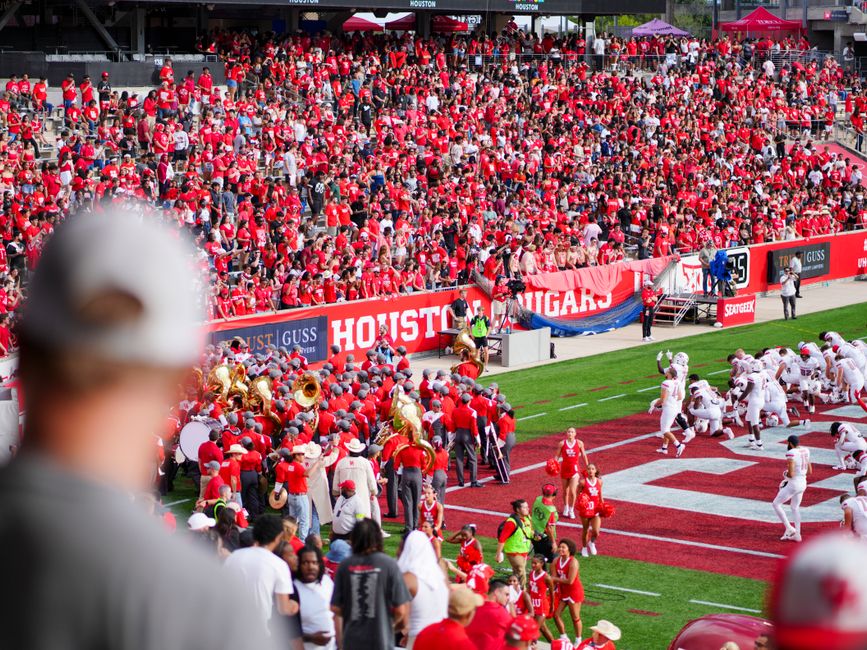
Football season is, by a wide margin, the single biggest recurring driver of the fall booking surge. Alumni associations charter buses for away games. Band programs move dozens of students and a truckload of equipment to every road contest. Booster clubs run fan buses to conference rivalries. Youth and high school teams travel to tournaments nearly every weekend from September through November.
What makes football different from a lot of other seasonal demand is its predictability and its repetition. A university with a home football schedule doesn’t need one bus for one Saturday, it needs a bus (or several) for every home and away game across a fourteen-to-sixteen-week season, and many programs lock in their transportation contracts for the entire season before the first kickoff. That means a meaningful share of fall charter capacity in college towns and football-heavy regions gets reserved months in advance, well before the general public starts thinking about their own October or November trip.
Fall Is Peak Wedding Season, Not Summer
Contrary to popular assumption, late summer and early fall (roughly late August through October) have become the most popular wedding months in much of the country, driven by cooler temperatures, fall foliage backdrops, and venues that book up less predictably than the traditional June peak. Wedding transportation, shuttling guests between hotels, ceremony sites, and reception venues, is one of the more logistically complex charter use cases, because it typically requires a bus (or several) held for a full day, sometimes with a split shift for late-night departures.
Wedding charters also tend to be booked far in advance, often six months to a year ahead, which means the fall wedding season’s charter demand was already partially “locked in” before summer even started. What that means for anyone trying to book a fall bus for a non-wedding trip: you’re not competing with other last-minute requests, you’re competing with reservations that were made when your own trip probably wasn’t even on the calendar yet.
Back-to-School Season Brings a Wave of Academic and Field Trip Travel
September and October are prime months for school field trips, once students are settled into the new academic year but before winter weather and holiday schedules start crowding the calendar. Museum trips, outdoor education programs, academic competitions, and college visit tours for high school juniors and seniors all cluster into this window. Add in fall orientation shuttles and athletic travel for school sports programs beyond football, and K-12 and higher education institutions become a significant, steady source of fall charter demand.
School bookings have a scheduling quirk that adds to the squeeze: many districts and universities work through procurement or purchasing-approval processes that take weeks, so even though the actual trip might be in October, the booking request often arrives in September, right in the thick of the football and wedding surge described above.
Corporate Travel Resets for Q4
Business travel follows the fiscal calendar more than most people realize. September through December is when a large share of companies run their sales kickoffs, all-hands meetings, client appreciation events, and holiday parties, partly to close out fiscal-year goals and partly because it’s simply become the default season for in-person corporate gatherings. Group ground transportation, whether it’s shuttling employees to an offsite retreat, moving a sales team between airport and venue, or running a fleet of buses for a company holiday party, adds up to a meaningful chunk of fall charter volume that has nothing to do with football, weddings, or school trips at all.
Corporate charter requests also tend to move fast once approved. A company deciding in late September to host a November all-hands doesn’t have the luxury of booking six months out, which means corporate demand often collides directly with the leftover availability from the football, wedding, and school segments that booked earlier.
Holiday Planning Starts Earlier Than You’d Think
By the time Halloween decorations come down, a significant share of the industry’s December bookings, office holiday parties, light show tours, family gatherings, and New Year’s Eve charters, are already locked in. Savvy corporate event planners and family trip organizers increasingly book their holiday transportation in September and October specifically to avoid the scramble that hits in November and early December, when availability for the most popular weekends (particularly the two weekends before Christmas) can dry up entirely in some markets.
This creates a layering effect: the same September-October window that’s absorbing football, wedding, school, and corporate demand is simultaneously absorbing early holiday-season bookings for trips that won’t even happen until six or eight weeks later.
Fall Foliage and Leisure Group Tourism Adds a Seasonal Spike of Its Own
In regions known for autumn scenery, New England, the Blue Ridge and Smoky Mountains, parts of the upper Midwest, fall foliage tourism creates its own dedicated demand spike, largely from senior travel groups, tour operators, and multigenerational family trips timed around peak leaf-color weeks. These trips are highly date-sensitive (leaf color windows typically run just two to four weeks in any given region) which concentrates an entire tourism season’s worth of demand into a handful of specific weekends, rather than spreading it evenly across the fall.
Regional Festivals, Conventions, and One-Off Events Add Unpredictable Local Spikes
On top of all the recurring, predictable categories above, individual markets see their own local surges tied to state fairs, harvest festivals, marathons, conventions, and other one-time or annual events. These are harder to plan around because they’re regional and event-specific, but they compound the effect in the exact markets where they occur, occasionally turning a normally moderate booking window into a genuinely sold-out one for a specific weekend.
Why the Surge Creates a Real Squeeze, Not Just a Busy Season
Two structural realities turn this pile-up of demand into an actual availability problem rather than just a busy stretch. First, the size of any local charter fleet is fixed in the short term. An operator can’t materialize ten extra buses because September got busy; the fleet they have is the fleet they have, and it’s shared across every category of demand described above. Second, the driver labor market remains tight nationally, which means even a company with a spare bus sitting in the lot may not have a qualified, available driver to put behind the wheel on a specific in-demand weekend.
Put those two constraints together with seven different sources of demand converging in the same twelve-week window, and it’s easy to see why fall charter availability tightens the way it does. It’s not that operators are trying to create urgency, it’s that the math of fixed supply meeting genuinely stacked demand works out that way every single year.
Fuel pricing volatility adds a third, less visible pressure on top of fleet size and driver availability. In a year like 2026, where diesel prices have swung sharply, operators managing tight margins during their busiest season have less room to discount or negotiate on price the way they might during a slower month, because the cost side of the equation is already moving against them. A trip organizer who waits until the last minute isn’t just competing for a shrinking pool of buses, they’re also more likely to be quoted at whatever the current fuel-adjusted rate happens to be that week, rather than a rate locked in months earlier. Our full breakdown of how gas prices affect charter bus rental costs covers exactly how that pricing mechanism works.
The Squeeze Looks Different Depending on Where You Are
The intensity of the fall surge varies a lot by region, and it’s worth knowing which pattern applies to your market. College towns and metro areas with major football programs see the sharpest weekend-specific spikes, often tied to a single opponent or rivalry date rather than the whole season evenly. Regions with strong fall tourism, New England during peak foliage weeks, wine country during harvest season, mountain towns during ski-season kickoff events, see demand concentrate into a tight two-to-four-week window rather than spreading across the whole fall. Large metro areas with a heavy concentration of corporate headquarters tend to see their squeeze arrive slightly later, in October and November, as Q4 event planning ramps up. And anywhere hosting a major one-off event, a convention, a festival, a tournament, can see an otherwise ordinary weekend turn into the single hardest date of the year to book, with very little advance warning for anyone outside that event’s own planning circle.
Knowing which of these patterns describes your area is genuinely useful information. If you’re booking in a college town, the football schedule (published months in advance) is a better planning guide than the calendar. If you’re booking somewhere known for fall tourism, treat the peak color or harvest weeks as a hard deadline for reserving your bus, not a target to aim for.
How to Actually Book Around the Fall Surge
None of this means you can’t get a good bus at a fair price for a fall trip. It means the standard advice, “book a few weeks out,” doesn’t really apply during this window. A few adjustments make a real difference:
Book as early as your plans allow, ideally 8 to 12 weeks ahead for a general fall trip, and even earlier, 4 to 6 months, if your date overlaps with a major local event, a college football weekend, or the two weekends before a major holiday. Our guide to how far in advance you should book a charter bus breaks this down further by trip type. If your dates have any flexibility, ask your operator whether a Friday or Sunday departure has more availability than the Saturday you originally had in mind, since Saturdays absorb the heaviest concentration of wedding and event traffic. Get your quote request in with real numbers, headcount, pickup and drop-off locations, and rough timing, rather than a vague inquiry, since a specific request lets an operator check real fleet availability instead of giving you a placeholder estimate, and reviewing common charter bus rental mistakes beforehand can help you avoid the most frequent booking missteps. And if you’re planning something for late November or December, start that conversation now rather than waiting until after Thanksgiving, since that’s exactly when the remaining holiday-season inventory disappears fastest.
If your organization runs the same kind of trip every year, whether that’s a booster club running to every away game or a company hosting an annual holiday party, locking in next year’s dates before this year’s season even ends is increasingly common practice among the planners who never seem to struggle with fall availability.
Advice by Trip Type
The right move during the fall surge depends somewhat on what kind of trip you’re planning, since each category above has its own booking rhythm.
Booster clubs and alumni groups: If you’re coordinating fan buses for a football season, contract the whole season at once rather than booking game by game. Season-long contracts are typically what operators prioritize when allocating their fleet, and locking in early protects every date on the schedule at once instead of leaving your November road games exposed to whatever’s left over.
Wedding planners and couples: Book your transportation at the same time you book your venue, not after. Because wedding charters routinely reserve six months to a year out, waiting until three months before the date puts you up against operators who may already be fully committed for your specific Saturday.
School and university trip coordinators: Submit your quote request as soon as a trip is approved internally, even if the purchasing paperwork isn’t finalized yet. Getting on an operator’s radar early, even with a soft hold, is far more useful than waiting for full administrative sign-off and then discovering your date is gone.
Corporate event planners: Build charter transportation into your Q4 event budget and timeline from the start rather than treating it as a logistics afterthought once the venue and agenda are locked. If your October or November event date has any flexibility, ask your operator which nearby dates have better fleet availability before finalizing your invitation list.
Family reunion and multigenerational trip organizers: Because these trips are often planned informally over months of group conversation, the actual booking can end up happening later than it should. Set a firm internal deadline, ideally 10 to 12 weeks before your date, to get a real quote request in, rather than letting the planning conversation drift until availability has already narrowed.
The Bottom Line
The fall booking surge isn’t a marketing story, it’s what happens when seven genuinely independent sources of demand, football, weddings, school trips, corporate events, early holiday planning, foliage tourism, and local festivals, all land in the same narrow calendar window against a fleet and driver pool that can’t expand to match it. Understanding which of those categories your own trip falls into (or which ones are competing against it) is the difference between booking calmly in September and scrambling for whatever’s left in November. For a wider view of how this fits into the industry’s bigger picture this year, see our full rundown of charter bus travel trends in 2026.
Have a fall trip on the calendar? Get a free quote now and lock in your dates before the season’s remaining availability disappears.
Frequently Asked Questions
Why does charter bus demand spike so hard after Labor Day? Seven overlapping demand sources, college and high school football, peak wedding season, back-to-school field trips, Q4 corporate travel, early holiday-season bookings, fall foliage tourism, and regional festivals, all converge in the same September-through-December window, competing for a fleet size and driver pool that can’t expand to match the surge.
How far in advance should I book a charter bus for a fall trip? Plan for 8 to 12 weeks ahead as a baseline, and 4 to 6 months out if your dates overlap with a major local event, a college football weekend, or the two weekends immediately before Christmas or another major holiday.
Is fall actually busier for charter buses than summer? In most markets, yes, at least for weekend availability. Summer has its own demand (camps, family vacations, graduation trips) but it’s spread more evenly across the season. Fall demand is concentrated into specific high-value weekends, which creates sharper local availability crunches even if summer’s total volume is comparable.
Does booking early actually get me a better price? Often, yes. Booking before fuel surcharge terms tighten and before an operator’s remaining fall inventory shrinks to premium-priced last-minute availability generally works in your favor. Locking in a quote early also protects you from the scheduling stress of settling for a less convenient bus size, pickup time, or departure day.
What’s the hardest weekend to book a charter bus in the fall? The two weekends before Christmas and any weekend that overlaps with a major local college football rivalry or regional festival tend to be the tightest, since those dates absorb the highest concentration of overlapping demand categories described above.
Can I still find a charter bus on short notice in the fall? Sometimes, especially for smaller groups or weekdays, but your options narrow fast the closer you get to a popular weekend. Operators often hold a small buffer of fleet capacity for last-minute requests, but that buffer is the first thing to disappear once the surge sets in, so short-notice bookings are far more reliant on luck and flexibility than they are during quieter months.
Do prices actually go up during the fall surge, or is it just availability that tightens? Both, typically. Reduced availability naturally pushes quoted rates up for the dates that remain, and 2026’s fuel price volatility has made operators less able to absorb cost pressure with discounting during their busiest season. Booking early generally protects you from both effects.
Is Sunday a better day to book than Saturday in the fall? Often, yes. Saturdays absorb the heaviest concentration of weddings, football games, and festivals, while Friday and Sunday departures frequently have more availability and sometimes better pricing, particularly for trips that don’t require a specific day for a scheduled event.
Does the fall surge affect every size of charter bus equally? Not quite. Full-size 56-passenger motorcoaches, the workhorse of football, wedding, and school group travel, tend to see the tightest availability first, since they’re the default choice for the largest and most common trip types. Minibuses and smaller shuttle-sized vehicles sometimes retain more flexibility later into the season, so if your group size is on the smaller end, it’s worth asking your operator whether a smaller vehicle opens up more scheduling options.