Veterans Organization Transportation for Reunions and Commemorative Events

What makes moving a group of veterans different from moving any other group of 50 adults? Start with the age range. A single unit reunion can put a 31-year-old Afghanistan veteran in the seat behind a 92-year-old who served in Korea, with spouses, widows, adult children and Gold Star families scattered in between. Add folded flags, wreaths, a color guard’s equipment cases, a walker or two, an oxygen concentrator, and a schedule built around a ceremony that will not wait for a late bus. That is why veterans reunion transportation deserves its own plan rather than a copy of the last church trip or company outing.
There is also the emotional pacing. A morning at a national cemetery can leave people drained by noon, and a banquet where a unit reads the names of its fallen does not end on a neat schedule. The bus has to fit around those moments.
This guide is for the reunion committee chair, post adjutant or auxiliary volunteer who ends up booking the bus. It works through five common event types as a casebook (the situation, the transportation plan, the details that are easy to miss), then covers accessibility, pacing, honor guard equipment, timing buffers, a committee checklist and cost splitting.
Why Veterans Reunion Transportation Needs Its Own Playbook
Your plan has to work for the member who walks five miles a day and the member who cannot manage a few steps without a cane. It has to respect ceremony protocol, and it has to account for families attending a memorial for someone they lost. Three habits separate smooth veterans events from stressful ones:
- Build the manifest early and in detail. Names, mobility needs, medical equipment, emergency contacts and, for base visits, whatever identification the installation requires.
- Plan the ceremony backward. Pick the moment the color guard steps off or the wreath is presented, then work back to boarding time with a generous buffer.
- Brief the operator like a partner. Share the run of show, the stops, the gear and the people. A written transportation brief for your bus provider prevents most of the day-of surprises.
For active-duty logistics, see our military group transportation planning guide.
Case 1: The Multi-Day Unit or Ship Reunion at a Hotel
The situation
A battalion association, a squadron alumni group or the shipmates of a decommissioned destroyer book a hotel block for three or four nights. Members fly or drive in from across the country. The program usually includes a hospitality room that stays open most of the day, one or two group tours, a memorial service, a business meeting and a closing banquet. Attendance can swing from 80 people on arrival day to 160 on banquet night when local families join.
The transportation plan
Think of a hotel reunion as three separate transportation problems sharing one calendar:
- Arrivals and departures. If most members fly into one airport, a scheduled airport loop on arrival day and departure day saves members from cab lines. Smaller groups often fit a mini bus, which is easier to position at a terminal curb and a hotel entrance.
- Daily tours. Tour days are where a full-size charter bus earns its keep: under-floor storage for walkers and folding wheelchairs, a restroom on longer runs, and a PA system so a tour guide or historian can narrate on the road.
- Banquet night. If the banquet is at the hotel, you may not need a bus at all. If it is at a VFW post, a country club or a museum hall across town, plan round trips with a split return so early leavers are not stuck waiting until the last toast.
Many reunion committees ask the hotel about its courtesy van and discover it seats 12 and is shared with every other guest. For anything larger, a dedicated hotel shuttle rental gives you a vehicle on your schedule. For multi-day programs, review how operators handle renting a charter bus for multiple days, including where the driver sleeps and how daily hours are counted.
The details that are easy to miss
- Tour sign-ups versus actual riders. Members sign up months ahead, then decide at breakfast that they would rather stay in the hospitality room. Collect a headcount the night before each tour, not just at registration.
- Memorabilia travels too. Associations often bring display boards, unit flags, a ship’s bell replica or a memorial book for the banquet. Tell the operator about anything bulky so it gets a bay of its own.
- Driver hours on long days. A tour that leaves at 8:00 a.m. and a banquet that ends at 10:30 p.m. may exceed what one driver can legally cover. Ask the operator early whether you need a second driver or a separate evening vehicle.
Case 2: Veterans Day Ceremonies and Parades on November 11, 2026
The situation
Veterans Day falls on Wednesday, November 11, 2026. Because 2026 is the nation’s 250th anniversary, many communities folded America 250 themes into their observances this year, which can mean larger crowds, more officials and longer programs than a typical year. A midweek date also means parade routes share streets with weekday traffic.
The transportation plan
Parades and ceremonies have two pressure points: the staging area and the dispersal area. The color guard and marching members need to be at staging well before step-off, usually at a location different from where spectators gather. Members who cannot march the whole route may ride in a vehicle in the parade itself, which is a separate arrangement with the parade committee.
- Get the parade or ceremony committee’s staging map and step-off time in writing.
- Ask where charter vehicles may drop off and wait. Many towns close streets early and set specific bus parking.
- Plan the drop at staging, then a separate pickup at the end of the route, which may be a mile or more away.
- If the group splits (marchers versus spectators), consider two smaller vehicles instead of one large one.
For a VFW or American Legion bus trip to a larger regional ceremony, a midsize vehicle often makes the most sense. A shuttle bus can be easier to fit into a crowded downtown drop zone than a 56-passenger coach, and it is plenty for a post’s color guard, auxiliary members and a few riders who need the shorter walk.
The details that are easy to miss
- Road closures start early. Ask the operator to plan the approach from the side of town that stays open longest.
- Multiple events, one bus. If your post covers a morning ceremony and a noon luncheon, build each leg into the quote.
Case 3: Memorial Dedications and Monument Unveilings
The situation
A county unveils a new veterans memorial. A unit association dedicates a plaque at a state park. A city adds names to an existing monument. These events usually involve elected officials, sometimes a military flyover or a ceremonial unit from a nearby installation, and a security perimeter around the dais. Seating may be limited and reserved, with families of honorees placed in front.
The transportation plan
Dedications reward precise timing more than any other event in this casebook. The organizing committee will typically want honored families and VIP guests seated before the general public, and the program will start on time because officials have the next stop on their calendar.
- Separate the honored families. Gold Star families, surviving spouses and veterans being recognized should not be boarding the same bus as 50 general attendees at the last minute. A small dedicated vehicle lets them arrive first and leave when they are ready. Our guide to separating VIP, staff and attendee transportation walks through how to structure that.
- Know the perimeter. If law enforcement or event security sets a perimeter, ask where buses may unload and whether vehicles will be inspected. Share the operator’s vehicle details and driver name if requested.
- Stage, do not circle. Arrange a staging spot where the bus can wait within a short call of the drop point. For guidance on what an operator expects during a wait, see whether a charter bus can wait during your event.
The details that are easy to miss
- Grass, gravel and slopes. New memorials are often in parks or on lawns. The walk from the bus to the seating area can be uneven and far. Ask the venue whether a golf cart or accessible path is available, and make sure the bus drops at the closest legal point.
- Press and photos after the program. Families often linger for photos with the honoree’s name. Build 30 to 45 minutes after the scheduled end before the bus departs, and confirm that time with the operator as part of the quote.
Case 4: National Cemetery Visits and Wreath Laying
The situation
A national cemetery group visit can be the emotional center of a reunion. Members may lay a wreath at a section where comrades are buried, visit individual graves, or attend a scheduled ceremony. National cemeteries are run by the VA’s National Cemetery Administration, which provides cemetery locations and a nationwide gravesite locator that families can use before the trip.
We are not going to list cemetery rules here because they vary by site and change. Each national cemetery has its own office, hours, roadway layout and expectations for organized groups, ceremonies and vehicles. Call the specific cemetery office well ahead of your visit, explain that you are bringing a group by bus, and ask about parking, roads that full-size coaches can use, committal services in progress, and any requirements for a planned wreath laying.
The transportation plan
- Look up graves before you go. Use the gravesite locator to get section and site numbers for every name your members want to visit. Print a list sorted by section so the group can move efficiently.
- Group stops by section. If the cemetery allows the bus on interior roads, plan two or three short stops instead of one long walk. If coaches must stay in a designated lot, plan for a smaller vehicle or a walking route with rest points.
- Respect active services. Burials take place on weekdays at many national cemeteries. Your group may need to pause or route around a committal shelter. Build in time for that.
The details that are easy to miss
- The ride home is quieter. After a cemetery visit, many groups prefer a calm ride with no PA announcements for a while. Tell the driver in advance.
Case 5: Museum or Military Installation Visits
The situation
Reunions frequently include a museum day or a visit to the base where the unit once trained. In New York, the New York State Military Museum and Veterans Research Center in Saratoga Springs is a natural stop for groups touring the Capital Region, and a Saratoga Springs charter bus rental can tie it to a lunch downtown and a ride past the Saratoga battlefield area. Groups with ties to the 10th Mountain Division often plan around Fort Drum, where a Watertown, NY charter bus keeps everything local to the North Country. West Point and the Hudson Valley draw reunion groups for the scenery and history as well.
In Texas, San Antonio combines Joint Base San Antonio, the Alamo and Fort Sam Houston National Cemetery, and a San Antonio charter bus rental can string those together in one long day. Central Texas reunions often center on Fort Cavazos (formerly Fort Hood), where a Killeen charter bus handles hotel pickups and base museum trips. El Paso groups gravitate to Fort Bliss and its museums.
The transportation plan
Base access is the planning item that trips up reunion committees most often. Installations set their own visitor procedures, and requirements can change with the security posture. As a general rule, expect that the installation will want an advance roster, that riders will need acceptable identification, and that the vehicle and driver may be checked at the gate. Confirm every requirement directly with the installation’s visitor center or the host office sponsoring your visit, and do it weeks ahead, not days.
- Ask the installation which gate a charter vehicle should use and whether there is a specific inspection lane.
- Confirm whether members with retiree or veteran ID cards follow a different process than spouses and guests.
- Send your operator the final roster and gate instructions together, so the driver is not hearing about them for the first time at the guard shack.
For base trips and government-coordinated events, a provider familiar with government and military charter bus rental will already know to ask the right questions.
The details that are easy to miss
- Late additions. A member’s grandson decides to come along the morning of the trip. If he is not on the roster, he may not get through the gate. Set a firm roster cutoff and explain why.
- Museum group rates and timed entry. Many museums require advance booking for groups. Confirm the entry time and plan the bus arrival 15 minutes before it.
Accessibility: Lifts, Wheelchairs and Oxygen Equipment
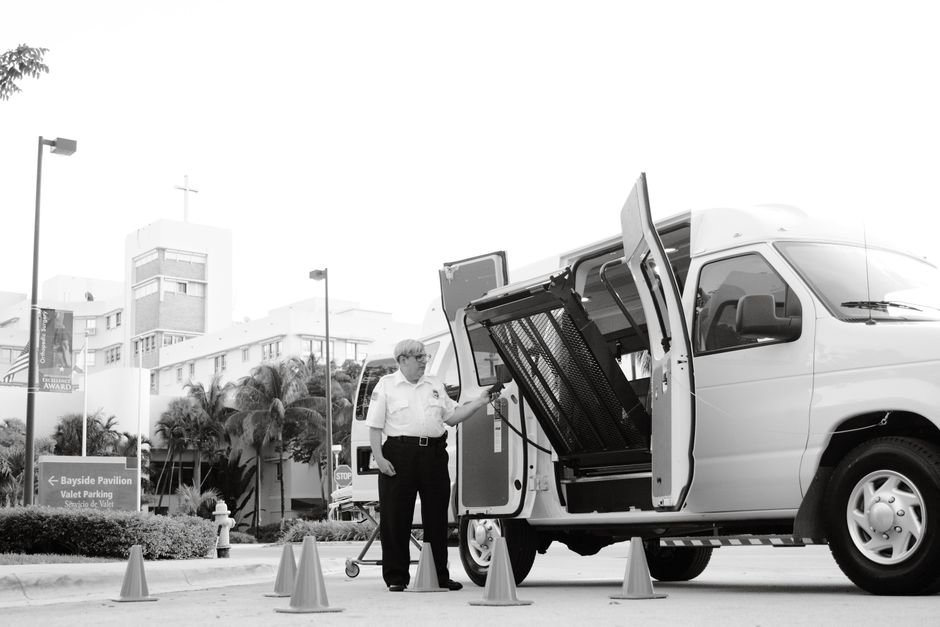
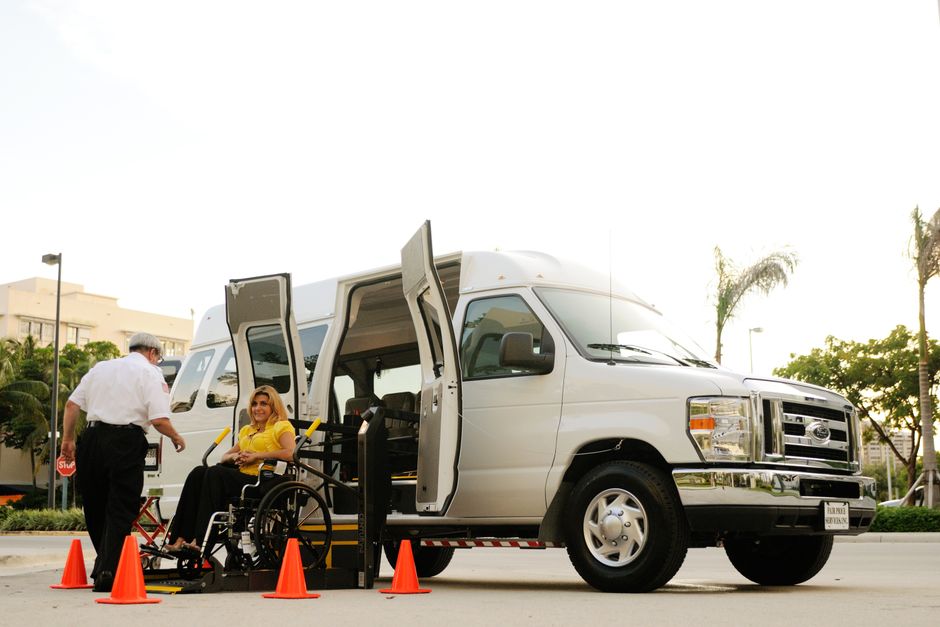
In veterans reunion transportation, accessibility is not a side note. It is often the first question that determines which vehicle you book. Plenty of older veterans and surviving spouses can climb coach steps on a good day but struggle after a long cemetery walk. Others use wheelchairs full time.
Start by collecting accurate information on the registration form. Instead of asking “Do you have any special needs?”, ask specific questions:
- Do you use a wheelchair, scooter or walker? Is it folding or rigid? Can you transfer to a bus seat?
- Can you climb three to four steps with a handrail?
- Will you travel with a portable oxygen concentrator or other medical device that needs power?
- Do you need a seat near the front or near the restroom?
The ADA.gov site from the Department of Justice explains the general obligations that apply to transportation providers. In practice, what matters for your trip is the specific vehicle: whether it has a wheelchair lift, how many securement positions it offers, and how much notice the operator needs to provide a lift-equipped bus. Our guides on what to expect from ADA-accessible charter buses and bringing a wheelchair on a charter bus cover the mechanics in detail.
On oxygen concentrators and other powered medical devices, do not assume. Ask the operator directly whether the vehicle has outlets that can support the device, whether there are any restrictions on compressed oxygen cylinders, and what the rider should bring as backup battery capacity. The rider’s medical supplier can tell them how long their device runs on battery. Get the operator’s answer in writing.
Committees whose membership skews older should also read our senior group trip planning guide.
Pacing, Rest Stops and the Emotional Rhythm of the Day
A reunion itinerary that looks reasonable on paper can be exhausting in practice. Here is how experienced committees pace a veterans group:
- Limit drive segments. As a planning assumption, plan a comfort stop roughly every 90 minutes to two hours, even if the bus has a restroom. Getting up and walking matters as much as the restroom.
- Alternate heavy and light. Do not stack a cemetery visit, a memorial dedication and a museum on the same day. Follow a heavy morning with a relaxed lunch and an easy afternoon.
- Plan quiet time. After a memorial or name reading, give people room. Some will want to talk; others will want to look out the window.
Boarding also takes longer than committees expect. A coach of 50 members where a dozen use canes or walkers can take 15 to 20 minutes to load, longer if wheelchairs are going on a lift. Build that into every departure time. Assigning a bus captain for each vehicle helps: one person who holds the roster, counts heads and is the driver’s single point of contact.
Flags, Wreaths and Honor Guard Equipment
Veterans groups travel with gear that most charter groups never carry. Plan for it explicitly.
Flags and staffs
Color guard flags on full-length staffs do not fit in a seat row. Cased flags and broken-down staffs usually travel in the luggage bays. Ask the operator about bay dimensions if your staffs do not break down, and pack them in protective cases. Our explanation of charter bus storage compartments covers what fits where.
Wreaths and memorial items
Load wreaths, easels and framed photos last so they come out first, and assign one member to stay with them.
Ceremonial rifles
Some honor guards and firing details carry ceremonial or drill rifles, and some carry functional rifles for rifle volleys. This is an area where you must confirm two things before the trip: the charter operator’s own policy on transporting any firearms, ceremonial weapons or blank ammunition, and the laws of every jurisdiction the bus will pass through. Policies and laws vary widely, and nothing in this article is legal advice. Disclose everything to the operator in writing at booking, not at the curb. If the operator cannot accommodate the equipment, the honor guard may need to transport it separately under its own arrangements.
Building a Ceremony Timing Buffer
Ceremonies start on time. Buses run into traffic, closed roads and slow gates. The fix is a deliberate buffer, set backward from the moment that cannot move.
| Milestone | Planning assumption | Why it matters |
|---|---|---|
| Color guard or honorees in position | 30 to 45 minutes before program start | Ceremony organizers often require early check-in for participants |
| Bus arrives at drop point | 15 to 20 minutes before that | Unloading members with mobility aids takes time |
| Traffic and closure buffer | 20 to 30 minutes, more for parades | Road closures and security checks are unpredictable |
| Boarding at hotel or post | 15 to 20 minutes before departure | Older groups board slowly; build in a final headcount |
| Base gate processing | Confirm with the installation | Inspection time varies by gate and day |
These are starting points. Confirm the operator’s arrival time in the contract; our timing guide on how early a charter bus should arrive explains how operators set their own pre-trip windows.
Reunion Committee Checklist
Use this table to divide transportation duties among committee members. Unit reunion planning goes far more smoothly when each line has a name next to it.
| Task | Timing | Owner |
|---|---|---|
| Draft the full itinerary with every stop, ceremony and meal | 6 to 9 months out | Reunion chair |
| Request quotes and confirm vehicle types, lifts and bay space | 4 to 6 months out | Transportation lead |
| Verify operator authority and insurance | Before signing | Transportation lead |
| Add mobility and medical device questions to registration | With registration launch | Registrar |
| Contact cemetery office, installation or venue about bus access | 8 to 12 weeks out | Program lead |
| Collect base visit roster and ID details | Per installation deadline | Registrar |
| Disclose flags, rifles and memorial items to operator in writing | At booking | Honor guard commander |
| Send final run of show and roster to operator | 7 to 10 days out | Transportation lead |
| Assign bus captains and print rosters | 1 week out | Reunion chair |
| Night-before headcount for each tour | Each evening | Bus captains |
For the verification step, the Federal Motor Carrier Safety Administration is where you confirm that an interstate passenger carrier is registered and check its safety record. Our walkthrough on verifying that a charter bus company is licensed and insured shows exactly where to look.
How to Split the Cost
Veterans organizations fund transportation in a handful of ways, and most reunions combine two or three:
- Build it into the registration fee. The cleanest option for multi-day reunions. Members pay once, and the tour bus is simply part of the package.
- Per-tour pricing. Charge separately for optional tours so members who skip them do not subsidize them. Set a minimum headcount and a cancellation date that lines up with the operator’s terms.
- Post or chapter funds. Many VFW and American Legion posts budget for Veterans Day and memorial events. Check your bylaws and get any expenditure approved at a regular meeting.
- Sponsors. Local businesses, defense contractors with a local presence and civic clubs often sponsor a bus for a ceremony. Offer recognition in the program or on a sign at the boarding area.
Most veterans organizations are nonprofits, so read our tips on getting a discount on charter bus rentals for nonprofits. To understand what drives the number, review charter bus rental pricing before you set your per-person fee. Leave a cushion for driver gratuity, parking and any wait time beyond the quoted hours.
Working With National Organizations and Related Programs
If your event is tied to a national organization, check its resources first. The Veterans of Foreign Wars and The American Legion both support local posts with event guidance, and their department or state offices often know which venues in your area handle groups well.
Some members may also be interested in Honor Flight Network, a nonprofit that takes veterans to Washington, D.C., to visit the memorials built in their honor. Honor Flight hubs run their own trips, but posts and reunion groups sometimes organize ground transportation for send-offs and welcome-home events at the local airport. Coordinate directly with your regional hub before planning anything around one of their flights.
Frequently Asked Questions
How far ahead should we book veterans reunion transportation?
For a multi-day reunion, start requesting quotes four to six months out, earlier if your dates overlap with fall foliage season, football weekends or Veterans Day week, when vehicle demand rises. For a single Veterans Day ceremony, two to three months is a reasonable minimum. Lift-equipped vehicles may need more lead time.
Can a charter bus drive into a national cemetery?
It depends on the cemetery. Road layout, coach parking and visitor procedures differ from one national cemetery to another. Call the specific cemetery office, explain the size of your vehicle and your group, and ask where the bus may stop. Share the answer with your operator.
What do we need for a group visit to a military base?
Expect the installation to want an advance roster and acceptable identification for every rider, and expect the vehicle and driver to be checked at the gate. Requirements are set by each installation and can change, so confirm everything directly with the visitor center or your host office well in advance.
Can our honor guard bring rifles on the bus?
Only if the operator’s policy allows it and it complies with the laws of every jurisdiction on the route. Disclose all ceremonial weapons and any blank ammunition in writing when you book. If the operator declines, the honor guard should transport the equipment separately under its own arrangements. This is not legal advice.
How do we accommodate members who use oxygen concentrators?
Ask on the registration form who will travel with a powered medical device, then ask the operator whether the vehicle has suitable outlets and any restrictions on oxygen equipment. Members should bring enough battery capacity for the full day as a backup.
Should Gold Star families ride with the main group?
It depends on the family’s wishes. Many committees offer a separate smaller vehicle so families can arrive early for reserved seating and leave on their own schedule. Ask them what they prefer rather than deciding for them.
Whether you are organizing a ship reunion, a Veterans Day color guard trip or a memorial dedication, the right vehicle and a clear plan let your members focus on each other and on the people they came to honor. Share your itinerary, headcount and accessibility needs, and request a free quote for your veterans group today.