
Mini Bus vs Sprinter Van: Which One Should You Rent?

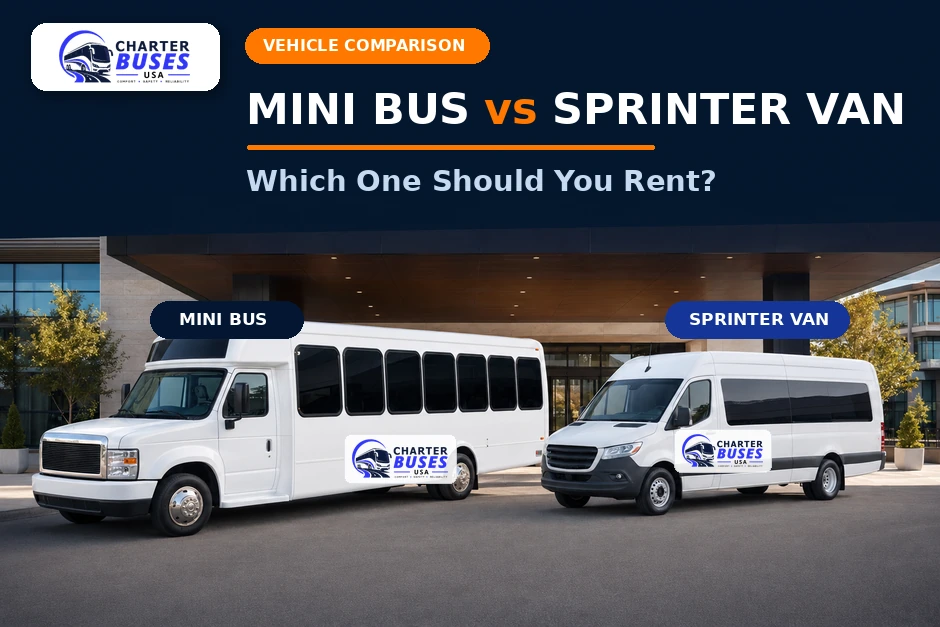
Picking between a mini bus and a Sprinter van feels simple until you actually start comparing seat counts, luggage space, and pricing side by side. The mini bus vs Sprinter van decision trips up a lot of event planners, families, and corporate travel coordinators because both vehicles look similar from the outside but perform very differently once passengers and bags get loaded in. In this guide, you’ll learn exactly how these two vehicle types differ in capacity, comfort, cost, and driving requirements, plus which one makes more sense for weddings, corporate travel, airport runs, and group tours.
By the end, you’ll have a clear framework for choosing the right vehicle for your group size, budget, and trip type, without guessing or overpaying.
What Is a Mini Bus?
A mini bus is a mid-size passenger vehicle built specifically for group transportation. Unlike a van that’s been retrofitted with extra seats, mini buses are manufactured or converted with transit-style seating, wider aisles, and higher rooflines that let most adults stand up straight while boarding.
Mini buses typically seat anywhere from 12 to 35 passengers, depending on the chassis and floor plan. Popular platforms include the Ford Transit, Ford E-450, and Freightliner chassis, often built out by companies that specialize in commercial passenger vehicles. If you want a deeper breakdown of exactly how many seats fit into different mini bus configurations, our guide on how many seats are on a mini bus covers every common layout in detail.
Common Features of a Mini Bus
- Bench or transit-style seating arranged in rows
- Higher ceiling clearance for easier boarding
- Onboard storage racks or an undercarriage luggage bay
- Optional amenities like PA systems, extra AC units, and USB charging ports
- Wheelchair lift or ramp options on many models
Because mini buses are purpose-built for moving groups, they tend to feel more like a small charter bus than an oversized van. That distinction matters once you start comparing comfort, legroom, and the overall passenger experience against a Sprinter van.
What Is a Sprinter Van?
A Sprinter van (a term that’s become almost generic, even though “Sprinter” is technically a Mercedes-Benz model) refers to a tall, narrow-bodied passenger van built on a van chassis rather than a bus chassis. These vehicles are popular for airport transfers, small group tours, and corporate shuttles because they’re nimble, easy to park, and often feel more like a luxury SUV than a commercial vehicle.
Sprinter vans typically seat between 8 and 15 passengers, depending on the trim and seating configuration. Because they’re built on a van platform rather than a bus platform, they tend to have a lower center of gravity, tighter turning radius, and a more car-like driving feel. That makes them a popular choice for shorter trips, smaller groups, and situations where maneuverability matters more than raw capacity.
Common Features of a Sprinter Van
- Plush, individual captain’s chairs instead of bench seating
- Leather or premium upholstery in many rental fleets
- Tinted windows and mood lighting on higher-end models
- Rear luggage compartment (though space is more limited than a mini bus)
- Easier highway merging and parking lot navigation due to a smaller footprint
Sprinter vans are often marketed as a premium, boutique transportation option. They’re the vehicle you’ll see picking up a small wedding party, a corporate executive team, or a group of six to ten friends heading to a wine tasting. They aren’t designed to compete with full-size buses on capacity, but they win on comfort and style for smaller groups.
Mini Bus vs Sprinter Van: Key Differences
Now that you understand what each vehicle actually is, let’s break down the differences that matter most when you’re trying to decide which one to book for your trip.
Passenger Capacity
This is usually the single biggest factor. Sprinter vans max out around 12 to 15 passengers in most rental fleets, and that’s with a tight, no-frills seating layout. Mini buses start around 12 passengers and scale up to 35, giving you a much wider range to work with.
If your group is under 10 people, a Sprinter van will almost always be the more comfortable and cost-effective choice. If your group is between 15 and 30 people, a mini bus is usually the only realistic option, since you’d need two or three Sprinter vans (and two or three drivers) to move the same number of passengers.
Comfort and Legroom
Sprinter vans generally offer a more premium interior experience for smaller groups. Captain’s chairs, extra legroom, and a lower passenger count mean everyone gets more personal space. For a two- or three-hour ride, that comfort difference is noticeable.
Mini buses, on the other hand, prioritize functional comfort at scale. You won’t get leather captain’s chairs, but you will get a taller ceiling, wider aisles, and enough room to comfortably move around, stand up, or shift positions during a longer trip. For groups that don’t mind bench-style seating, the tradeoff is well worth it.
Luggage and Storage Space
Sprinter vans have limited rear cargo space, which is fine for a group heading to dinner or a corporate meeting but can get cramped fast if everyone’s bringing suitcases for a multi-day trip. Mini buses, especially those built on a bus chassis, often include underneath luggage bays or rear storage racks that can handle full-size luggage for an entire group.
If you’re planning an airport transfer, a weekend getaway, or any trip involving suitcases and bags, the extra storage capacity of a mini bus can be a deciding factor on its own.
Driving Requirements and Licensing
This is an area many renters overlook. Depending on the seating capacity and gross vehicle weight, some larger mini buses require a driver with a Commercial Driver’s License (CDL) or a specific passenger endorsement, in line with Federal Motor Carrier Safety Administration regulations. Sprinter vans, because they typically seat under 15 passengers and fall under a lower gross vehicle weight rating, often don’t require the same level of licensing.
When you rent through a professional charter company, this usually isn’t something you need to worry about, since the company supplies a properly licensed driver. But it’s worth understanding, especially if you’re comparing quotes and wondering why a larger mini bus rental sometimes costs more per hour than the vehicle size alone would suggest.
Cost to Rent
Sprinter vans are generally cheaper per hour than mini buses, but that’s only part of the story. Once you factor in cost per passenger, mini buses often come out ahead for medium to large groups. Renting three Sprinter vans (plus three drivers) to move 30 people will almost always cost more than a single 30-passenger mini bus with one driver.
For a detailed breakdown of what factors into mini bus pricing, including hourly rates, daily rates, and how trip distance affects your total, check out our mini bus rental pricing guide. It walks through real pricing ranges so you can budget accurately before requesting a quote.
Best Use Cases
Sprinter vans tend to shine for:
- Small corporate shuttles and executive transport
- Airport pickups for groups of 6 to 12
- Wine tours, brewery tours, and small group outings
- Wedding parties needing a stylish, comfortable ride
Mini buses tend to shine for:
- School groups, sports teams, and youth organizations
- Church groups and community outings
- Corporate events with 15 to 30 attendees
- Airport shuttles for larger groups with luggage
- Multi-day trips where storage space matters
When Should You Rent a Mini Bus?
A mini bus makes the most sense when your group size falls between 15 and 35 passengers, or when you know luggage space will be a factor. It’s also the smarter choice if you want a single vehicle and a single driver handling the entire group, rather than splitting people across multiple vans.
Mini buses are particularly well suited for:
- School field trips and after-school activity transport
- Sports teams traveling with equipment
- Wedding shuttle service between a venue and hotel for larger guest lists
- Corporate offsites, conferences, and team-building events
- Airport transfers for tour groups or extended families
If you’re still not sure exactly how many seats you’ll need, our guide on mini bus seating capacity can help you match your headcount to the right floor plan before you book.
When Should You Rent a Sprinter Van?
A Sprinter van is the better pick when your group is smaller, typically under 12 people, and comfort or presentation is a priority. It’s also a great option when you need a vehicle that can navigate tighter city streets, valet parking, or venues without dedicated bus parking.
Sprinter vans work especially well for:
- Corporate executive transport and VIP airport pickups
- Small bachelor or bachelorette parties
- Wine tasting tours and brewery hopping with a small group
- Wedding parties needing upscale transportation
- Point-to-point transfers in urban areas with limited bus access
Mini Bus vs Sprinter Van: Quick Comparison Table
| Feature | Mini Bus | Sprinter Van |
|---|---|---|
| Typical Capacity | 12 to 35 passengers | 8 to 15 passengers |
| Seating Style | Bench or transit-style rows | Individual captain’s chairs |
| Ceiling Height | Stand-up height on most models | Lower, more van-like clearance |
| Luggage Space | Dedicated storage bays common | Limited rear cargo area |
| Best For | Medium to large groups, multi-day trips | Small groups, short transfers |
| Driver Licensing | May require CDL depending on size | Typically standard license |
| Cost Per Passenger | Lower for larger groups | Lower for smaller groups |
Other Factors to Consider Before You Book
Beyond capacity and cost, a few other details can influence which vehicle makes more sense for your trip.
Trip Length
For short transfers under an hour, either vehicle will feel comfortable. For anything longer, especially multi-hour trips or full-day charters, the extra room and amenities on a mini bus (like onboard restrooms on some larger models, extra AC units, and more legroom per row) start to matter a lot more.
Amenities Onboard
Some mini buses come equipped with PA systems, USB charging ports, and even Wi-Fi, which can be useful for corporate groups or tour operators who want to communicate with the group while en route. Sprinter vans typically keep things simpler, focusing on comfort rather than tech features, though premium models may include some of the same amenities.
Accessibility Needs
If anyone in your group uses a wheelchair or has mobility limitations, check availability early. Many mini bus fleets include models with wheelchair lifts or ramps, while accessible Sprinter van options tend to be more limited and may need to be requested well in advance.
Parking and Route Restrictions
Sprinter vans have an advantage in cities with tight streets, low parking garages, or venues that don’t have dedicated bus zones. If your itinerary involves a lot of urban stop-and-go with limited parking, that maneuverability can outweigh the extra capacity of a mini bus.
Group Type and Purpose
A youth sports team headed to a tournament has very different needs than a corporate team headed to an off-site retreat, even if the headcount is similar. Think about how your group will actually use the vehicle, whether that’s loading equipment, making multiple stops, or simply getting from point A to point B in comfort, and let that guide your decision as much as the passenger count does.
If you’re comparing more than just these two options and want to see how a full-size motorcoach stacks up against a smaller mini bus, our article on charter bus vs mini bus rentals breaks down that comparison in detail as well.
Frequently Asked Questions
Is a Sprinter van cheaper than a mini bus?
Per hour, yes, Sprinter vans usually cost less than mini buses. But for groups larger than 12 to 15 people, you’d need multiple Sprinter vans and drivers, which often ends up costing more in total than a single mini bus rental.
How many people fit in a Sprinter van versus a mini bus?
Sprinter vans typically seat 8 to 15 passengers, while mini buses range from 12 to 35 passengers depending on the model and floor plan.
Do I need a special license to drive a mini bus or Sprinter van?
It depends on the seating capacity and gross vehicle weight. Larger mini buses often require a CDL with a passenger endorsement, while most Sprinter vans fall under standard licensing requirements. When you book through a professional rental company, a licensed driver is typically included.
Which is better for a long road trip, a mini bus or Sprinter van?
For longer trips, a mini bus is usually more comfortable thanks to extra legroom, standing headroom, and dedicated luggage storage. Sprinter vans are better suited to shorter trips where comfort and style matter more than space.
Can a Sprinter van handle luggage for a group trip?
Sprinter vans have limited rear cargo space, which works fine for day trips or light bags. For multi-day trips with full suitcases, a mini bus with a dedicated luggage bay is usually the safer choice.
Final Verdict: Which One Should You Rent?
There’s no universal right answer here, only the right vehicle for your specific group and trip. If you’re moving a small group of 12 or fewer and comfort or presentation matters, a Sprinter van is likely your best bet. If you’re coordinating a group of 15 or more, especially with luggage or a longer trip involved, a mini bus will almost always deliver more value and a smoother experience.
The smartest move before booking either one is to get a firm headcount, be honest about your luggage and comfort needs, and request quotes for both vehicle types so you can compare real pricing side by side. A reputable charter company will help you match the right vehicle to your group instead of upselling you into more (or less) than you actually need.