Are Seat Belts Required on Charter Buses? What Every Passenger Should Know

If you have ever climbed aboard a charter bus for a school trip, wedding, or corporate retreat, you have probably looked around and wondered: are seat belts required on charter buses, and does anyone actually have to wear one? It is a fair question. Cars have had mandatory seat belt laws for decades, yet buses have always felt like a different animal, with rows of forward-facing seats and no obvious harness system in older models.
The truth is that the answer has changed significantly over the past decade. Federal regulations now require seat belts on most newly manufactured charter buses, though the rules around who must actually buckle up are more complicated than you might expect. In this guide, we will break down the federal requirements, state-level enforcement, safety statistics, and practical tips so you know exactly what to expect the next time you book a charter bus.
The Short Answer: Yes, Newer Charter Buses Must Have Seat Belts
As of November 2016, federal law requires that all newly manufactured motorcoaches, the large buses most commonly used for charter and tour service, come equipped with three-point lap and shoulder seat belts at every passenger seating position. This rule came from the National Highway Traffic Safety Administration (NHTSA) and applies to buses built after that date.
So if you book a relatively new charter bus, you can expect a seat belt at your seat. However, older buses that were manufactured before the rule took effect are not required to be retrofitted, which means some charter buses still on the road today may not have seat belts at all. This is one of the biggest points of confusion for travelers, and it is worth understanding in more detail before you assume every charter bus you board will have the same safety equipment.
The Federal Regulation Behind Seat Belts on Charter Buses
To really understand seat belts on charter buses, it helps to know where the rule came from and what it actually says. The requirement is part of the Federal Motor Vehicle Safety Standards (FMVSS), specifically FMVSS 208 (occupant crash protection) and FMVSS 210 (seat belt assembly anchorages).
Why NHTSA Created the Rule
For years, safety investigators at the National Transportation Safety Board (NTSB) had flagged motorcoach rollover crashes as a major safety concern. Investigations repeatedly found that passengers who were ejected from buses during rollovers suffered far more severe injuries and fatalities than those who stayed inside the vehicle. In several high-profile crashes involving tour buses and charter buses, unbelted passengers were thrown from their seats or through windows, while seat belts likely would have kept them contained and reduced the severity of their injuries.
After years of research, public comment periods, and pressure from safety advocates, NHTSA finalized a rule in November 2013 requiring seat belts on new motorcoaches. Manufacturers were given a three-year window to update their production lines, which is why the rule officially took effect for buses built on or after November 2016.
What Counts as a
For related reading, see our guide on Are Pets Allowed on Charter Buses? What You Need to Know.
“Motorcoach” Under the Rule
Not every large vehicle on the road falls under this federal seat belt mandate, so it’s worth understanding exactly what NHTSA classifies as a “motorcoach.” According to the rule, a motorcoach is defined as a bus with a gross vehicle weight rating (GVWR) greater than 26,000 pounds, designed to carry more than 16 passengers (including the driver), and built with a forward-facing passenger seating configuration. This definition covers the vast majority of the vehicles used by charter bus companies for weddings, corporate trips, school field trips, sports team travel, and long-distance group tours.
It’s important to note that the rule applies specifically to buses manufactured on or after November 2016. Buses built before that date, even if they’re still in active service today, are not required to have seat belts installed retroactively. This creates a bit of a gray area for passengers, since a perfectly legal, well-maintained charter bus built in 2014 might not have any seat belts at all, while a bus built in 2017 will have them at every seat.
Which Charter Buses Are Required to Have Seat Belts?
Now that we’ve covered the origin of the rule, let’s break down exactly which vehicles are subject to it and which ones aren’t. This is where a lot of passenger confusion comes from, because “charter bus” is a broad term that covers several different vehicle types, and not all of them are treated the same way under federal law.
New Buses vs. Older Models
As mentioned above, the seat belt requirement only applies to motorcoaches manufactured after November 2016. Charter bus companies that have updated their fleets in recent years are likely operating vehicles with seat belts at every seat. However, the charter bus industry includes many companies that operate mixed fleets, meaning some of their buses were built before the rule took effect and some after. If you book through a broker or a company with an older fleet, there’s a real chance you could end up on a bus without seat belts, especially for budget-friendly bookings.
This is one of the reasons it pays to ask direct questions before you book, and it’s also why working with a reputable charter bus provider matters so much. Companies that regularly rotate their fleets and invest in newer vehicles are more likely to offer buses equipped with modern safety features, including seat belts, updated suspension systems, and advanced driver-assist technology.
Motorcoaches vs. Minibuses vs. School Buses
The word “charter bus” often gets used loosely to describe several different vehicle categories, so let’s clarify the differences:
- Motorcoaches: These are the large, full-size buses most people picture when they think of a charter bus, typically seating 40 to 56 passengers. If built after November 2016, they are required to have seat belts at every seat.
- Minibuses: Smaller buses seating anywhere from 15 to 35 passengers, often used for smaller groups or shorter trips. Depending on their GVWR and passenger capacity, some minibuses fall under the same FMVSS 208 seat belt requirements, while others may be regulated differently.
- School buses: Traditional yellow school buses are subject to an entirely different set of federal safety standards. Historically, most school buses were not required to have seat belts because their design relies on “compartmentalization,” which uses closely spaced, high-backed seats to absorb crash energy. Some states have since passed their own laws requiring seat belts on school buses, but this is separate from the motorcoach rule.
If your group is chartering a smaller vehicle for an event, it’s worth double-checking which category it falls into and whether seat belts are standard equipment. Charter bus companies should be able to tell you the exact make, model, and manufacture year of the vehicle assigned to your trip.
What Types of Seat Belts Are Used on Charter Buses?
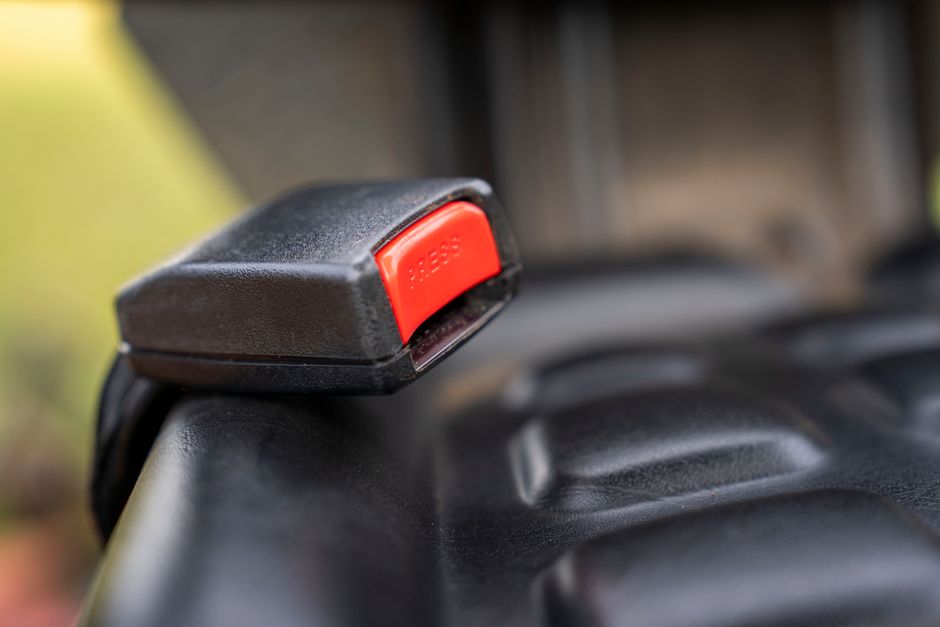
Not all seat belts are created equal, and the type installed on a charter bus can affect both comfort and safety. Under the NHTSA rule, motorcoach manufacturers are required to install either lap belts or lap-shoulder belts (also called three-point belts) at every seating position.
Lap Belts
A lap belt is a single strap that goes across the passenger’s hips, similar to what you might see on an older car or an airplane. Lap belts are simpler and less expensive to install, and they do provide some protection in a rollover or sudden stop by helping keep passengers in their seats. However, safety experts generally agree that lap belts alone are less effective than three-point belts at preventing upper body injuries, since they don’t restrain the torso or head.
Lap-Shoulder (3-Point) Belts
A lap-shoulder belt, the same style used in most modern passenger vehicles, combines a lap strap with a diagonal shoulder strap. This design distributes crash forces across a larger area of the body, reduces the risk of the upper body being thrown forward, and offers significantly better protection in frontal collisions and rollovers. Many of the newer motorcoaches built after 2016 come equipped with three-point belts as standard, particularly from manufacturers that prioritize passenger safety ratings as a selling point.
When booking a charter bus, especially for a long-distance trip, it’s reasonable to ask which type of seat belt is installed. While both types satisfy the federal requirement, the difference in real-world protection can be meaningful.
Are Passengers Legally Required to Wear Seat Belts on a Charter Bus?
This is where things get interesting, and where a lot of passengers are surprised by the answer. The federal rule requiring seat belts to be installed on motorcoaches does not automatically mean passengers are legally required to wear them.
Federal Law vs. State Law
At the federal level, there is no nationwide law mandating that charter bus passengers buckle their seat belts. The FMVSS rule focuses on manufacturing standards, meaning it dictates that the equipment must be present and meet certain crash-protection benchmarks, but it stops short of creating a universal passenger use requirement.
Instead, seat belt use laws are largely determined at the state level, and they vary quite a bit. Some states have passed laws specifically requiring passengers on buses (including charter buses and motorcoaches) to wear seat belts if the vehicle is equipped with them. Other states have no such requirement at all, leaving seat belt use as a matter of personal choice or company policy rather than law.
Because of this patchwork of state laws, the legal obligation to wear a seat belt on a charter bus can change depending on where your trip starts, where it ends, and which states you pass through along the way. In practice, this means a passenger traveling from one state to another might be legally required to buckle up in one state and not in another, even though they’re sitting in the exact same seat the entire time.
What Charter Bus Companies Require
Even in states without a legal mandate, many charter bus companies set their own seat belt policies as part of their safety procedures. It’s increasingly common for professional operators to require all passengers to wear seat belts whenever the bus is equipped with them, regardless of what state law says. This is often written into the company’s terms of service or communicated by the driver before departure.
Some tour operators, school districts, and corporate travel coordinators also implement their own seat belt policies for the groups they manage, sometimes going beyond what’s legally required in order to reduce liability and prioritize passenger safety. If you’re organizing group travel, it’s worth confirming the operator’s seat belt policy in advance and communicating it clearly to your group, especially for trips involving minors.
What Happens if a Charter Bus Doesn’t Have Seat Belts?
If you book a charter bus and discover it doesn’t have seat belts, you might wonder whether the company is breaking the law. In most cases, the answer is no, as long as the bus was manufactured before November 2016. Operating an older bus without seat belts is completely legal, provided the vehicle meets all other applicable safety standards, passes required inspections, and is properly maintained.
That said, the absence of seat belts doesn’t mean the bus is unsafe by definition. Motorcoaches are still built with sturdy frames, high seat backs, and other passive safety features designed to protect passengers in the event of a crash. Compartmentalization, similar to the design used in school buses, can offer a meaningful level of protection even without belts.
Still, if seat belts are a priority for you or your group, especially for a long highway trip, it’s worth specifically requesting a newer vehicle when you book. Reputable operators should be transparent about their fleet and able to confirm whether a specific bus has seat belts before your trip. If a company is vague or unwilling to answer this question directly, that’s worth treating as a red flag about their overall transparency and safety culture.
Why Seat Belts Matter: The Safety Case
Seat belts might feel like a minor detail when you’re focused on planning group logistics, but the data behind the federal rule tells a compelling story. According to research cited by NHTSA during the rulemaking process, rollover crashes accounted for a disproportionate share of motorcoach fatalities, even though rollovers represent a relatively small percentage of all bus crashes. In many of these incidents, passengers who were ejected from the bus, or thrown into the aisle or against hard surfaces inside the cabin, suffered the most severe injuries.
NHTSA’s own analysis estimated that seat belts on motorcoaches could prevent a meaningful number of fatalities and serious injuries each year once the rule was fully implemented across the industry’s fleet. While motorcoach travel remains statistically one of the safest ways to travel, safer than passenger cars per mile traveled, seat belts add another layer of protection for the relatively rare but high-consequence events like rollovers or sudden, severe impacts.
For a broader look at how charter buses stack up in terms of overall safety, our article on charter bus safety covers everything from driver regulations to vehicle maintenance standards and how the industry compares to other forms of transportation.
Special Considerations for Children and Seat Belts
Families and school groups often have additional questions about seat belts, particularly when it comes to young children. Charter buses are not equipped with the same type of child safety seats you’d install in a personal vehicle, and most motorcoaches are not designed to accommodate car seats or booster seats in the way passenger cars are.
In general, the seat belts installed on charter buses are designed for older children and adults who can properly use a standard lap or lap-shoulder belt. For very young children, particularly infants and toddlers who would normally require a car seat, charter bus travel presents a different set of considerations than a family road trip in a personal vehicle. If your group includes young children, it’s a good idea to contact the charter bus operator directly to ask about their specific policies, since some companies may have guidelines or restrictions in place for extremely young passengers.
For school trips, summer camp transportation, or family reunions where kids will be riding along, it’s worth reviewing seat belt expectations with chaperones and parents ahead of time. If you’re planning transportation for a youth group, our complete planning guide for summer camp charter bus rentals includes helpful tips on keeping young passengers safe and organized throughout the trip.
How to Check for Seat Belts Before You Book
If seat belts are a priority for your trip, whether for peace of mind, comfort, or a specific policy your organization follows, there are a few simple steps you can take before booking to confirm what you’ll be getting.
- Ask directly about the vehicle’s manufacture year. Since the seat belt rule applies to buses built after November 2016, this single question can tell you a lot about what to expect.
- Request photos or a vehicle spec sheet. Many charter bus companies can provide interior photos or a fleet spec sheet showing seating configuration and safety features.
- Ask what type of belts are installed. If the bus has seat belts, find out whether they’re lap belts or lap-shoulder belts, especially for longer trips.
- Confirm the company’s seat belt policy. Ask whether the operator requires passengers to wear seat belts and how that’s communicated to riders and drivers.
- Read reviews and ask about fleet age. Companies with newer fleets tend to mention this as a selling point, and past customers often comment on vehicle condition in reviews.
Being specific in your questions tends to get you more useful answers. Instead of asking “Is your bus safe?”, try asking “Does the bus assigned to our trip have seat belts, and what year was it manufactured?” Reputable companies should have this information readily available.
What to Do If a Seat Belt Is Missing or Broken
Occasionally, a passenger might board a charter bus and find that a specific seat belt is missing, damaged, or not functioning properly, even on a newer bus that should be equipped with them. If this happens, the best move is to notify the driver or a staff member right away rather than simply switching seats without saying anything. Most charter bus companies want to know about equipment issues so they can address them before the next trip, and they may be able to reassign you to a different, fully functional seat.
If you notice a pattern of poor maintenance, such as multiple broken belts, torn upholstery, or other visible wear that suggests the vehicle isn’t being properly cared for, it’s worth raising that concern with the company after your trip. Feedback like this helps hold operators accountable and can be a useful signal for other travelers researching the same company.
Seat Belts vs. Other Charter Bus Safety Features
While seat belts are an important piece of the safety puzzle, they’re just one part of a much larger system designed to protect passengers on a charter bus. Federal regulations also require motorcoach operators to follow strict rules around driver qualifications, hours-of-service limits to prevent fatigue, regular vehicle inspections, and maintenance schedules. Many modern motorcoaches also include features like electronic stability control, anti-lock brakes, and advanced tire pressure monitoring, all of which work together to reduce the risk of the kinds of severe crashes that make seat belts so important in the first place.
Seat belts are best understood as a last line of defense rather than the only safety measure that matters. A well-maintained bus with a properly trained, well-rested driver is far less likely to end up in the kind of severe crash where seat belts make the biggest difference. That’s why choosing a reputable operator with a strong safety record matters just as much as checking for seat belts, if not more.
Charter Bus Seat Belts vs. School Buses and City Transit Buses
It’s worth briefly comparing charter buses to two other common types of buses, since the seat belt rules differ quite a bit between them and this is a frequent source of confusion.
School Buses
As mentioned earlier, traditional school buses rely primarily on compartmentalization rather than seat belts for passenger protection, though a growing number of states have passed their own laws requiring seat belts on new school buses. This is a state-by-state patchwork rather than a single federal rule, which is part of why school bus seat belt policies vary so much depending on where you live.
City Transit Buses
Public transit buses, the kind you’d take around a city for a daily commute, are generally not required to have seat belts at all. These buses are designed for short trips at lower speeds, with a mix of seated and standing passengers, and they’re regulated differently than long-distance motorcoaches. This is one of the clearest examples of how vehicle classification, intended use, and speed all factor into how seat belt rules are applied across different bus types.
Charter buses and motorcoaches, by contrast, are typically used for longer trips at highway speeds, which is exactly the kind of travel where rollover risk and crash severity increase, and exactly why regulators singled out this vehicle category for the seat belt mandate.
Tips for Staying Safe on a Charter Bus Trip
Whether or not your bus has seat belts, there are several practical steps passengers and group organizers can take to stay safe and make the most of a charter bus trip.
- Buckle up if belts are available. Even if it’s not legally required in your state, wearing a seat belt is a simple, low-effort way to reduce your risk of injury.
- Keep the aisle clear. Store bags, luggage, and loose items in designated storage areas rather than the aisle or floor space near your feet.
- Follow the driver’s instructions. Drivers are trained to manage passenger safety, and following their guidance during boarding, stops, and travel matters.
- Stay seated while the bus is moving. Walking around a moving bus increases the risk of falls, especially during sudden stops or turns.
- Ask questions before you book. Whether it’s about seat belts, vehicle age, or the company’s safety record, asking upfront helps you make an informed choice.
Group leaders organizing trips for schools, sports teams, or corporate events can also build a quick safety briefing into the start of the trip, reminding passengers to buckle up if belts are present and reviewing basic bus etiquette before departure.
Frequently Asked Questions
Do all charter buses have seat belts?
No. Only motorcoaches manufactured on or after November 2016 are required to have seat belts under federal law. Older buses still in service may not have any seat belts installed, even though they remain legal to operate.
Is it illegal to ride a charter bus without wearing a seat belt?
It depends on your state. There is no federal law requiring passengers to wear seat belts on a charter bus, but some states have their own laws mandating seat belt use on buses equipped with them. Many charter bus companies also set their own policies requiring passengers to buckle up regardless of state law.
1
What type of seat belts do charter buses use?
Charter buses use either lap belts or lap-shoulder (three-point) belts, depending on the manufacturer and model. Lap-shoulder belts generally offer better protection for the upper body and are increasingly common on newer motorcoaches.
Can I request a charter bus with seat belts?
Yes. When booking, you can ask the operator about the manufacture year and safety features of the specific vehicle assigned to your trip. Most reputable companies can confirm whether the bus has seat belts before your departure date.
Are children required to use special seats on a charter bus?
Charter buses are not designed to accommodate car seats or booster seats the way personal vehicles are. Seat belts on motorcoaches are built for passengers who can safely use a standard lap or lap-shoulder belt, so parents traveling with infants or toddlers should contact the operator directly to ask about specific policies.
Final Thoughts
Seat belts on charter buses are the product of decades of safety research, real-world crash investigations, and a federal rule that finally caught up with the data in 2016. While newer motorcoaches are required to have them installed, whether you’re legally required to wear one, and whether your specific bus even has them, still depends on the vehicle’s age and the laws of the state you’re traveling through. The best way to travel with confidence is to ask direct questions before you book, understand your operator’s safety policies, and buckle up whenever a seat belt is available. Combined with a well-maintained vehicle and a properly trained driver, seat belts are one more layer of protection that helps make charter bus travel one of the safest ways to move a group from point A to point B.