Charter Bus for Airport Parking Shuttles: The Complete Operator’s Guide

Anyone who has circled an airport parking lot at 5 a.m., waiting for a shuttle that never seems to show up, knows how frustrating a bad shuttle system can be. For parking lot operators, hotels, and off-airport parking companies, that frustration translates directly into lost customers and bad reviews. This is exactly why more parking operators are switching from small shuttle vans to a charter bus for airport parking shuttles, and the shift is changing how travelers get from their cars to the terminal.
In this guide, we’ll break down why charter buses are becoming the preferred choice for airport parking shuttle operations, how the logistics actually work, what it costs, and how to choose the right vehicle and vendor for your specific parking facility. Whether you run a large off-airport parking lot, manage a hotel with a park-and-fly package, or oversee shuttle operations for an event venue near an airport, you’ll walk away with a clear, practical understanding of how to build (or improve) a shuttle program that actually works.
Why Airport Parking Operations Are Turning to Charter Buses
Traditional airport parking shuttles are usually 12- to 20-passenger vans or small cutaway buses. They’re inexpensive to buy and easy to maneuver, but they struggle the moment passenger volume spikes, such as during holiday travel weeks, big conventions, or peak summer travel season. A charter bus for airport parking shuttles solves that volume problem by moving 30, 40, or even 56 passengers in a single trip instead of running five or six smaller vans back and forth.
That single change ripples through nearly every part of a parking operation:
- Fewer trips, less fuel burned per passenger – Moving more people per vehicle cuts operating costs significantly over a full year.
- Shorter wait times during peak hours – One full-size bus can clear a crowded lot faster than three separate van runs.
- More comfortable ride – Charter buses offer upright seating, luggage racks, air conditioning, and sometimes restrooms, which matters when a passenger has already had a long travel day.
- Lower driver staffing needs – Instead of scheduling four van drivers for a rush period, a lot might only need two bus drivers.
As a result, many parking companies that once relied entirely on vans are now blending in charter buses, especially for their busiest routes and peak-season schedules.
How Charter Bus Airport Parking Shuttles Actually Work
The basic concept is simple: a traveler parks their car in an off-airport or overflow lot, then boards a bus that runs a continuous loop between the lot and the airport terminal. However, the details of how that loop is designed and staffed make the difference between a smooth operation and a chaotic one.
Continuous Loop Scheduling
Most successful shuttle programs run on a fixed loop, with buses departing every 10 to 20 minutes rather than waiting to fill up. Predictability matters more to travelers than raw speed. A traveler who knows a bus comes every 15 minutes will wait patiently; a traveler who doesn’t know when the next bus is coming will get anxious, especially if they’re cutting it close to a flight.
Multiple Pickup and Drop-Off Points
Larger parking facilities often have several sections or overflow lots. A charter bus route needs clearly marked stops, consistent signage, and a driver who knows the exact sequence of stops before pulling out. If your facility has multiple lots feeding into one terminal loop, it helps to review general pickup and drop-off planning strategies that apply just as much to a shuttle loop as they do to a one-time group trip.
Terminal Curb Access
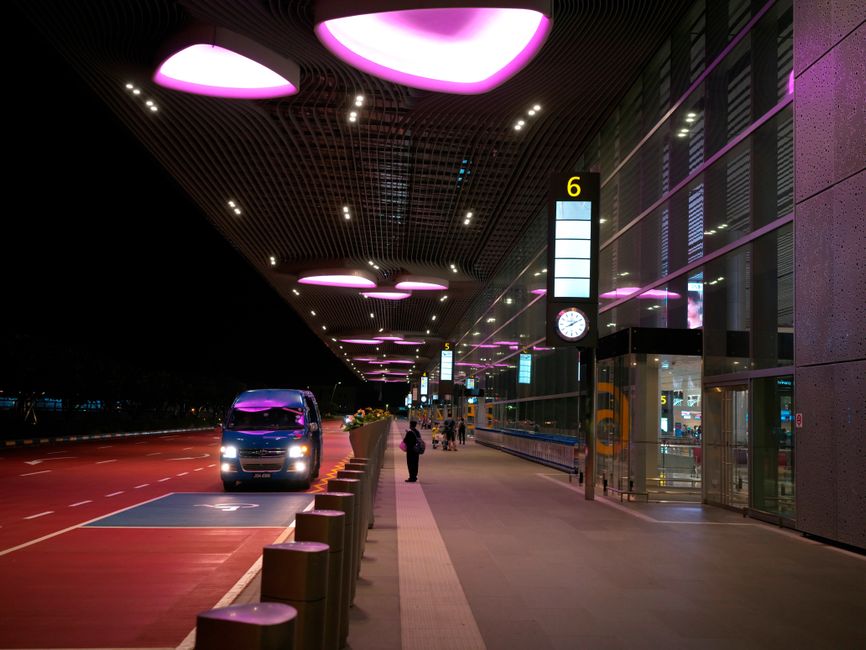
This is often the trickiest part of the whole system. Airports tightly regulate which curb zones commercial shuttles can use, and a full-size charter bus needs more curb space and dwell time than a van. Getting this wrong causes traffic backups and can result in fines or a lost curb permit. We’ll cover this in more detail in the compliance section below.
Who Actually Needs a Charter Bus Airport Parking Shuttle?
While the phrase
“airport shuttle” tends to conjure images of a lone van circling a rental car lot, the reality is that a wide range of businesses and organizations rely on full-size, charter-bus-class vehicles to move travelers between parking facilities and terminals. If your operation moves more than a handful of people at a time, or if you’re trying to cut down on the number of vehicle trips clogging up terminal curb space, a charter bus is often the more practical answer. Here’s a closer look at who actually ends up needing this kind of service.
Off-Airport Parking Lot Operators
This is the most obvious use case. Independent off-airport parking companies compete almost entirely on convenience, and the shuttle is the product. Travelers aren’t paying for a parking space so much as they’re paying for a reliable, fast ride to the terminal and back. When lots grow past a few hundred spaces, vans simply can’t keep pace with demand during peak departure windows, which is exactly when a 35- to 56-passenger charter bus starts to make financial sense.
Airport Authorities and Municipal Transit Programs
Many airports run their own remote parking lots, and some contract out shuttle operations to third-party charter companies rather than maintaining an in-house fleet. These arrangements often come with strict service-level agreements covering wait times, vehicle age, and accessibility compliance, which we’ll get into later in this guide.
Hotels With Park-and-Fly Packages
Hotels near major airports frequently offer park-and-fly deals: stay a night, leave your car in the hotel lot, and ride a shuttle to the terminal for the length of your trip. For properties with high volume, a shared charter bus contract (sometimes split among several nearby hotels) is far more cost-effective than each property running its own van fleet.
Rental Car Agencies and Consolidated Rental Centers
Large rental car facilities, particularly consolidated centers that serve multiple brands, move enormous numbers of travelers every hour. These operations often need a mixed fleet, with charter buses handling peak-hour surges while smaller shuttles cover off-peak periods.
Corporate Campuses and University Parking Programs
Some corporate campuses near airports (think large logistics or tech companies) run employee shuttle programs that double as airport connectors for business travel. Universities with satellite parking lots sometimes do the same for students and staff flying out for conferences, athletics, or breaks. If your organization already books buses for other purposes, it’s worth reading about charter bus rental for university events to see how the logistics overlap with shuttle planning.
Event and Cruise Port Parking Operations
Cruise terminals, stadiums, and convention centers with remote parking lots face the exact same challenge as airports: getting large numbers of people from a car to a checkpoint quickly and predictably. Many of these venues use the same charter bus companies and even the same vehicles that serve airport shuttle contracts during off-peak seasons.
Charter Bus vs. Vans vs. Transit Buses: Choosing the Right Vehicle Class
Not every parking shuttle program needs a full-size charter bus. Choosing the wrong vehicle class is one of the most common (and costly) mistakes operators make when setting up a new route. Here’s how the three main options stack up.
Shuttle Vans and Sprinter-Style Vehicles
Vans typically seat 10 to 15 passengers and are the right choice for smaller lots, boutique hotels, or overnight coverage windows when demand is light. They’re cheap to operate and easy to maneuver in tight lots, but they can’t handle luggage volume well, and running enough of them to match the throughput of a single charter bus usually costs more in labor and fuel over time.
Standard Transit Buses
Transit-style buses (the kind you’d see on a city bus route) offer more capacity than vans but are typically not designed with dedicated luggage storage. That’s a major drawback for airport shuttle work, since nearly every rider is carrying at least one bag, often two or three. Standing room helps with capacity, but a bus full of standing passengers holding rolling suitcases is a safety hazard on anything other than short, slow routes.
Charter Buses
Charter buses, particularly motorcoach-style vehicles with underbody luggage bays, solve the two biggest problems at once: they move large groups of people per trip, and they have real cargo capacity built in. A single 45- to 56-passenger charter bus with underneath storage can often replace three or four vans on a busy loop, cutting curb congestion, driver labor costs, and fuel consumption simultaneously. The tradeoff is a higher per-vehicle cost and the need for more space to maneuver and park between runs, which matters if your lot layout is tight.
For most mid-size to large parking operations, the right answer isn’t choosing one vehicle type exclusively. It’s building a mixed fleet: vans for slow overnight hours, charter buses for peak departure and arrival windows, and enough flexibility to shift capacity as demand changes throughout the day.
Vehicle Specifications That Matter for Parking Shuttle Service
Once you’ve decided a charter bus fits your route, the next question is which specific configuration to buy or lease. Airport shuttle work has its own set of priorities that differ from long-distance charter service.
Luggage Capacity
Underbody bay space matters more here than almost anywhere else in the charter bus world. Airport travelers routinely bring full-size suitcases, golf bags, car seats, and oversized carry-ons that didn’t make it onto the plane. A bus with limited or poorly organized bay space will slow down loading at every single stop, which compounds into major delays across a full day of continuous loops.
Low-Floor or Step-Friendly Entry
Frequent boarding and deboarding, often by travelers who are tired, rushed, or managing kids and bags, makes entry design a real factor. Buses with a lower first step or a retractable step system move people on and off faster and reduce the risk of trip-and-fall incidents, which are among the most common liability claims in shuttle operations.
ADA Accessibility
Wheelchair lifts or ramps, securement stations, and accessible seating aren’t optional extras for most parking shuttle contracts, they’re a legal requirement under the Americans with Disabilities Act, and many airport authorities won’t approve a shuttle contract without documented ADA compliance across the fleet. Even if your specific lot serves mostly walk-on traffic today, building ADA-compliant vehicles into your fleet from the start avoids a costly retrofit later.
Durability Over Comfort Extras
Long-distance charter buses are often outfitted with reclining leather seats, entertainment systems, and other comfort upgrades that make sense for a multi-hour trip. Shuttle routes rarely need any of that. Since most rides last five to fifteen minutes, operators are usually better off prioritizing durable, easy-to-clean seating, wide aisles for luggage flow, and robust HVAC systems that can handle doors opening and closing dozens of times per hour.
Signage and Branding Space
Clear exterior signage indicating the route, lot name, or terminal destination reduces rider confusion and driver questions. If multiple companies or lots share color-coded shuttle branding, this becomes even more important, since a traveler standing at a stop needs to identify the correct bus at a glance, especially in bad weather or low light.
Compliance and Regulatory Considerations
Airport shuttle service is one of the more heavily regulated corners of the charter bus industry, largely because it operates on airport property or in close coordination with airport authorities. Skipping this step is the fastest way to lose a contract or rack up fines.
Curb Access Permits
As mentioned earlier, terminal curb space is tightly controlled. Airport authorities issue specific permits for commercial ground transportation, and those permits often come with restrictions on vehicle size, dwell time, designated pickup zones, and hours of operation. Larger charter buses may be restricted to certain curb sections specifically because of their length and the additional time needed to load luggage. Before committing to a route or vehicle size, confirm with the airport’s ground transportation office exactly what’s permitted, since rules vary significantly from one airport to another.
Commercial Insurance Requirements
Airport authorities and many parking lot operators require proof of commercial auto liability insurance well above standard minimums, often in the range of five to ten million dollars in coverage for buses operating on airport property. Confirm your policy explicitly covers shuttle operations and curb-side loading, not just point-to-point charter work, since some policies distinguish between the two.
Driver Licensing and Background Checks
Drivers need a Commercial Driver’s License with a passenger endorsement, and many airport contracts require additional background screening beyond what’s standard for over-the-road charter work, including TSA-related security checks if the route touches secure airport zones. Some airports issue driver ID badges that must be renewed periodically and can be revoked for violations, so build renewal tracking into your compliance calendar.
DOT and FMCSA Compliance
Federal Motor Carrier Safety Administration rules around hours of service, vehicle inspections, and maintenance records apply to shuttle operations just as they do to long-distance charter trips, even though individual routes are short. Because shuttle drivers often work long shifts made up of many short loops, it’s easy to lose track of cumulative hours if dispatch isn’t monitoring it closely.
Local Parking and Traffic Ordinances
If any part of your route runs on public roads outside airport property, local municipalities may have their own rules about bus size, noise, idling time, and designated stops. It’s worth reviewing general charter bus parking rules before finalizing a route, since staging areas and layover spots near the airport are often subject to the same kinds of restrictions that apply to charter buses parking anywhere else.
Driver Requirements and Training for Shuttle Routes
Airport parking shuttle driving looks simple from the outside, short trips, familiar route, no highway driving, but it’s actually a demanding job that requires a specific skill set.
Repetition Fatigue Management
Driving the same quarter-mile loop fifty times in a shift is mentally taxing in a way that long-distance driving isn’t. Operators need to build in real rest breaks and rotate drivers between routes to prevent the kind of fatigue-driven mistakes that happen when a job becomes mechanical.
Tight-Quarters Maneuvering
Parking lots and terminal curbs are full of pedestrians, luggage carts, other buses, and taxis, often in a much tighter footprint than a highway or open road. Drivers need specific training on low-speed maneuvering, mirror checks, and pedestrian awareness that goes beyond standard CDL curriculum.
Customer Service Under Pressure
Shuttle drivers interact with far more passengers per hour than long-distance charter drivers do, and many of those passengers are stressed about making a flight. Training should cover how to communicate delays calmly, help with luggage without slowing down the loop, and handle the inevitable rider who’s convinced the bus is running late even when it isn’t.
Emergency and Evacuation Procedures
Because shuttle buses are constantly loading and unloading near active traffic, drivers need clear protocols for emergency stops, evacuations, and coordinating with airport security or ground crew during an incident. This should be part of onboarding, not something drivers figure out the first time something goes wrong.
Scheduling, Dispatch, and Technology
A charter bus airport shuttle program lives or dies on scheduling discipline. Unlike a one-time group charter, this is a recurring, high-frequency operation, and small inefficiencies compound fast across hundreds of daily trips.
GPS Tracking and Real-Time Passenger Apps
Modern shuttle programs increasingly offer live bus tracking through an app or a digital sign at the pickup point, showing riders exactly how many minutes until the next bus arrives. This single feature does more to reduce passenger anxiety and complaint volume than almost anything else an operator can invest in.
Automated Dispatch Software
Dispatch platforms built for fixed-loop operations can automatically adjust bus frequency based on live flight schedules, lot occupancy data, and time of day. During a morning surge when three wide-body flights are boarding within an hour of each other, the system can push additional buses onto the loop before a backup even forms at the curb.
Driver Communication Tools
Two-way radios or app-based messaging let dispatch redirect drivers around traffic incidents, terminal closures, or curb congestion in real time. Without this, drivers are stuck following a fixed schedule even when conditions on the ground have changed.
Data Tracking for Continuous Improvement
Tracking metrics like average wait time, trips per hour, and passenger volume by time of day lets operators fine-tune schedules over weeks and months rather than guessing. A route that needs a bus every 12 minutes on a Monday morning might only need one every 25 minutes on a quiet Tuesday afternoon, and data is the only reliable way to know the difference.
Cost Considerations for Operators
Setting up or expanding a charter bus shuttle program is a significant financial commitment, and the numbers look different depending on whether you’re buying, leasing, or contracting out the service entirely.
Owning a Fleet
Purchasing charter buses outright gives an operator full control over scheduling, branding, and maintenance standards, but it comes with major upfront capital costs, ongoing maintenance responsibility, and depreciation. This model tends to make the most sense for large, established parking operators or airport authorities running high-volume routes year-round.
Leasing Vehicles
Leasing spreads out costs and makes it easier to scale a fleet up or down seasonally, which matters for markets with strong travel-season swings. The tradeoff is less long-term cost efficiency compared to ownership if the route runs at high volume for many years.
Contracting a Charter Bus Company
Many parking lot operators, especially smaller and mid-size ones, contract the entire shuttle service out to a third-party charter bus company. This removes the burden of fleet maintenance, driver hiring, and compliance tracking, shifting it to a vendor who already specializes in it. The tradeoff is less direct control over vehicle branding and schedule flexibility, and contract pricing needs to be negotiated carefully to avoid overpaying for underused capacity during slow periods.
Hybrid Models
Some of the most efficient operations use a hybrid approach: owning a core fleet sized for average daily demand, then contracting additional charter buses from a rental company during peak holiday travel weeks, big events, or unexpected surges. This avoids paying to own capacity that sits idle eleven months a year.
Safety and Maintenance Protocols
Because shuttle buses run far more cycles per day than a typical charter bus on a one-time trip, wear and tear accumulates faster, and maintenance schedules need to reflect that.
Daily Pre- and Post-Trip Inspections
Brakes, tires, doors, and lift mechanisms take a beating from constant stop-and-go driving and repeated door cycling. Daily inspections catch small issues, a slow-closing door, a soft brake pedal, before they turn into a breakdown in the middle of a busy loop.
Preventive Maintenance Intervals Based on Cycles, Not Just Mileage
A shuttle bus might only log 60 miles in a full day, but it could complete 40 stop-and-start cycles in that same period. Maintenance schedules built around long-distance mileage assumptions can miss wear patterns that are specific to high-frequency, low-speed operation, particularly on brakes, suspension components, and door mechanisms.
Cleaning and Sanitation Standards
High passenger turnover means shuttle buses need more frequent interior cleaning than long-distance charters. Spilled coffee, dropped luggage tags, and general wear from constant boarding add up quickly, and a visibly dirty shuttle bus reflects poorly on the lot or hotel it represents, even if the ride itself was fast and on time.
Incident Reporting and Camera Systems
Given how many pedestrian interactions occur at each stop, onboard cameras and clear incident reporting procedures protect both passengers and the operator in the event of a claim. This is an area where the cost of the technology is almost always lower than the cost of a single disputed incident without footage to review.
Improving the Passenger Experience
A shuttle program can be technically efficient and still feel bad to ride if the passenger experience isn’t considered. Since most riders are already stressed about catching a flight or just landed after a long one, small details make a big difference.
Clear, Consistent Signage
Every stop should have visible, well-lit signage indicating which bus serves which lot or terminal, along with basic instructions for boarding. Confusing or missing signage is one of the top sources of complaints in shuttle operations, right alongside long wait times.
Weather-Protected Waiting Areas
Covered shelters, benches, and lighting at pickup points make waiting far more tolerable, especially in extreme heat, rain, or winter cold. This is a relatively low-cost investment that pays off directly in customer satisfaction scores for parking operators competing on convenience.
Luggage Assistance
Drivers or attendants who help load and unload luggage speed up boarding and reduce the risk of injury from travelers wrestling oversized bags into tight storage bays. Some operators add a second staff member during peak hours specifically to manage luggage while the driver focuses on the road.
Accessibility for All Travelers
Beyond legal ADA requirements, thoughtful accessibility means training drivers to proactively offer help to travelers with mobility devices, families with young children, or elderly passengers rather than waiting to be asked. This kind of service detail is often what separates a shuttle program travelers complain about from one they barely think twice about, which is really the goal.
Choosing the Right Charter Bus Partner
Whether you’re contracting out an entire shuttle program or supplementing an owned fleet during peak season, the charter bus company you choose matters as much as the vehicles themselves.
Look for Airport-Specific Experience
A company that regularly runs charter trips for weddings or sports teams isn’t automatically equipped to handle the unique demands of continuous-loop shuttle work. Ask directly about experience with airport ground transportation, curb permits, and high-frequency scheduling before signing a contract.
Confirm Fleet Availability and Backup Vehicles
Breakdowns happen, and a shuttle program can’t afford to have a route go dark for even twenty minutes during a peak departure window. Ask potential partners how they handle backup vehicles and how quickly they can deploy a replacement bus if one goes out of service mid-shift.
Review Insurance and Compliance Documentation Directly
Don’t take a vendor’s word for it. Request current insurance certificates, DOT numbers, and driver qualification files before finalizing a contract, and confirm the airport authority accepts that documentation as part of the permitting process. If you’re new to evaluating charter operators generally, it’s worth reading about how charter buses handle airport pickups to understand the baseline expectations before adding the complexity of a recurring shuttle contract on top.
Ask About Scalability
Travel volume isn’t static. Holiday weeks, weather disruptions, and citywide events can spike demand well beyond a typical day. A good charter partner should be able to explain, specifically, how they’d add capacity on short notice, whether that’s pulling buses from a nearby depot or coordinating with a partner fleet.
Frequently Asked Questions
How many charter buses does a typical airport parking shuttle route need?
It depends entirely on lot size and peak demand, but a common starting point for a mid-size off-airport lot is two to four buses running a continuous loop during peak hours, scaled down to one or two during overnight or low-demand periods. The right number comes from tracking actual passenger volume by hour rather than guessing.
Can a standard charter bus be used for airport shuttle service, or does it need special modifications?
A standard charter bus can often be used with minimal changes, but operators should confirm ADA accessibility, adequate luggage bay space, and durable, easy-to-clean seating before putting a bus into regular shuttle rotation. Comfort features built for long-distance trips generally aren’t necessary for short shuttle loops.
Do airport shuttle buses need a special permit to use terminal curb space?
Yes, in almost every case. Airport authorities issue specific commercial ground transportation permits that govern which curb zones a bus can use, how long it can dwell there, and during what hours. These permits are separate from standard vehicle registration and insurance requirements.
How is a charter bus shuttle contract typically priced?
Pricing usually follows one of a few models: a flat contract rate for guaranteed service hours, a per-trip rate tied to actual usage, or a hybrid that includes a base rate plus surge pricing during confirmed high-demand periods like holidays. The right structure depends on how predictable your passenger volume is throughout the year.
What’s the biggest mistake operators make when setting up a new shuttle route?
Underestimating luggage handling time. Many new routes are scheduled based on how long the drive itself takes, without factoring in the extra minutes needed at each stop for passengers to load bags, especially during early morning and holiday travel windows when nearly every rider is checking a full-size suitcase.
Final Thoughts
Running a charter bus airport parking shuttle program well is a balancing act between efficiency, compliance, and passenger comfort, and no single piece of it works in isolation. The right vehicle spec means nothing without a driver trained for tight-quarters maneuvering. A perfectly timed loop schedule falls apart without a curb permit that actually allows the bus to stop where it needs to. And even a technically flawless operation will earn complaints if travelers are left standing in the rain without clear signage telling them help is on the way.
The operators who get this right treat their shuttle program the way they’d treat any other core piece of their business: with real data, clear compliance documentation, a maintenance schedule built around actual usage patterns, and a genuine focus on what the passenger experience feels like at three in the morning during a holiday travel rush. Get those fundamentals right, and a charter bus shuttle stops being a logistical headache and becomes exactly what it’s supposed to be, a fast, dependable bridge between a parking spot and a flight.